


AI Blogging Mistakes That Kill Google Rankings
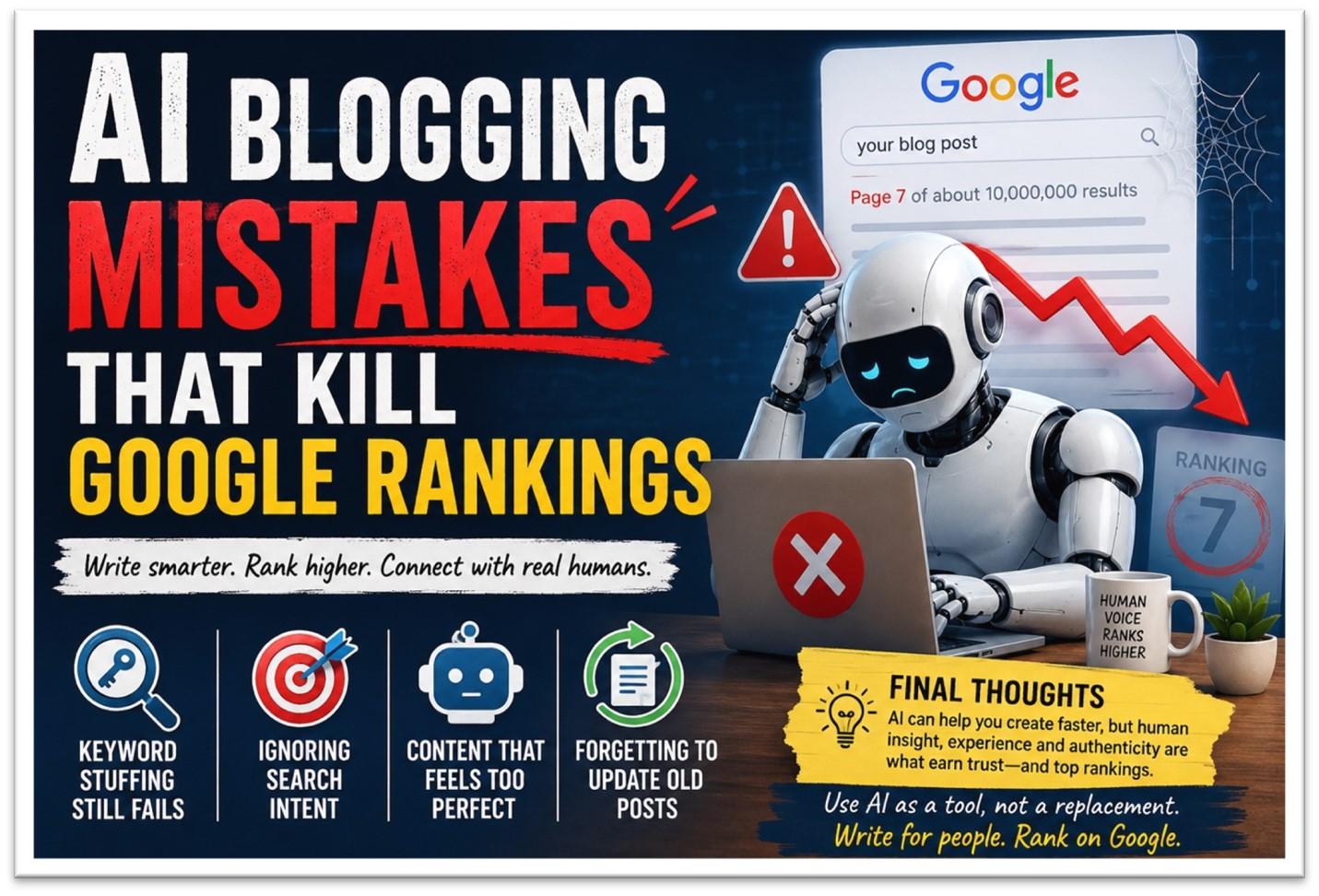
AI tools made blogging faster. No question about that. A single prompt can spit out a full article in seconds, which sounds amazing until Google pushes that article to page seven, where nobody will ever find it. That’s the part many bloggers don’t see coming. This is exactly why there is a need to learn content writing using AI the right way.
The biggest mistake is publishing raw AI content without touching it. Readers can tell, and so can Google. The wording feels stiff, repetitive and weirdly empty at the same time. Every paragraph sounds like it was copied from another article written by another bot five minutes earlier. This kind of content dies fast in search rankings.
· Keyword Stuffing Still Fails
AI often gives broad information with no depth, no personality, and no actual experience behind it. The thing is, Google wants useful pages. If an article says the same basic stuff found on hundreds of websites, there’s no reason to rank it higher. Adding real examples, opinions, small observations, or even mistakes learned along the way makes a huge difference.
· Ignoring Search Intent
One thing many site owners ignore is search intent. They write for search engines instead of actual humans. Someone searching for a blogging device doesn’t want robotic filler paragraphs which says the same thing in different ways. Clean formatting, short paragraphs, and simple language work far better than trying to sound overly smart. This is exactly why one needs to learn content writing using AI.
· Chasing Volume Instead of Real Value
A lot of people get excited about AI because it can pump out 20 articles in a single day. Sounds productive, but that’s where many sites start going downhill. Google’s E-E-A-T guidelines reward content that actually feels useful and written by someone with experience, not endless batches of generic blog posts and readers notice the difference too.
· Ignoring Basic On-Page SEO
People let AI handle the first draft and then completely skip the SEO basics afterwards. Google still checks these signals first, and most AI-generated drafts won’t include them unless you specifically ask for them. One thing I noticed is that a tiny prompt change can seriously improve results. Just tell the tool to add H2s, FAQ schema, and a clean meta description from the start. Simple fix. Better rankings. Learning content writing using AI works best when you combine speed with solid SEO habits instead of relying on automation alone.
· Content That Feels Too Perfect
Another mistake is sounding too polished. Real human writing has rhythm changes. Some sentences are short, while others ramble a bit. That’s normal. Even when you learn content writing using AI, forcing every paragraph to sound perfectly balanced makes the writing feel robotic. Content using AI platforms like ChatGPT often sounds painfully polished, almost like every paragraph came from the same factory. Readers bounce quickly when content feels fake, and high bounce rates don’t help rankings at all.
· Forgetting to Update Old Posts
Updating old content matters too. A lot of bloggers publish AI articles and forget them forever. Google prefers fresh pages that stay relevant. A quick rewrite, better examples, updated stats or cleaner formatting can revive a struggling post surprisingly fast.
Final Thoughts
AI can absolutely help bloggers create content faster. No shame in using it. But relying on it completely is where things fall apart. Search engines reward helpful writing that feels alive, useful and human, not recycled text with fancy wording and zero personality. This is why joining an institution that offers AI-based learning content writing can make a huge difference.

 Arabic
 French
 Spanish
 Portuguese
 Deutsch
 Turkish
 Dutch
Dutch
 Italiano
 Russian
 Romaian
 Portuguese (Brazil)
 Greek
Greek
