


Can High Quality Hot Melt Adhesive Reduce Waste?
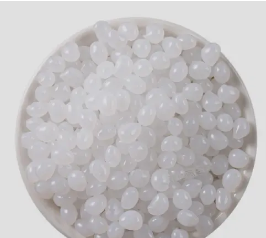
Material waste remains a challenge across manufacturing industries. Packaging plants, furniture workshops, textile processors, and assembly lines all seek ways to reduce scrap while maintaining production speed. One factor that often receives attention is adhesive selection. High Quality Hot Melt Adhesive contributes to process consistency by delivering controlled application, reliable bonding, and stable performance during long operating cycles.
Unlike liquid adhesives that depend on solvent evaporation or moisture loss, hot melt products are heated into a liquid state and rapidly solidify after application. This characteristic allows production equipment to move quickly while reducing waiting periods. Industry references describe hot melt adhesives as thermoplastic materials that provide fast setting and broad application flexibility.
Waste Begins with Inconsistent Bonding
Material waste can originate from several factors:
Incomplete adhesive coverage
Poor wetting
Adhesive stringing
Overapplication
Nozzle blockage
Bond failure
Equipment contamination
Each issue increases production costs through rejected products or machine cleaning.
A stable adhesive formulation helps reduce these interruptions.
Important Technical Properties
Manufacturers often compare adhesives using several performance indicators.
Viscosity
Typical industrial range:
1,500–15,000 cps
Stable viscosity supports predictable application.
Open Time
Usually:
5–25 seconds
Long enough for assembly but short enough to support production speed.
Setting Speed
Generally:
2–10 seconds
Fast solidification reduces fixture time.
Softening Point
Typically:
80°C–120°C
Higher values can improve heat performance.
Application Temperature
Common range:
150°C–180°C
Consistent heating improves coating uniformity.
Thermal Stability
Long heating cycles should produce limited carbon deposits.
Reducing Adhesive Consumption
Applying excessive adhesive does not always improve bonding.
Proper viscosity allows:
Thin glue lines
Uniform spreading
Controlled bead size
Lower adhesive usage
Reduced squeeze-out
Cleaner finished products
Many automated systems use precision nozzles to dispense calculated adhesive amounts.
High Quality Hot Melt Adhesive supports these systems by maintaining stable flow properties.
Cleaner Equipment Operation
Machine maintenance affects production efficiency.
Adhesives with poor thermal characteristics may leave carbon residues inside tanks and hoses.
Possible results include:
Filter blockage
Pump wear
Nozzle clogging
Uneven spray patterns
Unexpected downtime
Stable formulations can reduce cleaning frequency and simplify maintenance schedules.
Packaging Production Benefits
Packaging operations require high throughput.
Applications include:
Case sealing
Carton erection
Bookbinding
Label attachment
Paper bag manufacturing
Display packaging
A quality adhesive should provide rapid grab while maintaining bond integrity during transportation.
Cold warehouses and warm shipping environments create temperature variations, making balanced adhesive performance important.
Textile Manufacturing
Textile bonding has expanded into industrial products.
Applications include:
Garment lamination
Automotive interiors
Medical textiles
Footwear
Protective clothing
Filtration materials
A suitable adhesive may offer:
Soft flexibility
Low odor
Repeated bending resistance
Smooth coating
Controlled penetration
These characteristics help reduce production defects.
Furniture and Wood Components
Wood products experience seasonal movement due to moisture changes.
Edge banding
Decorative panels
Cabinet assembly
Profile wrapping
Laminated boards
Adhesives should maintain flexibility while resisting separation under changing environmental conditions.
Stable viscosity also helps operators maintain consistent glue application.
Automation Compatibility
Manufacturing equipment continues to evolve.
Modern adhesive systems may include:
Automatic feeders
Temperature sensors
Precision pumps
Robotic dispensers
Pattern spray equipment
Slot die coaters
High Quality Hot Melt Adhesive should work consistently across these systems without frequent parameter adjustments.
Environmental Considerations
Hot melt technology offers practical production advantages because many formulations contain no water or solvents.
Potential operational benefits include:
Lower drying requirements
Reduced process steps
Limited solvent handling
Simplified storage
Fast production turnover
Many industries appreciate these characteristics while pursuing cleaner manufacturing processes.
Storage Recommendations
Storage conditions influence adhesive quality.
Keep products:
Away from moisture
Out of direct sunlight
At moderate temperatures
Inside sealed packaging
Protected from dust contamination
Follow stock rotation practices
Proper handling helps maintain consistent processing characteristics.
Future Manufacturing Trends
Manufacturers continue seeking materials that support efficient production and adaptable product designs.
Research into polymers and formulation additives has expanded the performance range of industrial adhesives. New developments target better thermal stability, broader substrate compatibility, and improved machine operation.
High Quality Hot Melt Adhesive plays a practical role in these production goals. Balanced viscosity, predictable open time, steady thermal behavior, and broad material compatibility help reduce waste while supporting efficient manufacturing. Packaging, woodworking, textile processing, and product assembly all benefit from adhesives designed to work reliably across changing production environments. Technical resources highlight the importance of polymer selection, tackifiers, waxes, and stabilizers in achieving these balanced performance characteristics.

 Arabic
 French
 Spanish
 Portuguese
 Deutsch
 Turkish
 Dutch
Dutch
 Italiano
 Russian
 Romaian
 Portuguese (Brazil)
 Greek
Greek
