


Quantum Communication Industry Develops Around Secure Networks Hardware And Government Procurement
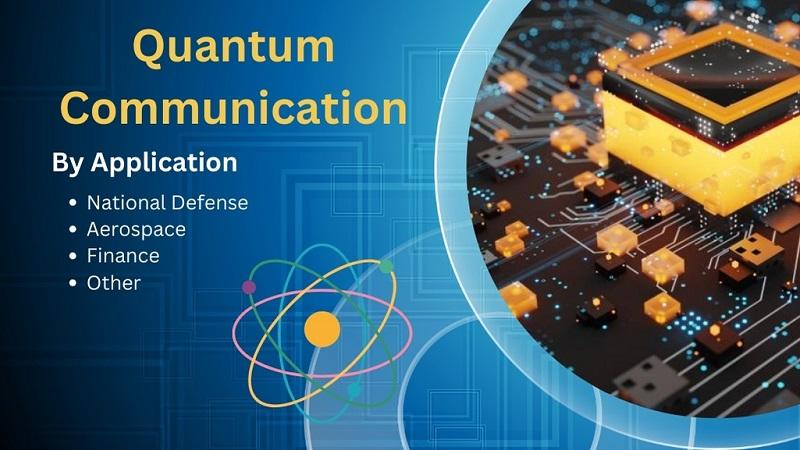
The Quantum Communication Industry is evolving from research programs into an early commercial ecosystem centered on quantum key distribution and secure network pilots. Industry participants include quantum hardware companies, telecom equipment vendors, research spin-offs, systems integrators, and government-backed consortia. The industry is shaped by national security priorities, which drive funding, procurement, and standards development. Because buyers often include defense, finance, and critical infrastructure organizations, trust and assurance are central requirements. Industry offerings typically include QKD devices, detectors, photon sources, key management integration, and operational services. The industry also overlaps with cybersecurity, as quantum communication must integrate into existing encryption architectures and monitoring processes. Supply chain assurance is a key industry concern, especially in sovereign contexts. The industry is also influenced by advances in photonics and optical engineering that improve reliability and key rates. As more pilots are deployed, operational experience accumulates, shaping best practices and procurement expectations.
Industry dynamics emphasize interoperability and standards. Early systems were often proprietary, but buyers increasingly want networks that can evolve and support multi-vendor components. Standards bodies and national programs influence how interfaces and protocols mature. The industry also depends on fiber infrastructure and secure facilities, making partnerships with telecom operators and data centers important. Another dynamic is the integration of QKD with classical encryption and key management. Without smooth integration, QKD is difficult to operationalize. Therefore, key delivery interfaces, monitoring integration, and lifecycle management are industry priorities. The industry is also investing in certification and testing to address practical security risks such as implementation side-channels. Operational maturity is becoming a differentiator: uptime, maintainability, and automated calibration are needed for production networks. The industry must also address talent and training, since operating quantum systems requires specialized skills. Managed service models may grow to reduce burden on customers. These dynamics show an industry shifting toward professional delivery capability rather than experimental demonstration.
Challenges remain significant. Hardware cost and complexity limit adoption beyond high-security contexts. Distance constraints in fiber require trusted nodes, which introduce operational and physical security requirements. Free-space and satellite approaches remain complex to operate at scale. Implementation vulnerabilities can undermine theoretical security if not mitigated. The industry must therefore invest in secure engineering, supply chain assurance, and robust testing. Another challenge is expectation management; quantum communication does not replace cybersecurity basics or eliminate the need for strong key governance. Organizations must still implement strong encryption, IAM controls, and monitoring. The industry also competes indirectly with post-quantum cryptography, which can be deployed in software broadly and may address many long-term risks. Therefore, the industry must articulate where QKD provides incremental value. Procurement cycles can be long, and political changes can affect funding. Scaling from pilot to national network requires coordination, standardization, and long-term support. These challenges indicate a market that will grow, but likely in targeted segments for the near term.
Industry outlook suggests gradual maturation with expanded pilot networks and stronger commercial offerings. High-security sectors will lead adoption, followed by critical infrastructure and select data center interconnects. Standards and interoperability will improve, enabling broader ecosystems. Integration with enterprise key management and encryption appliances will become more standardized. Operational tooling and managed services may reduce adoption friction. Satellite QKD may expand for long-distance key distribution if operational viability improves. Research into quantum repeaters will continue, but near-term industry growth remains anchored in QKD deployments and network integration. The quantum communication industry will be judged by practical outcomes: stable key rates, reliable operations, secure implementation, and clear governance. Vendors that deliver production-ready systems with strong support and certification will shape the industry’s transition from research to secure infrastructure. Over time, quantum communication may become a strategic layer of national and critical communications, complementing post-quantum cryptography and broader security modernization.
Top Trending Reports:
Hand Geometry Biometric Market

 Arabic
 French
 Spanish
 Portuguese
 Deutsch
 Turkish
 Dutch
Dutch
 Italiano
 Russian
 Romaian
 Portuguese (Brazil)
 Greek
Greek
