


What Rubber Antioxidant Agent Does YG-1 Recommend for Natural Rubber Products
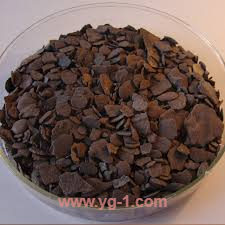
The selection of a rubber Antioxidant agent represents a critical formulation decision that directly influences the performance and longevity of finished rubber goods. Each polymer type exhibits distinct degradation pathways when exposed to heat, oxygen, and mechanical stress, requiring protective additives tailored to these specific vulnerabilities. This formulation challenge prompts a fundamental question: which Rubber Antioxidant Agent works best for EPDM, NBR, or natural rubber compounds?
The degradation mechanisms differ fundamentally among these three common rubber types. Natural rubber, with its unsaturated backbone structure, proves particularly susceptible to oxidative attack at the double bonds within its molecular chain. This vulnerability demands antioxidants that can effectively interrupt the free-radical chain reactions that initiate degradation. The phenolic family of antioxidants, functioning through hydrogen donation to neutralize reactive species, offers suitable protection for natural rubber applications where stain resistance also matters.
Ethylene propylene diene monomer (EPDM) rubber presents a different stabilization challenge. Its fully saturated backbone structure offers inherent resistance to oxidation, yet the small amount of unsaturation in the diene component still presents a vulnerability. Amine antioxidants, recognized for their strong heat resistance and extraction resistance, provide effective long-term thermal protection for EPDM. These compounds, particularly polymerized or high-molecular-weight amine varieties, maintain their protective function even under the elevated temperatures experienced in automotive engine compartments.
Nitrile rubber (NBR) contains acrylonitrile units that introduce polar characteristics, making oil and fuel resistance one of its key features. However, the unsaturation in the butadiene segments creates oxidation susceptibility, especially at the elevated temperatures encountered in seal and hose applications. The choice of Rubber Antioxidant Agent for NBR requires consideration of both the thermal environment and the chemical exposure the component will face. Amine antioxidants offer strong thermal protection, while certain phenolic types provide staining resistance important for light-colored NBR products.
The compatibility of the antioxidant with the specific polymer matrix affects both processing and performance. A Rubber Antioxidant Agent that disperses poorly may cause blooming, surface exudation that affects appearance and seal performance. The solubility parameter of the antioxidant should match that of the polymer to ensure uniform distribution and sustained protection throughout the part's service life. Manufacturers conducting compatibility studies can identify the most suitable antioxidant for each polymer combination.
The synergistic effects achievable through antioxidant blends often exceed the protection offered by single-component systems. Combining a primary antioxidant, such as a hindered phenol, with a secondary antioxidant, such as a phosphite or thioester, addresses different stages of the oxidation process. The primary antioxidant neutralizes free radicals, while the secondary antioxidant decomposes peroxides that would otherwise initiate new oxidation cycles. This complementary action provides more comprehensive protection than either component alone could achieve.
The processing conditions experienced during rubber mixing and curing influence the antioxidant's effectiveness. High-temperature mixing and the vulcanization process can consume a portion of the antioxidant if it degrades prematurely. A Rubber Antioxidant Agent with adequate thermal stability survives the processing stage, remaining available to protect the final product during its service life. The choice between more volatile and less volatile antioxidants depends on the specific processing temperatures encountered.
The environmental conditions the finished product will face determine the required level and type of protection. Outdoor applications demand antioxidants that resist ozone attack and UV degradation, often requiring a combination of an antioxidant with antiozonant properties. Applications involving food contact require antioxidants that meet regulatory standards for safety and extractability. DongHai Chemical provides technical guidance that helps formulators navigate these selection considerations, drawing on its extensive experience in rubber chemical manufacturing. Their product range addresses the specific needs of various polymer systems, supporting manufacturers in developing durable rubber products.
The commercial aspect of antioxidant selection balances performance requirements with cost considerations. Higher-efficiency antioxidants may justify their premium through lower addition levels or extended service life. The total cost of protection includes the price of the antioxidant, the potential for improved performance, and any effect on processing efficiency. Formulators often choose a combination of cost-effective primary antioxidants with small amounts of more specialized secondary antioxidants to achieve the desired protection at an economical price.
For manufacturers seeking to identify the most appropriate Rubber Antioxidant Agent for their specific polymer and application, https://www.yg-1.com/ provides detailed information on product categories and their applications. The relationship between antioxidant selection and rubber performance requires careful evaluation of multiple factors, including polymer type, service environment, and processing conditions. A systematic approach to this selection process, supported by technical expertise from experienced suppliers, increases the likelihood of achieving optimal product performance and durability.

 English
 Arabic
 French
 Spanish
 Portuguese
 Deutsch
 Turkish
 Italiano
 Russian
 Romaian
 Portuguese (Brazil)
 Greek
Greek
