Modern businesses increasingly depend on reliable, high-capacity network infrastructure to support cloud computing, data centers, video communications, connected devices, and large-scale data transfers. A high density fiber cable provides an efficient way to manage numerous optical connections while making better use of limited rack, cabinet, and pathway space. As network requirements continue to grow, organizations are looking for infrastructure that can deliver strong performance without creating unnecessary complexity. High-density fiber technology addresses this challenge by allowing more connections to be organized within a compact physical footprint, helping businesses improve network efficiency while preparing their infrastructure for future expansion.
The demand for compact and scalable connectivity has become particularly important in data centers, telecommunications facilities, enterprise networks, and high-performance computing environments. Traditional cabling arrangements can occupy considerable space and make maintenance more complicated as connection counts increase. A properly designed high density fiber cable deployment can help simplify cable management while supporting high bandwidth and reliable optical transmission. For businesses planning new installations or upgrading existing infrastructure, understanding the benefits, applications, installation considerations, and future potential of high-density fiber technology is essential for making informed networking decisions.
Understanding High Density Fiber Cable and Its Importance
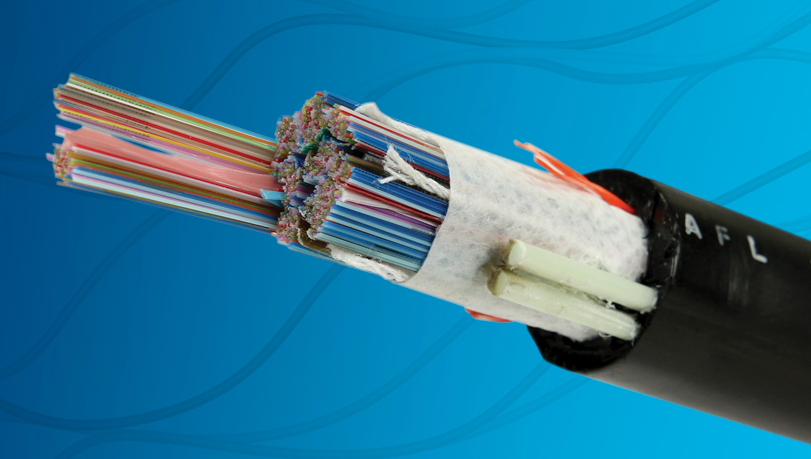
High-density fiber cabling is designed to accommodate a large number of optical fibers and connections within a relatively small physical area. This design approach is especially valuable where rack space and pathway capacity are limited. Instead of expanding horizontally whenever additional connections are required, organizations can use compact fiber assemblies, panels, modules, and trunks to increase connection capacity while maintaining a more organized infrastructure. This can be particularly beneficial in environments where hundreds or thousands of connections must be managed efficiently. High-density configurations also support structured network designs, making it easier to identify, route, and maintain individual connections. Beyond saving physical space, the technology can help organizations create cleaner network environments that are easier to scale. As bandwidth-intensive applications continue to increase, efficient use of physical infrastructure has become just as important as transmission speed, making high-density fiber an increasingly valuable component of modern network architecture.
Importance of Professional Fiber Optic Installation
Professional installation is essential for achieving dependable performance from any high-density optical network. When numerous fibers are concentrated into a limited space, careful planning and cable management become especially important. Technicians must consider routing, bend radius, connector compatibility, termination requirements, labeling, and access for future maintenance. Poorly organized cabling can create congestion, increase the risk of accidental damage, and make troubleshooting more difficult. Professional installers can evaluate the network environment before deployment and develop a structured layout that accommodates current requirements while allowing room for expansion. Proper installation also involves testing connections and verifying optical performance before the network enters regular operation. This attention to detail reduces the likelihood of installation-related failures and helps organizations maintain reliable connectivity over the long term. For large-scale facilities, professional installation can also improve operational efficiency by creating standardized layouts that make future upgrades and maintenance easier to complete.
Key Applications and Features of High-Density Fiber Infrastructure
High-density fiber infrastructure is used across a wide range of demanding networking environments. Data centers commonly rely on compact fiber systems to connect servers, switches, storage platforms, and other critical equipment without consuming excessive rack space. Telecommunications providers can also use high-density configurations to manage large numbers of subscriber, backbone, and interconnection links in centralized facilities. Enterprise networks, healthcare facilities, educational campuses, financial institutions, and industrial environments may benefit from similar designs when large quantities of optical connections must be accommodated within controlled spaces. High-density fiber systems can include trunk cables, patch panels, cassettes, adapters, modular enclosures, and pre-terminated assemblies designed to simplify deployment. Their compact architecture can help improve port utilization and create more structured connectivity. Depending on the network design, these systems may support different fiber types and connector configurations, allowing organizations to select infrastructure based on transmission distance, bandwidth requirements, equipment compatibility, and future expansion plans.
Choosing the Right High-Density Fiber Cable
Selecting appropriate fiber infrastructure requires more than simply choosing the highest connection count available. Businesses should first evaluate their current and anticipated bandwidth requirements, the number of required connections, transmission distances, equipment compatibility, and available installation space. Fiber type is another important consideration because different network environments may require different optical characteristics. Connector formats and termination methods should also match the equipment and patching architecture used throughout the facility. Organizations should consider whether the installation will need frequent changes, as highly active environments may benefit from modular systems that make moves, additions, and changes easier to manage. Cable routing and accessibility are equally important because a high-density design should improve organization rather than create congestion. Choosing a system that can accommodate future capacity increases can also reduce the need for disruptive infrastructure replacements. A professional network assessment can help decision-makers balance density, performance, maintainability, and cost to create an infrastructure strategy that remains practical as business requirements evolve.
Quality, Safety, and Industry Standards
Quality and disciplined installation practices are critical when deploying dense optical infrastructure. Fiber components should be sourced from reputable manufacturers and selected according to the technical requirements of the network. Proper handling is essential because optical fibers can be affected by excessive bending, pulling, contamination, or other physical stresses. Connectors should be kept clean and protected when not in use, while cables should be routed in ways that maintain appropriate bend radii and prevent unnecessary pressure. Testing and certification provide another important layer of quality control by helping technicians identify signal loss, faulty connections, or installation problems before a system is placed into production. Accurate labeling and documentation are also valuable in high-density environments because identifying individual connections can become increasingly difficult as port counts rise. By following recognized installation practices and maintaining clear documentation, organizations can improve network reliability, simplify maintenance, and reduce the risk of avoidable service interruptions.
Benefits of Using High-Density Fiber Technology
The primary advantage of high-density fiber infrastructure is its ability to provide extensive connectivity while using space efficiently. This can be especially valuable in data centers and telecommunications facilities where rack space is expensive and physical expansion may be limited. A well-designed high-density system can also improve cable organization, making network components easier to identify and maintain. Reduced physical congestion can support better airflow around equipment and create a cleaner working environment for technicians. Another important benefit is scalability, as modular high-density systems can often accommodate additional connections without requiring a complete redesign of the existing infrastructure. High-density optical connectivity also supports the bandwidth demands associated with cloud services, virtualization, large-scale storage, artificial intelligence workloads, and other data-intensive applications. When combined with professional installation and appropriate network planning, the result can be a compact, organized, and adaptable infrastructure that supports both present requirements and future technological development.
Future Trends in High-Density Fiber Networking
Network infrastructure is evolving rapidly as artificial intelligence, cloud computing, edge computing, automation, and high-performance data processing increase the amount of information moving through modern facilities. These developments are creating stronger demand for higher connection densities, faster optical interfaces, and more efficient physical architectures. Data centers in particular are looking for ways to increase capacity without continuously expanding their physical footprint. High-density fiber systems are well positioned to support this transition because they enable large numbers of optical connections to be consolidated into organized and space-efficient configurations. Future developments are likely to emphasize modularity, faster deployment, improved connector technologies, better cable management, and infrastructure capable of supporting increasingly demanding optical transmission speeds. Organizations that consider these trends when planning network upgrades can reduce the risk of building infrastructure that becomes outdated too quickly. A forward-looking approach can also help businesses balance immediate requirements with the flexibility needed to support new technologies and growing data volumes.
Conclusion
Reliable and scalable connectivity is now a fundamental requirement for organizations operating in an increasingly digital environment. High-density optical infrastructure offers an effective way to increase connection capacity while making better use of valuable physical space. From data centers and telecommunications facilities to enterprise networks and high-performance computing environments, these systems can support demanding connectivity requirements while improving organization and scalability. Careful product selection, professional installation, appropriate testing, and effective cable management are essential for achieving dependable results. By investing in a properly planned high density fiber cable infrastructure, businesses can create a more efficient network foundation that supports current applications while remaining adaptable to future bandwidth and connectivity demands. A strategic approach to high-density fiber deployment can ultimately contribute to stronger network performance, easier maintenance, and more sustainable infrastructure growth.




 English
 Arabic
 French
 Spanish
 Portuguese
 Deutsch
 Turkish
 Dutch
Dutch
 Russian
 Romaian
 Portuguese (Brazil)
 Greek
Greek
