


Create a NextDoor Clone with AI: Business Model, Monetization & Development Strategy
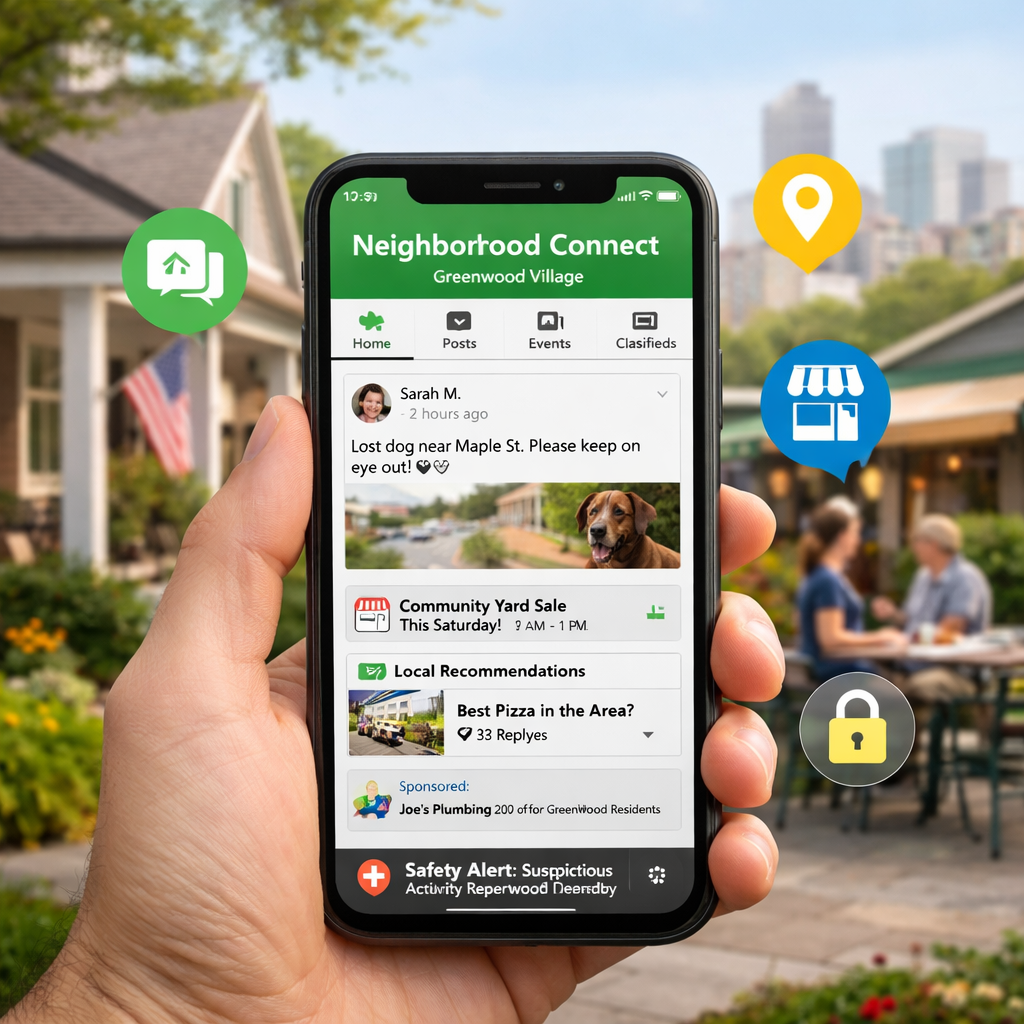
A NextDoor clone is a hyperlocal social networking platform designed to connect people within specific neighborhoods. Inspired by platforms like Nextdoor, this model focuses on enabling local conversations, neighborhood recommendations, event sharing, classifieds, and public safety updates.
In recent years, hyperlocal platforms have gained momentum because users increasingly prefer trusted, verified communities over large, noisy global networks. A NextDoor clone with AI adds an additional competitive layer by integrating personalization, automated moderation, recommendation systems, and predictive analytics into the platform.
Unlike traditional social networks, hyperlocal apps generate engagement through geographic relevance. The value proposition lies in community trust, local business discovery, civic participation, and neighborhood problem-solving. With AI embedded into the ecosystem, the platform becomes scalable, safer, and more monetizable.
Defining the Core Business Model of a NextDoor Clone
The business model of a NextDoor clone revolves around connecting residents within defined geographic boundaries and monetizing local engagement.
Hyperlocal Community-Centric Model
At its core, the platform verifies users based on residential location. This creates a trusted environment where members can:
-
Share neighborhood updates
-
Report safety concerns
-
Ask for recommendations
-
Buy and sell locally
-
Discover local services
The community-first approach drives consistent engagement. Since users interact with real neighbors, retention rates tend to be higher than general social media platforms.
Local Business Integration Model
A NextDoor clone integrates local businesses directly into the ecosystem. Businesses can:
-
Promote services
-
Offer deals
-
Sponsor neighborhood announcements
-
Run geo-targeted ads
This transforms the app into a localized advertising platform with high intent-driven traffic.
AI-Powered Engagement Layer
Artificial Intelligence enhances user experience by:
-
Personalizing feeds based on behavior
-
Detecting spam or harmful content
-
Recommending relevant discussions
-
Suggesting nearby services
-
Identifying trending neighborhood topics
AI ensures scalability while maintaining content quality and trust within communities.
Designing a Sustainable Monetization Strategy for a NextDoor Clone
Monetization must align with hyperlocal relevance. Since users trust the platform for community engagement, intrusive advertising can damage credibility. Therefore, monetization should be subtle yet powerful.
Local Advertising Revenue
Geo-targeted ads are the primary revenue stream. Businesses pay to target users within specific neighborhoods. AI improves ad targeting accuracy by analyzing:
-
User engagement patterns
-
Interest categories
-
Purchase behavior
-
Location data
This precision allows higher CPM rates compared to generic advertising networks.
Sponsored Neighborhood Posts
Local service providers can sponsor announcements, events, or recommendations. Sponsored posts blend naturally into the community feed without disrupting user experience.
Subscription Plans for Businesses
A tiered subscription model allows local businesses to access:
-
Enhanced analytics
-
Priority listing
-
AI-driven customer insights
-
Advanced advertising tools
This recurring revenue model ensures predictable income.
Marketplace Transaction Fees
If the platform includes classifieds or service booking features, a commission-based model can be introduced. AI helps in fraud detection, pricing optimization, and demand forecasting.
Data Intelligence Services
Aggregated and anonymized neighborhood trend data can be valuable to:
-
Real estate firms
-
Retail chains
-
Urban planners
-
Local governments
This advanced monetization stream must comply with privacy regulations.
Integrating AI Features That Differentiate Your NextDoor Clone
AI is not just an add-on; it is a strategic growth engine.
AI-Based Content Moderation
Hyperlocal communities require strict moderation. AI-powered Natural Language Processing (NLP) can:
-
Detect hate speech
-
Identify misinformation
-
Flag abusive content
-
Prevent scams
This reduces manual moderation costs while maintaining trust.
Personalized Feed Algorithms
AI-driven recommendation engines analyze user interactions to prioritize relevant posts. Instead of showing generic updates, users see neighborhood discussions aligned with their interests.
Smart Safety Alerts
AI can analyze crime reports, unusual activity trends, and user reports to generate predictive safety alerts. This builds platform credibility.
Automated Local Business Matching
AI can match users with relevant service providers based on previous searches, engagement history, and neighborhood demand patterns.
Conversational AI for Community Support
AI chatbots can assist users with:
-
Reporting issues
-
Navigating features
-
Connecting with neighbors
-
Booking services
This improves onboarding and user retention.
Development Strategy: Step-by-Step Plan to Build a NextDoor Clone with AI
Step 1: Market Research and Geographic Targeting
Begin with niche geographic targeting instead of launching nationwide. Focus on:
-
Gated communities
-
Urban residential complexes
-
Tier-2 cities
-
Residential suburbs
This localized launch strategy reduces marketing cost and improves adoption rates.
Step 2: Define Core Features for MVP
The Minimum Viable Product should include:
-
User verification via address or phone
-
Neighborhood feed
-
Event listing
-
Messaging
-
Local business profiles
-
Push notifications
AI features like moderation and personalization can be introduced gradually.
Step 3: Choose the Right Tech Stack
Frontend: Flutter or React Native for cross-platform development
Backend: Node.js or Django
Database: PostgreSQL or MongoDB
AI Integration: TensorFlow, PyTorch, or OpenAI APIs
Cloud Hosting: AWS, Azure, or Google Cloud
Scalability should be considered from day one because hyperlocal apps can expand quickly once product-market fit is achieved.
Step 4: Build AI Modules in Phases
Phase 1: Basic moderation AI
Phase 2: Personalized feed algorithms
Phase 3: Predictive analytics and safety alerts
Phase 4: Business intelligence dashboards
Modular AI implementation reduces development risk.
Step 5: Compliance and Data Privacy
Since hyperlocal apps collect location data, compliance with data protection laws is essential. Implement:
-
End-to-end encryption
-
Secure authentication
-
Data anonymization
-
Transparent privacy policies
Failure to comply can destroy trust and limit growth.
Step 6: Launch Strategy and Community Activation
Early growth strategies include:
-
Partnering with resident welfare associations
-
Hosting local events
-
Offering free business listings
-
Running referral programs
Community ambassadors can accelerate organic adoption.
Cost Breakdown for Developing a NextDoor Clone with AI
The development cost depends on features, AI complexity, and geographic scale.
Basic MVP: Moderate investment focusing on core features
Mid-Level Platform: Advanced AI integration and business tools
Enterprise-Level Platform: Predictive AI, large-scale cloud infrastructure, analytics dashboards
Additional costs include:
-
Marketing
-
Cloud hosting
-
AI model training
-
Ongoing moderation
-
Customer support
A staged rollout minimizes upfront investment while validating market demand.
Scaling Strategy: Expanding from One Neighborhood to Multiple Cities
Scaling requires careful planning.
Geographic Expansion Model
Expand cluster by cluster instead of random expansion. Launch in nearby neighborhoods to create density.
AI-Based Expansion Insights
Use AI analytics to identify high-engagement regions. Focus marketing budgets where user interaction metrics are strongest.
Franchise or Partnership Model
Collaborate with:
-
Local governments
-
Housing developers
-
Community leaders
This reduces customer acquisition cost.
Continuous Feature Innovation
Introduce:
-
AI-driven polls
-
Hyperlocal e-commerce
-
Service booking integrations
-
Smart community dashboards
Innovation prevents stagnation and strengthens retention.
Risks and Challenges in Building a NextDoor Clone with AI
While the opportunity is strong, challenges must be addressed strategically.
-
Trust-building in new neighborhoods
-
Content moderation complexity
-
Data privacy concerns
-
Competition from existing platforms
-
Monetization without harming user experience
AI mitigates many operational risks, but ethical AI usage and transparency are essential.
Future Trends Shaping Hyperlocal AI Platforms
Hyperlocal platforms are evolving toward:
-
Predictive neighborhood analytics
-
Integrated smart city dashboards
-
AI-based emergency coordination
-
Hyperlocal commerce ecosystems
-
Community-based microservices
As urban populations grow, neighborhood-based digital networks will become more relevant than broad social platforms.
Conclusion
Creating a NextDoor clone with AI is not just about replicating a neighborhood social network; it is about building a scalable hyperlocal ecosystem powered by intelligent automation. The right business model combines community engagement with subtle monetization, while AI enhances personalization, safety, and operational efficiency. A phased development strategy, focused geographic expansion, and strong data privacy practices can position the platform for sustainable growth. When executed strategically, a NextDoor clone can evolve into a powerful hyperlocal digital infrastructure serving residents, businesses, and local institutions alike.
Frequently Asked Questions
What makes a NextDoor clone different from traditional social media platforms?
A NextDoor clone focuses exclusively on hyperlocal engagement. Unlike global social networks, it verifies users by neighborhood and prioritizes geographically relevant discussions, creating a more trusted and focused environment.
How does AI improve monetization in a hyperlocal app?
AI enhances ad targeting, predicts user behavior, recommends local services, and optimizes pricing strategies. This improves advertiser ROI and increases revenue potential without compromising user experience.
Is building a NextDoor clone legally complex?
The main legal concerns involve data privacy and content moderation. Compliance with regional data protection regulations and transparent privacy policies are essential for safe operations.
How long does it take to develop a NextDoor clone with AI?
An MVP can typically be developed within a few months, depending on feature scope. Advanced AI integration and scaling capabilities may require additional development time.
Can a NextDoor clone succeed in smaller cities?
Yes. In fact, smaller cities and residential clusters often demonstrate stronger adoption rates because community connections are more tightly knit and engagement levels are naturally higher.

 English
 Arabic
 French
 Spanish
 Portuguese
 Deutsch
 Dutch
Dutch
 Italiano
 Russian
 Romaian
 Portuguese (Brazil)
 Greek
Greek
