


Selecting Reliable Paper for Food Processing
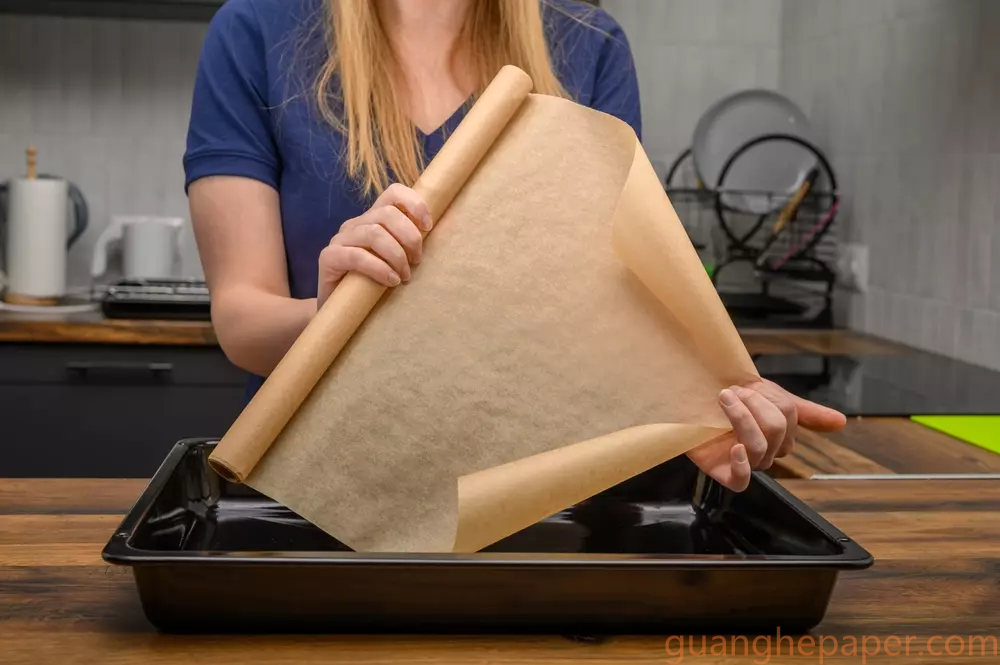
For bakeries, food processors, catering businesses, and packaging distributors, selecting a suitable Baking Paper Manufacturer requires attention to more than product appearance or purchasing cost. The paper must work reliably in a real production environment where heat, moisture, grease, handling, and packaging all influence performance. A professional manufacturer should therefore combine appropriate raw materials, controlled surface treatment, accurate converting, responsible quality management, and clear communication about the intended application.
The manufacturing process begins with the paper substrate. The base paper provides the physical structure of the finished material and must be selected according to the requirements of food preparation. It may need to withstand folding, cutting, stacking, wrapping, and movement between workstations. A substrate that is too weak may tear during handling, while a substrate that is too rigid may be difficult to fit into trays or molds. A balanced structure supports both practical use and later processing.
Surface characteristics also affect the next production stage. The paper should provide a stable foundation for coating so that the treatment can be distributed consistently. Variations in absorption, smoothness, or fiber structure may influence coating behavior and drying. This is why material selection and coating control should be treated as connected technical decisions rather than separate activities.
Silicone coating is widely used in baking and parchment-style paper because it creates a non-stick surface. This surface can help reduce adhesion between food and paper during baking or roasting. Cookies, pastries, breads, and other prepared foods may be removed more easily when the paper has suitable release properties. Easier release can help preserve food shape and reduce the amount of product left on trays or molds.
Coating consistency is particularly important for commercial production. A bakery may process many trays in a single shift, so repeated sticking or inconsistent release can create labor and material costs. Uneven coating may cause certain areas of a sheet or roll to behave differently from others. Controlled coating application and inspection help make the finished paper more predictable and support a smoother production workflow.
Grease resistance is another important function. Butter, oil, sauces, and other ingredients can migrate into ordinary paper, affecting its appearance and handling strength. A suitable coated surface helps limit grease penetration and keeps the material cleaner during use. This can be valuable in commercial kitchens, where excessive residue may increase cleaning requirements. It can also improve the appearance of food packaging and takeaway presentation.
Heat exposure must be considered according to the specific application. Baking, roasting, reheating, steaming, and air frying involve different combinations of temperature, moisture, airflow, and food contact. A paper product should be selected for its intended process rather than assumed to be suitable for every heating environment. Manufacturers with application knowledge can help buyers identify appropriate formats and provide guidance for responsible use.
Converting technology transforms large paper rolls into usable formats. Slitting can create different roll widths, while cutting can produce sheets for trays, molds, or packaging. Folding may be used for specialized liners or formats that require easier placement and storage. Accurate converting helps ensure that the paper can be handled efficiently and used with manual or automated equipment.
Format selection should begin with the customer’s workflow. A bakery may prefer pre-cut sheets for quick tray preparation. An industrial processor may need rolls for continuous feeding. A restaurant may require paper liners or wrapping formats for takeaway foods. A distributor may need individually packed sheets for retail or food-service customers. These requirements are different even when the materials are all described as baking paper.
Food-contact safety should be considered throughout manufacturing. Raw materials, coating substances, production equipment, inspection procedures, and packaging conditions all contribute to the suitability of the finished product. Buyers may require technical documents or compliance information for their own quality systems and target markets. The manufacturer should provide accurate documentation for the specific material and intended application.
Quality control should include more than a visual check of the final package. Paper surface condition, coating coverage, cutting accuracy, dimensions, packaging integrity, and traceability may all need attention. A product that looks acceptable but performs inconsistently can still create difficulties for the customer. For this reason, inspection should be integrated into the manufacturing process rather than treated as a final administrative formality.
Packaging protects the paper after production. Sheets may need support to prevent bending, while rolls may require protection against crushing and moisture. Suitable packing also helps maintain cleanliness during storage and transportation. International shipments may pass through several handling stages, so packaging design should reflect the risks associated with the product format and delivery route.
Storage conditions are equally relevant. Paper can be affected by humidity, dust, pressure, and improper handling. Coated products should remain protected until they are ready for use. Buyers should also maintain suitable warehouse conditions and avoid exposing the material to unnecessary moisture or compression. Proper storage helps preserve the paper’s intended physical and surface characteristics.
Customization is increasingly important for commercial customers. Businesses may request specific sheet sizes, roll widths, folding styles, package arrangements, or printed designs. A responsible development process should consider the food type, equipment, preparation method, packaging system, and storage environment before confirming a customized format. Clear communication at the beginning can reduce revisions and improve order accuracy.
Sustainability is another factor influencing procurement. Buyers may review unbleached paper, recycled material options, responsible sourcing, coating choices, and packaging efficiency. These considerations should be assessed together with food-contact suitability and actual performance. A material that fails during production may create additional waste through damaged food, repeated replacement, or inefficient handling.
International B2B buyers should also evaluate the manufacturer’s communication and supply capabilities. Samples, technical discussions, packaging confirmation, production schedules, and shipment preparation can all affect the success of an order. A supplier that understands the customer’s application can provide more useful recommendations and identify potential problems before production begins.
A dependable Baking Paper Manufacturer should connect material selection, silicone coating, converting, inspection, packaging, and customer support into one coordinated process. Businesses evaluating paper for baking, roasting, food preparation, or packaging can review available solutions at https://www.guanghepaper.com/product/ and discuss suitable materials with Zhejiang Guanghe New Materials Co., Ltd.

 English
 Arabic
 French
 Spanish
 Portuguese
 Deutsch
 Turkish
 Dutch
Dutch
 Italiano
 Russian
 Portuguese (Brazil)
 Greek
Greek
