


AI Marketing and Personalization: Transforming the Customer Experience
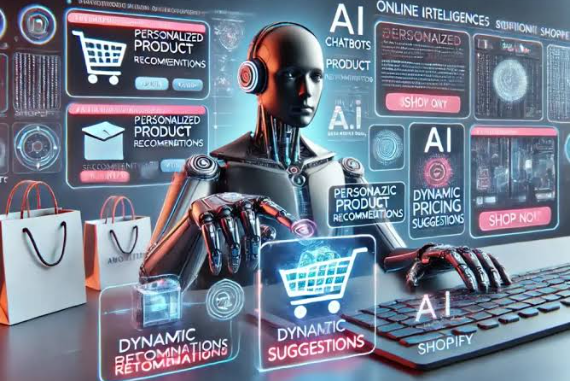
In today’s digital world, customers are surrounded by advertisements, emails, social media posts, product recommendations, and promotional messages. With so much content competing for their attention, traditional marketing methods are becoming less effective. Customers no longer want to receive generic messages that are designed for everyone. Instead, they expect businesses to understand their individual needs, interests, preferences, and behaviors. This is where Artificial Intelligence (AI) marketing and personalization have become increasingly important.
AI marketing uses artificial intelligence technologies to collect and analyze information, identify patterns, predict customer behavior, and help businesses make better marketing decisions. When AI is combined with personalization, companies can create marketing experiences that feel more relevant and meaningful to individual customers.
What Is AI Marketing?
AI marketing refers to the use of artificial intelligence to improve different areas of marketing. AI systems can process large amounts of information much faster than humans and can identify patterns that might otherwise be difficult to recognize.
Businesses can use AI to analyze customer interactions, purchasing behavior, website activity, search patterns, and responses to marketing campaigns. This information can then be used to determine what customers are likely to want or need.
For example, an online store can use AI to analyze what a customer has previously viewed or purchased. Based on this information, the system can recommend products that are more likely to interest that particular customer. Instead of showing the same products to everyone, the business can create a more personalized shopping experience.
Understanding Personalization in Marketing
Personalization means tailoring marketing content, products, offers, and communication to individual customers or specific groups of customers.
Traditional marketing often relies on broad categories such as age, gender, location, or income. AI allows businesses to go much further. It can examine customer behavior and create detailed insights based on how people actually interact with a brand.
For instance, a customer who frequently purchases sports equipment might receive recommendations for new sports products, while another customer who regularly buys books may receive personalized book suggestions. Both customers may visit the same website, but their experiences can be completely different.
Personalization makes customers feel that a business understands them rather than treating them as anonymous members of a large audience.
How AI Improves Personalization
One of the biggest advantages of AI is its ability to analyze huge amounts of customer data. Human marketers may struggle to examine thousands or millions of interactions individually, but AI can process this information quickly.
AI can identify patterns in customer behavior and use them to predict future interests. It can help answer questions such as:
-
What products is a customer likely to purchase?
-
What type of content might interest them?
-
When are they most likely to interact with a message?
-
Which marketing channel is most effective for them?
-
What offer might encourage them to complete a purchase?
These insights allow marketers to create more targeted campaigns.
AI can also personalize communication in real time. For example, if someone visits a website several times without purchasing a particular product, an AI-powered marketing system may identify this behavior and provide relevant information, recommendations, or an appropriate offer.
Personalized Content and Recommendations
Content personalization is another important application of AI marketing. Businesses produce large amounts of content, including articles, videos, emails, advertisements, and social media posts. However, not every piece of content is relevant to every customer.
AI can help determine which content is most appropriate for different audiences. A customer interested in technology may see technology-related content, while another person interested in fashion may receive fashion-related recommendations.
Product recommendations are also a common example of AI personalization. Online businesses can analyze previous purchases and browsing behavior to suggest products that match a customer's interests.
This can benefit both customers and businesses. Customers spend less time searching for relevant products, while businesses have more opportunities to generate sales.
AI-Powered Customer Communication
AI is also changing how companies communicate with their customers. AI-powered chatbots and virtual assistants can respond to questions, provide product information, and guide customers through different stages of the buying process.
When these systems are connected to customer information, they can provide more personalized interactions. Instead of giving every customer exactly the same response, an AI system can consider previous interactions and provide information that is more relevant to the individual's situation.
Personalized communication can also be used in email marketing. Instead of sending one generic email to an entire customer database, businesses can create different messages based on customer interests and behavior.
Benefits for Businesses
AI-driven personalization can provide several important benefits for businesses. First, it can improve customer engagement. People are more likely to pay attention to messages that are relevant to their interests.
Second, personalization can improve customer satisfaction. When customers can quickly find products, services, and information that match their needs, their overall experience can become more convenient.
Third, AI can help marketers work more efficiently. Instead of manually analyzing every customer interaction, marketers can use AI tools to identify patterns and generate useful insights.
AI can also help businesses make better decisions. By understanding customer behavior, marketers can determine which campaigns are performing well and which strategies need improvement.
Challenges of AI Personalization
Although AI personalization offers many advantages, it also creates challenges. One major concern is privacy. Personalization depends on customer information, and businesses must handle this information responsibly.
Customers may become uncomfortable if personalization becomes too intrusive. There is an important difference between making a useful recommendation and making a customer feel that a company knows too much about them.
Another challenge is accuracy. AI systems depend on the quality of the information they analyze. If the data is incomplete, outdated, or incorrect, the recommendations may also be inaccurate.
Businesses must therefore balance personalization with transparency, privacy, and responsible use of technology.
The Future of AI Marketing and Personalization
The future of marketing is likely to become increasingly personalized. AI technology will continue to help businesses understand customers and deliver more relevant experiences.
Instead of simply predicting what customers might purchase, future AI systems may help businesses anticipate customer needs before customers actively search for solutions. Marketing could become more interactive, adaptive, and responsive.
However, successful AI marketing will not depend only on technology. Businesses will also need to maintain trust with their customers. Customers want relevant experiences, but they also want control over their information and transparency about how their data is used.
The most successful companies will likely be those that combine technological innovation with a strong understanding of human behavior.
Conclusion
AI marketing and personalization are transforming the way businesses connect with customers. AI enables companies to analyze large amounts of information, understand customer behavior, predict preferences, and deliver more relevant content and recommendations.
Personalization can make marketing more useful for customers while helping businesses improve engagement, efficiency, and customer relationships. However, it must be used responsibly. Privacy, transparency, accuracy, and customer trust should remain important considerations.
Ultimately, AI should not replace the human side of marketing. Instead, it should help marketers understand their audiences better and create experiences that are more relevant and valuable. When used thoughtfully, AI-powered personalization can turn marketing from a one-size-fits-all approach into a more meaningful conversation between businesses and their customers.

 Arabic
 French
 Spanish
 Portuguese
 Deutsch
 Turkish
 Dutch
Dutch
 Italiano
 Russian
 Romaian
 Portuguese (Brazil)
 Greek
Greek
