


The “One More Repair” Trap: When Fixing an Old Car Stops Making Sense in Edmonton
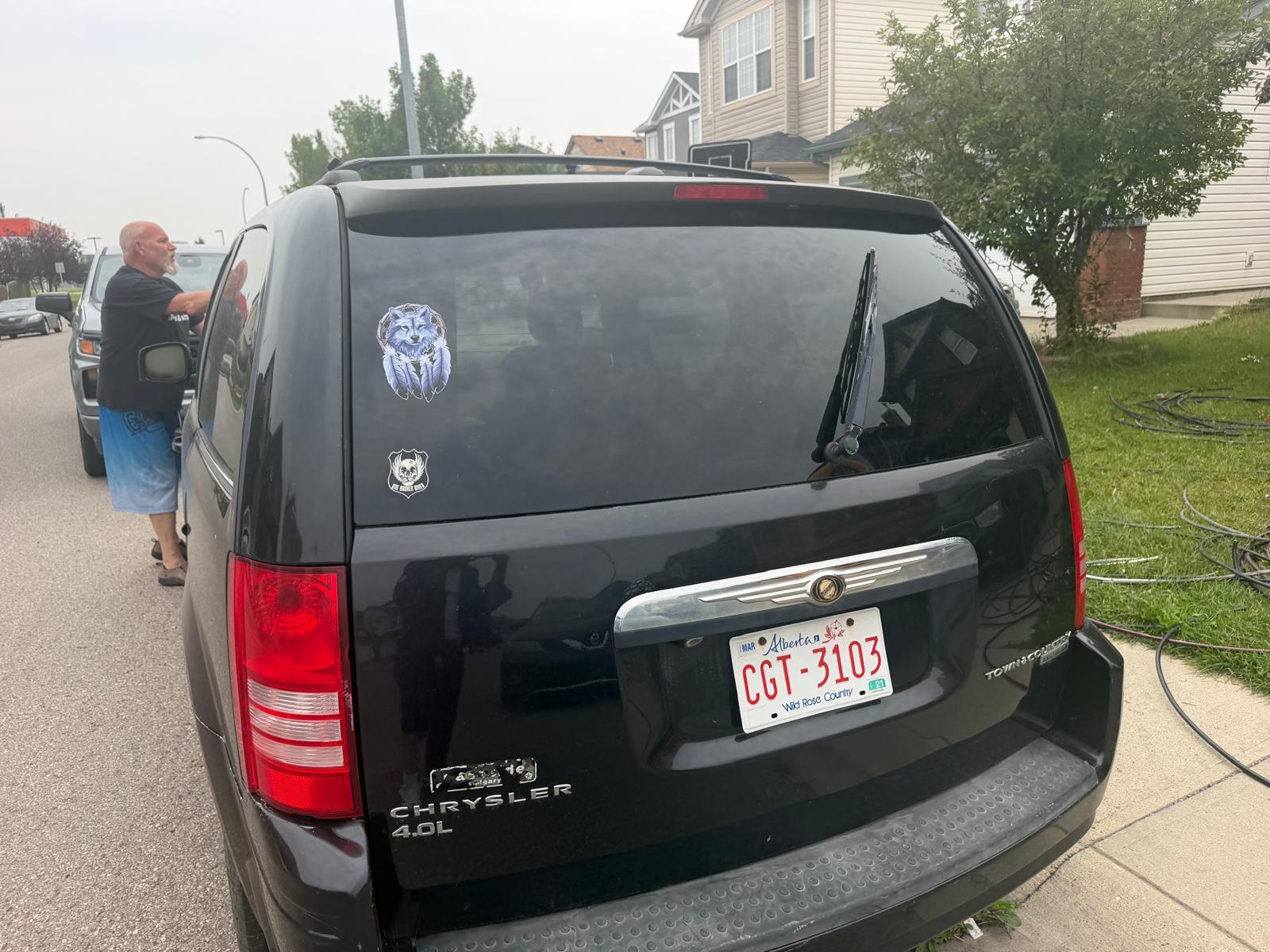
There is a moment almost every owner of an aging vehicle eventually faces.
The mechanic gives you the estimate. You look at the number, look at the car, and think:
“I’ll fix this one thing, then I’ll keep driving it.”
It sounds reasonable.
Maybe the repair is $600. Then another $900 repair appears a few months later. Then the battery, tires, brakes, suspension, or exhaust needs attention. Suddenly, the car that was supposed to be a cheap way to get around Edmonton has become an ongoing expense.
This is the “one more repair” trap.
The difficult part is knowing when a repair is actually an investment—and when you are simply putting more money into a vehicle that has reached the end of its practical life.
If you are dealing with an older, high-mileage, damaged, or unreliable vehicle in Edmonton, this guide can help you make that decision using numbers rather than emotion.
What Is the “One More Repair” Trap?
The trap begins with a small repair.
Your vehicle still starts. The body looks acceptable. You already know its history. Buying another car sounds expensive and inconvenient, so spending another few hundred dollars feels like the easier option.
But one repair does not always remain one repair.
An aging vehicle can develop several unrelated problems because different components are reaching the end of their service life.
For example:
- $700 for suspension work
- $1,000 for brakes and tires
- $1,200 for an exhaust or emissions-related repair
- $2,500 for transmission work
- $900 for electrical problems
None of these expenses necessarily means the mechanic is doing unnecessary work. The bigger question is whether the total cost of keeping the vehicle still makes financial sense.
That is where many Edmonton car owners get stuck.
Start With the Car’s Current Value—Not What You Paid
One of the biggest mistakes owners make is thinking about what they originally paid for the vehicle.
If you paid $12,000 for a car several years ago, that does not mean spending another $2,000 on it today automatically makes sense.
Instead, ask:
“What is this vehicle worth today in its current condition?”
Look at:
- Current mileage
- Mechanical condition
- Accident history
- Rust or body damage
- Interior condition
- Tire condition
- Warning lights
- Engine and transmission health
- Whether the vehicle runs and drives
- Local demand for the make and model
A vehicle with 250,000 kilometres, significant rust, a failing transmission, and multiple warning lights has a very different financial position from a well-maintained vehicle with 140,000 kilometres.
The repair decision should be based on today’s vehicle, not yesterday’s purchase price.
The Repair Cost Is Only Part of the Equation
Suppose your mechanic says a repair will cost $2,000.
That sounds like the entire decision.
It isn't.
Ask what else the vehicle is likely to need over the next 6–12 months.
If the car requires a $2,000 repair today but is also approaching the point where it needs tires, brakes, suspension work, or major engine maintenance, your actual cost of keeping it could be much higher.
Try this simple calculation:
Repair cost + likely upcoming maintenance + ownership costs = real cost of keeping the car
Then compare that number with your vehicle's current as-is value.
This does not produce a perfect answer, but it forces you to look beyond the immediate repair bill.
Edmonton Winters Can Change the Equation
Edmonton vehicles deal with demanding seasonal conditions.
Cold starts, snow, road salt, freeze-thaw cycles, potholes, and long winter periods can place additional stress on components such as batteries, tires, suspension systems, brakes, and electrical systems.
An older vehicle may also become less predictable when temperatures drop.
A car that works reasonably well during summer can suddenly develop starting problems, battery issues, coolant concerns, or other problems during winter.
That means timing matters.
If your vehicle is already unreliable and another major repair is approaching, ask yourself whether you want to depend on it through another Edmonton winter.
Sometimes the question isn't simply:
“Can I repair it?”
It is:
“Do I want to keep relying on this vehicle after I repair it?”
That is a much more useful question.
Watch for the “Repair Chain”
One of the clearest warning signs is what we can call a repair chain.
It looks something like this:
Repair → drive for a while → another major problem → repair → another problem
The individual repairs may each seem reasonable.
The problem is the pattern.
When multiple expensive systems begin requiring attention within a relatively short period, your vehicle may be entering a stage where maintenance becomes unpredictable.
This is especially important with older vehicles where the engine, transmission, suspension, electrical system, cooling system, and drivetrain have accumulated substantial wear.
You don't necessarily need to sell a car because it needs one expensive repair.
But several major repairs close together deserve a much closer financial review.
Don't Let Sunk Costs Make the Decision for You
“I've already spent so much on this car.”
That sentence keeps many people repairing vehicles longer than they originally intended.
But money you spent last year is already gone.
Whether you spent $3,000 or $10,000 maintaining the vehicle does not automatically make another $2,000 repair a good decision.
Ask a different question:
“If I did not already own this vehicle, would I spend $2,000 today to buy it in its current condition?”
Your answer can reveal a lot.
If the answer is no, take a closer look at why you are continuing to invest in it.
When Selling As-Is Starts Making More Sense
Selling an old vehicle as-is can become a practical option when the cost and uncertainty of continued ownership outweigh the benefits.
This can apply to vehicles with:
- Failed transmissions
- Blown or severely damaged engines
- Major electrical problems
- Extensive body damage
- Significant rust
- Very high mileage
- Multiple warning lights
- Failed inspections
- Long periods of inactivity
- Four flat or badly damaged tires
- Vehicles that no longer run
You do not necessarily need to repair everything before selling.
In fact, putting thousands of dollars into a vehicle immediately before selling it may not return that money through the final selling price.
For some owners, getting a cash offer for an old car in Edmonton and comparing it with the cost of repairs can provide a much clearer picture.
Try the 10-Minute Edmonton Car Decision Test
Before authorizing another major repair, write down these five numbers:
1. Current as-is value:
What could the vehicle realistically be worth today?
2. Immediate repair cost:
How much is required to get it back on the road?
3. Upcoming repairs:
What else is likely to need attention soon?
4. Annual ownership cost:
Insurance, registration, fuel, maintenance, parking, and unexpected repairs.
5. Replacement cost:
What would you realistically spend to replace this vehicle with dependable transportation?
Now compare the entire picture.
You may discover that repairing the car is still the logical choice.
Or you may discover that continuing to repair it is simply delaying the inevitable.
What If the Car Doesn't Run?
A non-running vehicle can feel impossible to sell.
Many owners assume a car needs to start, drive, and pass an inspection before it has any meaningful value.
That isn't necessarily the case.
Even a non-running vehicle can have value based on its parts, components, metal, model, condition, and recyclability.
This is where junk car removal in Edmonton or a local cash-for-cars service may be worth investigating.
Before spending several thousand dollars trying to make an old vehicle roadworthy again, compare the repair route with an as-is sale.
That comparison can save you from turning a manageable problem into a much larger expense.
The Real Question Isn't “Can I Fix It?”
Almost any vehicle can become repairable if enough money is spent.
The better question is:
“Is repairing this vehicle the smartest use of my money?”
That distinction matters.
If a relatively reliable vehicle needs one predictable repair, fixing it may make perfect sense.
If an aging vehicle needs one major repair after another, has declining value, and is becoming increasingly unreliable, the financial calculation changes.
For Edmonton drivers, the decision becomes even more important when winter reliability, transportation needs, and unexpected breakdown costs are involved.
Before approving that one more repair, step back.
Look at the vehicle's current value. Look at the repair estimate. Look at what is likely to break next. Look at how much you have already spent—and then deliberately ignore the sunk cost.
Sometimes the smartest way to save money isn't finding a cheaper repair.
It's knowing when to stop repairing.
If your old vehicle has reached that point, compare the cost of fixing it with the possibility of selling it as-is for cash. A clear comparison can turn a frustrating car problem into a straightforward financial decision.

 English
 Arabic
 French
 Spanish
 Portuguese
 Deutsch
 Turkish
 Dutch
Dutch
 Italiano
 Russian
 Romaian
 Greek
Greek
