


Sanitary Fittings Supplier for Reliable Industrial Applications
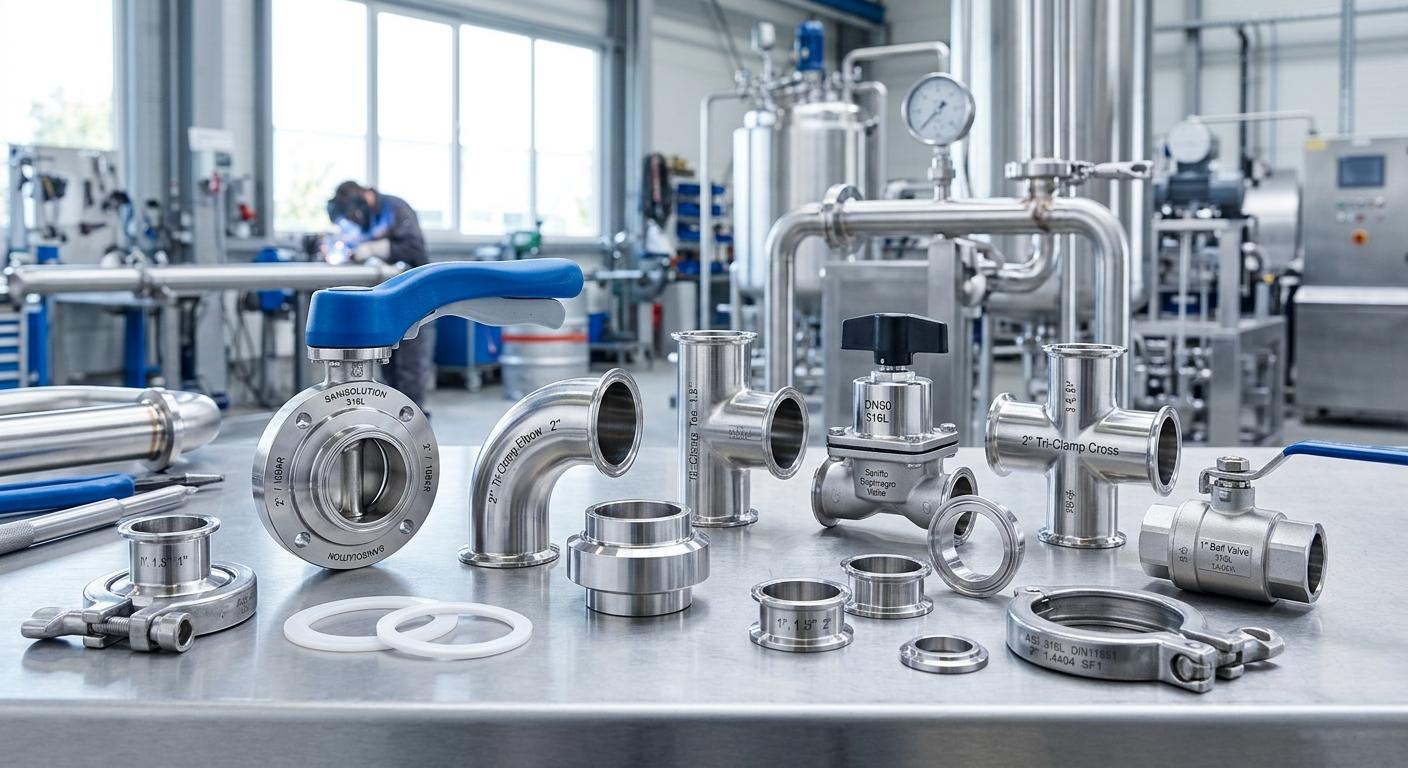
Finding the right sanitary fittings supplier is important for businesses that depend on clean, safe, and efficient fluid handling systems. Sanitary fittings are widely used in industries where hygiene and contamination control are essential, including food and beverage processing, dairy production, pharmaceuticals, biotechnology, cosmetics, and other applications that require clean processing environments.
A reliable supplier does more than provide fittings. The right supplier can help businesses choose suitable components, maintain consistent quality, and find products that match their existing piping systems. This makes supplier selection an important part of maintaining an efficient and dependable sanitary process.
What Are Sanitary Fittings
Sanitary fittings are specially designed pipe components used in systems where cleanliness, smooth surfaces, and easy maintenance are priorities. Unlike standard industrial fittings, sanitary components are manufactured to minimize areas where bacteria, residue, or other contaminants can collect.
Common sanitary fittings include elbows, tees, reducers, clamps, unions, adapters, caps, and other connection components. Many are manufactured from stainless steel because it offers durability, corrosion resistance, and a smooth surface suitable for hygienic processing environments.
The design of these fittings allows them to be cleaned efficiently while maintaining the integrity of the processing system. Depending on the application, fittings may be used with sanitary tubing, pumps, valves, tanks, and other process equipment.
Why Choosing the Right Supplier Matters
The quality of sanitary fittings can directly affect the performance and reliability of a processing system. A dependable sanitary fittings supplier should offer components that meet the required dimensional, material, and application specifications.
Poor-quality fittings may create installation problems, leaks, premature wear, or cleaning difficulties. In industries handling food, beverages, medicines, or other sensitive products, these issues can also create hygiene concerns.
A reputable supplier can make the purchasing process easier by providing accurate product information and helping customers select suitable fittings. This is especially useful when a system requires specific sizes, connection types, materials, or configurations.
Stainless Steel Sanitary Fittings
Stainless steel is one of the most common materials used for sanitary fittings. Stainless steel fittings are valued for their strength, corrosion resistance, and ability to withstand demanding processing conditions.
The smooth internal surface is particularly important because it helps reduce the accumulation of product residue and makes cleaning easier. Depending on the application, different stainless steel grades may be selected to provide the required level of corrosion resistance and durability.
A quality supplier should clearly identify the material and specifications of each fitting. This allows customers to select components that are appropriate for their operating environment rather than relying only on appearance or price.
Common Types of Sanitary Fittings
There are several types of sanitary fittings available for different piping requirements. Sanitary elbows are used to change the direction of a pipeline, while tees allow a process line to branch into multiple directions. Reducers connect pipes or tubes of different sizes.
Sanitary clamps and unions provide convenient connections that can be removed when equipment needs cleaning, inspection, or maintenance. Adapters can be used to connect different connection styles, while caps and end fittings can close unused sections of a piping system.
The correct fitting depends on factors such as tube size, pressure, temperature, fluid characteristics, connection method, and cleaning requirements.
Applications Across Different Industries
Sanitary fittings are used in many industries where hygiene and process consistency are important. Food processing facilities may use them for milk, beverages, sauces, oils, and other liquid products. Dairy operations also rely heavily on hygienic piping systems for processing and transferring milk and related products.
Pharmaceutical and biotechnology facilities require carefully designed processing systems to minimize contamination risks. Sanitary fittings can also be found in cosmetic manufacturing, breweries, water treatment applications, and other facilities where clean fluid handling is essential.
Because every application has different requirements, businesses should select fittings based on the specific operating conditions of their systems.
What to Look for in a Sanitary Fittings Supplier
When comparing suppliers, businesses should consider more than product availability. Product quality, material specifications, sizing options, connection types, and manufacturing standards should all be reviewed before placing an order.
A good sanitary fittings supplier should provide clear product specifications and help customers identify the correct components. Availability is also important, particularly for facilities that need replacement parts quickly to minimize equipment downtime.
Customer support can be another valuable factor. Suppliers with knowledgeable teams can help customers understand product specifications and identify fittings that are compatible with existing equipment.
Quality and Compatibility
Compatibility is essential when purchasing sanitary fittings. Even a high-quality component may not be suitable if its dimensions or connection style do not match the existing piping system.
Before ordering, customers should confirm tube dimensions, fitting type, material, connection method, and other relevant specifications. It is also useful to consider the temperature and pressure conditions in which the fitting will operate.
Working with an experienced supplier can help reduce the possibility of ordering incorrect components and make installation and maintenance more straightforward.
Cost-Effective Maintenance Solutions
Sanitary fittings are relatively small components, but they play an important role in the overall performance of a processing system. Keeping appropriate replacement fittings available can help maintenance teams respond quickly when a component needs to be replaced.
Choosing durable fittings may also reduce the frequency of replacement and help maintain consistent system performance. Instead of focusing only on the initial purchase price, businesses should consider product quality, service life, compatibility, and maintenance requirements.
A supplier that offers a broad selection of sanitary components can make it easier for businesses to source multiple parts from one reliable source.
Final Considerations
Selecting a dependable sanitary fittings supplier can support efficient maintenance, hygienic processing, and reliable fluid handling. Businesses should look for suppliers that offer quality stainless steel components, accurate specifications, suitable connection options, and dependable customer support.
Whether the requirement involves a single replacement fitting or components for a complete processing system, choosing products that match the application is essential. With the right supplier and properly selected fittings, businesses can maintain cleaner, more reliable, and efficient piping systems for demanding industrial environments.

 English
 Arabic
 French
 Spanish
 Portuguese
 Deutsch
 Turkish
 Italiano
 Russian
 Romaian
 Portuguese (Brazil)
 Greek
Greek
