


Closed Loop Recycling | From Plastic Waste to New Materials
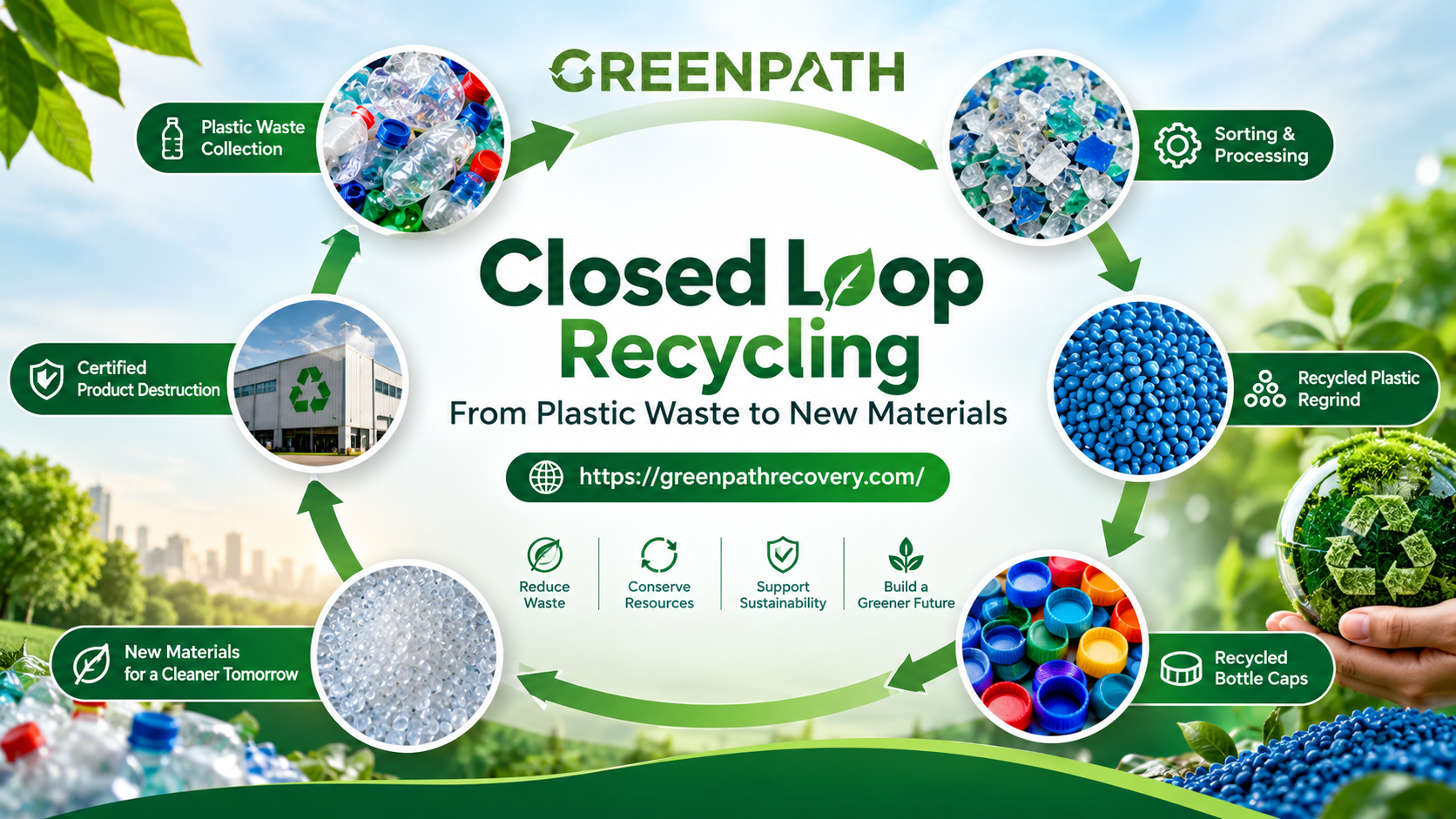
Plastic waste is a growing challenge for businesses across manufacturing, retail, packaging, distribution, and other industries. However, discarded plastic does not always have to become waste with no further purpose. With the right collection, sorting, processing, and recovery systems, used plastic can be transformed into useful materials for new products.
Closed Loop Recycling provides a practical approach to achieving this goal. Instead of treating plastic as a one-time resource, it focuses on recovering materials and returning them to productive use. For businesses, this approach can support waste reduction, resource efficiency, and broader sustainability initiatives.
What Is Closed Loop Recycling?
Closed Loop Recycling is a system in which recovered materials are collected, processed, and returned to the manufacturing cycle. The objective is to keep valuable resources in use for as long as possible rather than sending them to disposal.
The process typically begins when a business generates plastic waste. Materials are collected and separated according to polymer type, color, condition, and other characteristics. After sorting, suitable plastics can be cleaned, shredded, processed, and converted into forms that may be used for manufacturing.
This approach creates a connection between waste management and material production. Instead of simply removing plastic from a facility, businesses can help recover materials that have potential value in another stage of the supply chain.
How the Closed-Loop Process Works
A successful Closed Loop Recycling program generally involves several stages.
1. Collection
Plastic materials are collected from manufacturing facilities, warehouses, commercial locations, distribution centers, or other business operations.
2. Sorting
Collected plastics are separated according to material type and quality. Proper sorting is important because different polymers require different processing methods.
3. Processing
Suitable materials are cleaned and processed through methods such as shredding, grinding, or other size-reduction processes. This creates a consistent feedstock for further recycling.
4. Quality Control
Recovered materials are evaluated for contamination, composition, consistency, and other quality characteristics. Effective quality control helps determine the appropriate end use.
5. Return to Manufacturing
Processed materials can then enter appropriate manufacturing applications. This completes the circular process and gives recovered plastic another useful purpose.
The Role of Recycled Plastic Regrind
One important output of plastic recovery is Recycled Plastic Regrind. Regrind refers to plastic that has been mechanically processed into smaller pieces, typically through shredding or grinding.
Recycled Plastic Regrind can be produced from various plastic waste streams, depending on the material and processing requirements. Its potential applications depend on factors such as polymer type, cleanliness, particle size, and consistency.
For businesses, recovering suitable plastic as Recycled Plastic Regrind can be more valuable than treating the material as ordinary waste. It can provide manufacturers with a processed material stream that may be suitable for additional recycling or manufacturing applications.
Recycled Bottle Caps and Material Recovery
Bottle caps are another plastic stream that can be recovered through commercial recycling programs. Because caps are frequently made from materials such as polypropylene or other recyclable polymers, separating them correctly can help improve material recovery.
Recycled Bottle Caps can be collected, sorted, and processed according to their polymer characteristics. Instead of allowing used caps to become part of a mixed waste stream, businesses can direct suitable material toward dedicated recycling processes.
The recovery of Recycled Bottle Caps also demonstrates why proper sorting matters. Keeping compatible materials together can improve processing efficiency and help create more consistent recycled material.
For businesses that generate large volumes of packaging waste, recovering Recycled Bottle Caps can become an important component of a broader plastic recovery strategy.
Certified Product Destruction and Responsible Waste Management
Not every product can simply be placed into a conventional recycling stream. Businesses may also handle expired, defective, obsolete, recalled, or otherwise unsuitable products that need controlled destruction.
Certified Product Destruction provides a documented approach for securely destroying products while helping businesses maintain appropriate records of the destruction process.
When applicable materials can be recovered after destruction, Certified Product Destruction can work alongside recycling strategies. This can help businesses manage sensitive products responsibly while identifying recyclable material streams that may have recovery value.
A comprehensive program may therefore combine Certified Product Destruction with sorting and material recovery, depending on the nature of the products involved and the applicable requirements.
Why Closed-Loop Recycling Matters for Businesses
The benefits of Closed Loop Recycling extend beyond simply reducing the amount of waste sent for disposal.
Reduces Material Waste
Recovering usable plastic can prevent valuable polymers from being unnecessarily discarded.
Supports Resource Efficiency
Recycling allows businesses to make better use of materials that have already entered the economy.
Encourages Circular Supply Chains
A closed-loop approach connects waste recovery with manufacturing, helping create a more circular flow of materials.
Creates Better Visibility
Structured recycling programs can help businesses understand what materials they generate, where those materials go, and how they can be recovered.
Supports Sustainability Goals
Companies increasingly have waste-reduction and sustainability objectives. A well-managed recycling program can contribute to these broader business goals.
Building an Effective Plastic Recovery Program
Implementing Closed Loop Recycling successfully requires planning. Businesses should first identify the types of plastic generated at their facilities and determine which materials can be separated for recovery.
Clear labeling and employee education can help prevent contamination. Separate collection containers for different material streams can also make sorting easier.
Businesses should consider working with a recycling partner that has experience handling commercial plastic materials. The right partner can help establish collection procedures, identify suitable material streams, process recovered plastics, and provide information about the resulting materials.
For example, a business generating large quantities of plastic packaging may be able to recover Recycled Plastic Regrind or separate Recycled Bottle Caps rather than placing these materials into a general waste stream.
From Waste Management to Material Recovery
Traditional waste management often focuses on removing unwanted materials from a business. A more resource-conscious approach asks a different question: What useful materials can be recovered from this waste?
That question is at the heart of Closed Loop Recycling.
When plastic is collected and processed correctly, it can potentially move from a business's waste stream into a new material stream. Recycled Plastic Regrind can become a valuable recovered feedstock, while suitable Recycled Bottle Caps can be processed separately according to their material characteristics.
At the same time, Certified Product Destruction can provide businesses with a controlled solution for products that require secure disposal or destruction.
The Future of Closed-Loop Plastic Recovery
As businesses continue to look for practical ways to reduce waste and improve resource efficiency, Closed Loop Recycling is becoming an increasingly relevant part of commercial recycling strategies.
The future of plastic recovery depends on effective collection, accurate sorting, responsible processing, and reliable end markets for recycled materials. Businesses can contribute to this system by keeping recyclable materials separated and partnering with experienced recycling providers.
The goal is not simply to recycle more plastic. It is to create better systems in which recovered materials can remain useful for longer.
Conclusion
Closed Loop Recycling offers businesses a practical way to rethink plastic waste by connecting collection, processing, and material recovery with future manufacturing opportunities. From Recycled Plastic Regrind and Recycled Bottle Caps to controlled Certified Product Destruction, different recovery solutions can work together as part of a comprehensive commercial recycling strategy.
For businesses, the most effective approach begins with understanding their waste streams, separating suitable materials, reducing contamination, and working with an experienced recycling partner. By turning discarded plastic into usable resources, companies can take meaningful steps toward a more efficient and circular material economy.

 Arabic
 French
 Spanish
 Portuguese
 Deutsch
 Turkish
 Dutch
Dutch
 Italiano
 Russian
 Romaian
 Portuguese (Brazil)
 Greek
Greek
