


Portable Power Stations for Home Backup: A Complete Guide
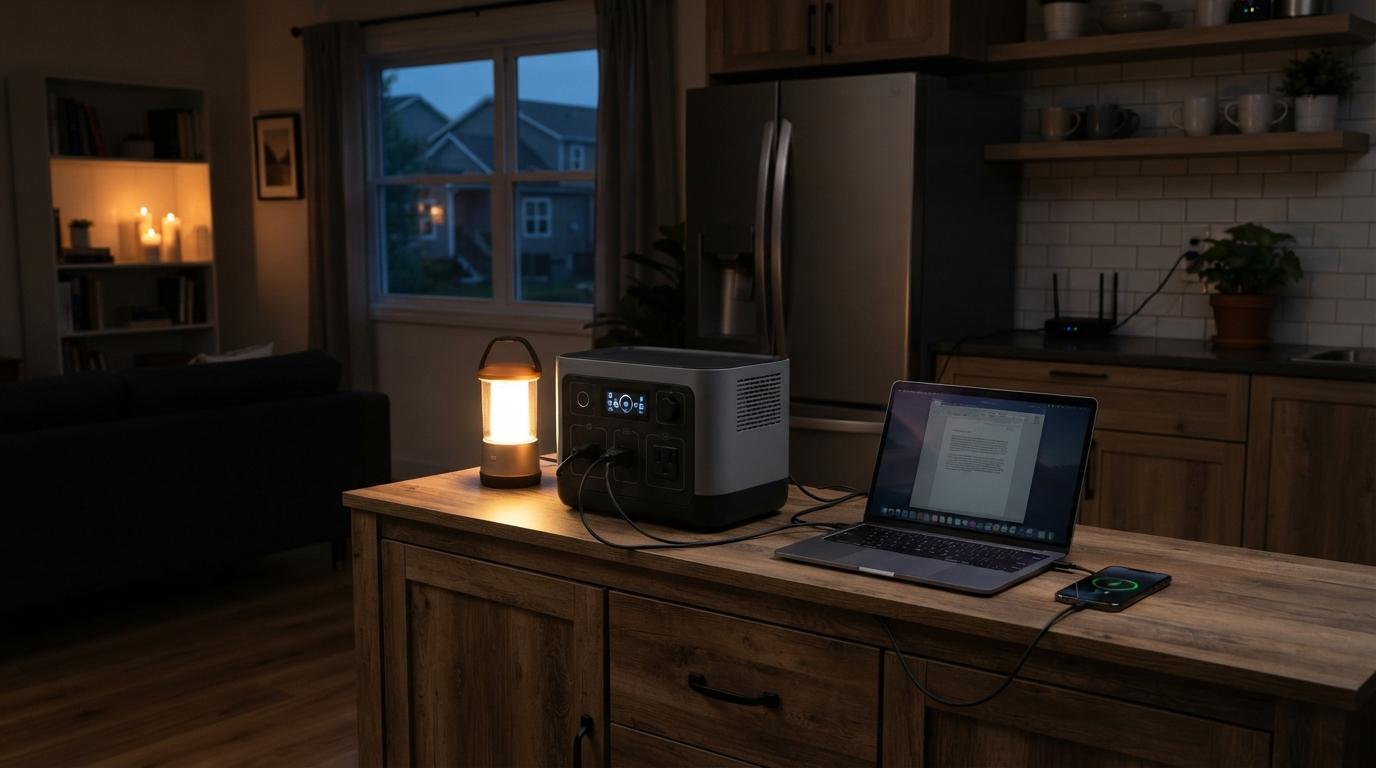
Unexpected power outages can interrupt daily routines, affect essential appliances, and make it difficult to stay connected when electricity is unavailable. From keeping a Wi-Fi router running to maintaining lighting and charging important devices, households need a dependable way to manage temporary power interruptions. Portable Power Stations provide a practical battery-based option for storing electricity and supplying power to compatible household devices when the main electrical supply goes down. Their usefulness depends on battery capacity, power output, charging options, and the equipment a household needs to operate. Understanding these factors helps homeowners choose a suitable backup solution without spending money on unnecessary capacity.
What Are Portable Power Stations?
A portable power station is a rechargeable battery system that stores electrical energy and delivers it through different output ports. Most models combine a battery, an inverter, a battery management system, and several connections for powering compatible electronics and appliances.
Unlike conventional fuel-powered generators, battery-powered stations do not burn petrol, diesel, or gas while supplying electricity. They also do not produce exhaust fumes during operation, although charging equipment and connected appliances must still be used according to their safety instructions. This makes them useful for selected indoor backup applications when the unit is designed for the intended environment.
Portable power stations can be recharged through a wall outlet, compatible solar panels, or supported vehicle charging connections. Once charged, they provide stored electricity until the battery reaches its lower operating limit. They do not create electricity independently, so households must plan how to recharge them during extended outages.
Why Homeowners Use Portable Power Stations During Power Outages
Power interruptions can happen because of severe weather, electrical maintenance, equipment failures, or problems with the local electricity supply. Even a short outage can affect internet access, lighting, communication, and refrigeration.
A suitable power station can help keep selected essential devices running. Small electronics such as mobile phones, tablets, LED lights, and laptops generally require less power than household appliances. A larger system may support a refrigerator or other compatible equipment if its continuous output, startup capability, and stored energy are sufficient.
The main advantage is flexibility. Instead of powering an entire property, homeowners can prioritize the devices they need most. This approach can reduce unnecessary energy consumption and extend the time available before recharging becomes necessary.
However, not every appliance is suitable for every station. Electric heaters, kettles, ovens, air conditioners, and other high-demand equipment may exceed the output rating of smaller models. Choosing equipment according to actual household needs is more effective than relying on a product's advertised capacity alone.
Understanding Battery Capacity and Power Output
Two specifications matter most when comparing backup power equipment: battery capacity and output power. Although they are related, they describe different capabilities.
Battery Capacity Measured in Watt-Hours
Battery capacity is usually expressed in watt-hours (Wh). It indicates how much energy a battery can store. A higher capacity can generally provide longer operating time for the same connected load, although actual performance depends on conversion losses, battery limits, and the operating conditions.
For example, a device that consistently consumes 50 watts would use approximately 200 watt-hours over four hours. A power station would need additional stored energy to cover conversion losses and maintain a reasonable reserve.
This calculation provides a starting point for estimating requirements. Actual runtime can differ because many appliances do not consume a constant amount of electricity.
Output Power Measured in Watts
Output power, measured in watts (W), indicates how much electricity a station can supply at a given moment. If several devices operate simultaneously, their combined demand must remain within the station's continuous output rating.
Motor-driven appliances, including refrigerators and some pumps, may briefly require more power when starting than they use during normal operation. This is known as startup or surge demand. A station must support that temporary requirement as well as the appliance's normal running load.
Capacity and output should therefore be checked together. A large battery cannot compensate for an inverter that cannot run the intended appliance, and a powerful inverter cannot provide long runtime if the battery stores too little energy.
How to Estimate Your Household's Backup Requirements
The easiest way to select a suitable system is to identify the devices that matter most during an outage. Begin with essential equipment rather than trying to run every appliance in the house.
Consider a household that wants to power LED lights, a Wi-Fi router, mobile phones, and a laptop. Each device has a different energy requirement, and the total depends on how long each one operates. Adding their estimated consumption produces a more useful capacity target than choosing a station based on appearance or price.
For a simple estimate, multiply each device's wattage by the number of hours it will run. Add the results together to calculate the approximate energy requirement in watt-hours. Then allow extra capacity for conversion losses, battery reserve, and variations in actual consumption.
For example, a 40-watt device running for five hours uses approximately 200 watt-hours. If several devices are used throughout the day, calculate each one separately and add their energy requirements.
Check the labels or manuals of your appliances whenever possible. Actual consumption may differ from a general estimate, particularly for refrigerators, which cycle on and off instead of drawing the same power continuously.
Which Household Devices Can a Power Station Support?
The equipment a station can run depends on its output rating, battery capacity, available ports, and compatibility with the connected devices.
Lighting and Communication Equipment
LED lights, smartphones, tablets, and Wi-Fi routers are useful priorities during an outage. Their relatively modest power requirements can make it easier to maintain basic household comfort and communication without quickly draining the battery.
Keep essential charging cables available and group the devices you expect to use. This reduces the chance of wasting stored energy on unnecessary charging or leaving important equipment without power when it is needed.
Computers and Work Equipment
Laptops, monitors, and selected office devices can help people continue working during short interruptions. Before connecting desktop computers or other sensitive equipment, check the station's output characteristics and the device manufacturer's requirements.
A model with suitable outlets and sufficient output may support a small home office. If uninterrupted operation is essential, check whether the station includes a compatible uninterruptible power supply (UPS) function and whether its transfer time meets the connected equipment's needs.
Refrigerators and Other Appliances
Refrigeration may be a priority because an extended outage can put stored food at risk. However, refrigerator compatibility requires more than checking its normal running wattage. The station must handle startup demand and provide enough usable energy for the expected operating period.
High-power appliances require additional care. Heating elements, cooking appliances, and air conditioners can drain batteries quickly or exceed the station's output limit. Review the manufacturer's specifications before connecting them, and avoid using extension arrangements or adapters that are not rated for the load.
Choosing the Right Battery Type
Battery chemistry affects lifespan, weight, cost, and charging performance. Two common options in portable power equipment are lithium iron phosphate (LiFePO4) and nickel manganese cobalt (NMC) lithium-ion batteries.
LiFePO4 batteries are often selected for their cycle-life characteristics and thermal stability. They can be suitable for households expecting to recharge and use their backup system regularly. NMC batteries can offer a compact design and a useful balance of energy storage and weight, depending on the model.
Neither battery type should be judged in isolation. Compare the complete specifications, warranty terms, recommended operating temperatures, protection systems, and expected cycle life. Battery lifespan also depends on charging habits, storage conditions, depth of discharge, and the manufacturer's stated testing method.
A well-designed battery management system is important because it helps monitor battery conditions and provides protection against specified electrical or temperature limits. Always follow the instructions supplied with the exact unit.
Solar Charging for Extended Outages
Solar charging can provide another way to replenish stored electricity when grid power is unavailable. A compatible portable power station can receive energy from supported solar panels, allowing a household to recharge during daylight hours.
The amount of energy collected depends on sunlight, panel orientation, shading, weather, and the station's maximum accepted solar input. A panel's advertised wattage is not a guarantee of the same continuous output throughout the day.
Before purchasing panels, check their voltage range, connector type, and compatibility with the power station. Exceeding the station's permitted input limits can create a safety risk or prevent the equipment from operating correctly.
Solar charging is especially useful when outages last longer than the battery's initial runtime. Nevertheless, households should not assume that sunlight will always be available or that a small panel will recharge a large battery quickly. A realistic plan may combine stored energy, grid charging when available, and solar input when conditions permit.
Important Safety Considerations
Although battery-powered equipment avoids the exhaust produced by fuel-burning generators, it still requires careful handling. Read the product manual before connecting appliances, charging the battery, or using additional batteries and solar panels.
Place the station on a stable, dry surface with adequate ventilation around any cooling openings. Keep it away from excessive heat, water, and flammable materials, and do not operate damaged equipment. Use only approved charging accessories and cables rated for the intended connection.
Never connect a power station to a household wall outlet in an attempt to energize the home's wiring. Supplying selected home circuits requires suitable transfer equipment and installation by a qualified professional. Improper backfeeding can endanger utility workers and occupants and may damage electrical equipment.
Follow the manufacturer's instructions for medical devices and other critical equipment. If electricity is essential for a medical need, arrange a suitable backup plan with the relevant healthcare provider rather than relying on an unverified runtime estimate.
Maintaining a Portable Power Station
Regular maintenance helps keep a backup system ready when an outage occurs. Follow the manufacturer's guidance for charging, storage, inspection, and periodic battery checks.
Recharge the unit as recommended rather than leaving it depleted for long periods. Some models have specific storage charge levels or periodic maintenance requirements, so one routine may not suit every battery system.
Inspect cables, connectors, and the enclosure for visible damage. Keep charging ports clean and dry, and avoid storing the unit in environments outside its specified temperature range. If the station displays a fault warning, stop using it as directed by the manufacturer and investigate the cause before reconnecting equipment.
It is also sensible to test the devices you plan to use during an outage. A brief, controlled test can reveal missing cables, incompatible connections, or unexpected power consumption before an emergency occurs.
Common Mistakes to Avoid When Buying
One common mistake is choosing a station based only on battery capacity. Buyers may overlook output limits, leaving them unable to operate an appliance even when substantial energy remains stored.
Another mistake is assuming that advertised runtime applies to every situation. Runtime depends on the actual power draw, inverter efficiency, operating temperature, battery condition, and whether multiple devices run together.
Ignoring charging options can also create problems. A station that meets everyday needs may become less useful during a prolonged outage if it cannot be recharged through an available source.
Finally, consider the complete cost of the setup. Solar panels, compatible cables, additional batteries, and professional installation for approved home integration may add to the initial price. A realistic budget should include the accessories needed for the intended use rather than the battery unit alone.
How to Choose a Reliable Home Backup Solution
Start by defining which household devices must remain operational and how long they should run. Calculate the expected energy demand, confirm the highest simultaneous power requirement, and check whether any appliance needs extra startup power.
Next, compare usable battery capacity, continuous output, surge rating, charging speed, supported solar input, available ports, battery chemistry, and warranty coverage. Consider the unit's weight and storage location as well, especially if different household members may need to move or operate it.
Review the operating instructions and support arrangements before making a purchase. A clear warranty, accessible technical documentation, and compatible accessories can matter just as much as an impressive specification sheet.
The best choice is not necessarily the largest or most expensive model. It is the system that can safely support the devices you genuinely need, for the required duration, with a practical way to recharge it.
Conclusion
Power interruptions are easier to manage when households have a realistic plan for keeping essential equipment running. Portable Power Stations can provide stored electricity for lighting, communication devices, computers, and selected appliances when their capacity and output match the load. Battery chemistry, charging methods, safety features, and maintenance requirements also influence long-term usefulness.
Before choosing a unit, calculate your expected energy consumption, check startup requirements, and confirm how you will recharge the battery during an extended outage. Careful planning helps avoid overspending on unnecessary capacity or selecting a system that cannot meet essential needs. By comparing specifications and following safe operating practices, homeowners can choose Portable Power Stations that provide practical and dependable backup support for their household.
Frequently Asked Questions
What can a portable power station run during a power outage?
Depending on its capacity and output, it may run phones, laptops, LED lights, routers, and selected household appliances. Always confirm the power requirements and compatibility of each device.
How long can a portable power station provide backup power?
Runtime depends on usable battery capacity and the total energy consumed by connected devices. A low-power device may operate for many hours, while a high-demand appliance can drain the battery much faster.
Can a portable power station run a refrigerator?
Some models can, provided they support the refrigerator's running wattage and startup surge. Their battery capacity must also be sufficient for the required operating time.
Can solar panels recharge a power station during an outage?
Yes, if the station supports solar charging and the panels meet its compatibility requirements. Charging speed varies with sunlight, weather, panel positioning, and the station's accepted input limit.
Are portable power stations safe for indoor use?
Many are designed for indoor use because they do not produce combustion exhaust during battery operation. However, users must follow the manual, maintain suitable ventilation around cooling openings, and keep the unit away from water and excessive heat.
How should I choose the right capacity for my home?
List the appliances you need, estimate their wattage and operating hours, and add their energy requirements together. Allow for conversion losses and reserve capacity, then confirm that the station's output can handle the devices operating simultaneously.

 English
 Arabic
 Spanish
 Portuguese
 Deutsch
 Turkish
 Dutch
Dutch
 Italiano
 Russian
 Romaian
 Portuguese (Brazil)
 Greek
Greek
