


3 Types of Auditory Hallucinations and How to Respond
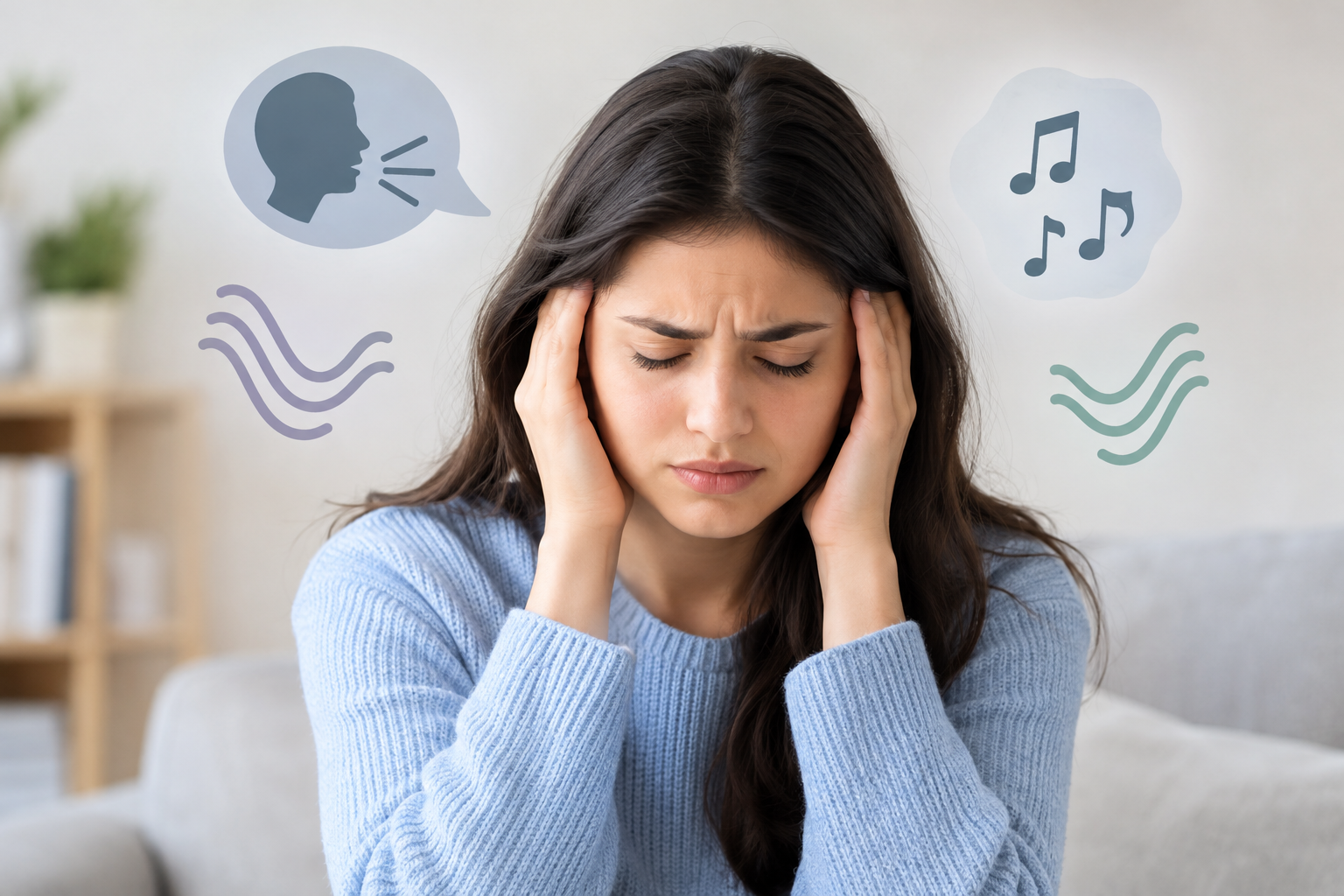
Auditory hallucinations can be confusing, frightening, or difficult to explain. A person experiencing them may hear voices, music, or other sounds that seem completely real, even when no external sound source is present. These experiences can affect sleep, concentration, relationships, and everyday activities.
Understanding the 3 types of auditory hallucinations can help individuals and families recognize what is happening and determine when professional support may be necessary. Although auditory hallucinations are sometimes associated with psychiatric conditions, they can also occur because of hearing problems, sleep disturbances, medication effects, or certain medical conditions.
The most important step is to understand the experience without judgment and seek an appropriate evaluation when needed. With the right assessment and treatment, many underlying causes can be managed effectively.
What Are Auditory Hallucinations?
Auditory hallucinations occur when someone perceives sounds without a corresponding external sound source. Unlike ordinary sounds, which originate from the surrounding environment, these experiences may seem to come from inside the head or from a specific location nearby.
For example, someone might hear a person calling their name while alone in a room. Another person may hear repeated conversations or sounds that other people cannot hear.
These experiences can vary in frequency, intensity, and emotional impact. Some people find them mildly distracting, while others experience significant distress.
Auditory hallucinations are not always a sign of a serious mental health condition. Their meaning depends on several factors, including the type of sound, when it occurs, the person's medical history, and whether other symptoms are present.
What Are the 3 Types of Auditory Hallucinations?
Auditory hallucinations are often described according to the sounds a person experiences. Three commonly discussed forms include verbal hallucinations, nonverbal auditory hallucinations, and musical hallucinations.
These categories help describe the experience, but they are not a complete diagnostic system. A mental health or medical professional must consider the broader symptoms and circumstances before identifying a possible cause.
1. Verbal Auditory Hallucinations
Verbal auditory hallucinations involve hearing spoken words or voices when nobody is speaking externally. They are among the most widely recognized forms of auditory hallucinations.
A person might hear a familiar voice, an unfamiliar speaker, or what seems like a conversation between several people.
Common experiences include:
-
Hearing someone call their name when nobody has done so.
-
Perceiving voices that comment on everyday activities.
-
Hearing conversations that appear to happen nearby.
-
Experiencing voices that criticize, threaten, or give instructions.
-
Hearing words or sentences that seem to come from inside the head.
The emotional impact varies. Some people feel confused or distracted, while others become anxious, frightened, or suspicious of their surroundings.
Verbal hallucinations can occur in different circumstances, including certain psychiatric disorders, severe mood episodes, sleep-related conditions, neurological illnesses, and substance-related states. Hearing loss and some medications may also contribute to unusual auditory experiences.
What can help?
A professional assessment can help identify possible causes and determine the most appropriate treatment. Depending on the situation, treatment may involve psychiatric care, medication review, psychological support, or evaluation for a medical or hearing-related condition.
If voices tell someone to hurt themselves or another person, or the person feels unable to resist dangerous instructions, urgent professional assistance is important.
2. Nonverbal Auditory Hallucinations
Nonverbal auditory hallucinations involve hearing sounds that do not contain recognizable speech. These sounds may resemble noises from the environment, even when no external source can be identified.
Examples may include:
-
Buzzing, humming, or ringing sounds.
-
Knocking, tapping, or footsteps.
-
Whistling or unexplained noises.
-
Beeping or other repetitive sounds.
-
Sounds that seem to come from another room.
It is important to distinguish hallucinations from tinnitus and other hearing-related symptoms. Tinnitus commonly involves ringing, buzzing, or similar sounds without an external source. However, it is not automatically classified as an auditory hallucination in the same sense as hearing voices or music.
Environmental noise, hearing impairment, ear conditions, sleep deprivation, and neurological or psychiatric conditions may contribute to different auditory experiences.
The pattern matters. For instance, persistent ringing may call for an evaluation by a healthcare professional who specializes in hearing, while complex sounds accompanied by changes in thinking or behavior may require a broader medical assessment.
What can help?
Keep track of when the sounds occur, how long they last, and whether they affect one or both ears. Note any recent medication changes, sleep problems, hearing changes, or other symptoms.
Avoid assuming that unexplained sounds automatically indicate a psychiatric disorder. A suitable evaluation can help distinguish between auditory hallucinations, tinnitus, environmental sounds, and other possible explanations.
3. Musical Auditory Hallucinations
Musical auditory hallucinations involve hearing melodies, songs, instrumental music, or familiar tunes when no corresponding music is playing.
Someone might hear a song repeatedly, recognize a melody from childhood, or perceive music coming from another room despite having no identifiable sound source.
Possible experiences include:
-
Hearing familiar songs while sitting in a quiet room.
-
Perceiving instrumental music without actual instruments nearby.
-
Hearing the same melody repeatedly.
-
Experiencing music that seems to continue even after checking the environment.
Musical hallucinations can occur in people with hearing impairment, particularly when the brain has reduced access to external sound. They may also be associated with neurological conditions, certain medications, sleep-related factors, or other medical circumstances.
The experience can be unsettling, especially when it interrupts sleep or makes concentration difficult. However, hearing music without an external source does not automatically mean someone has a severe psychiatric illness.
What can help?
A healthcare professional may review hearing health, medications, neurological symptoms, and overall medical history. Depending on the suspected cause, a hearing assessment, medical examination, or mental health evaluation may be appropriate.
If the experience begins suddenly, becomes persistent, or occurs alongside confusion or other new neurological symptoms, seek prompt medical attention.
What Causes Auditory Hallucinations?
The causes of auditory hallucinations vary from person to person. Identifying the underlying reason is often more useful than focusing only on the sounds themselves.
Potential contributing factors include:
Mental health conditions: Some people with schizophrenia-spectrum disorders or severe mood disorders experience hallucinations. However, hallucinations alone are not enough to establish a diagnosis.
Sleep deprivation: Significant sleep loss can affect perception, concentration, and emotional regulation. Some people also experience auditory phenomena while falling asleep or waking up.
Hearing impairment: Changes in hearing can contribute to tinnitus and, in some cases, complex auditory experiences, including musical hallucinations.
Medication or substance effects: Certain prescription medicines, intoxicating substances, and withdrawal states can affect perception. Never stop a prescribed medication without consulting the clinician responsible for your care.
Neurological or medical conditions: Some neurological disorders, infections, metabolic disturbances, and other medical problems may produce changes in perception. Sudden symptoms, particularly with confusion or other neurological changes, require urgent assessment.
Understanding the possible causes helps healthcare professionals recommend care that addresses the underlying problem instead of treating every auditory experience in the same way.
When Should You Seek Professional Help?
Occasional unusual sounds around sleep transitions may not indicate a serious problem. However, recurring hallucinations, increasing distress, or changes in daily functioning deserve professional attention.
Consider arranging an evaluation if you or someone you care about:
-
Frequently hears voices or sounds that others cannot hear.
-
Has difficulty sleeping because of auditory experiences.
-
Feels frightened, confused, or distracted by the sounds.
-
Experiences changes in mood, behavior, concentration, or relationships.
-
Has recently started a medication or experienced a significant health change.
-
Develops hallucinations alongside hearing difficulties or other physical symptoms.
Seek emergency medical help if hallucinations occur with sudden confusion, severe disorientation, new weakness, difficulty speaking, or other signs of a potentially serious medical problem. If voices encourage immediate harm to yourself or someone else, do not remain alone if it is unsafe; contact emergency services or a crisis professional.
How Virtual Mental Health Services Can Help
Virtual mental health services can provide a convenient way to connect with a qualified mental health professional from home. For people who feel uncomfortable discussing unusual perceptions in person, a private telehealth appointment may make the first conversation easier.
A virtual appointment may help with:
Initial symptom discussions: A clinician can ask when the sounds started, how frequently they occur, and whether they affect sleep, emotions, or daily activities.
Mental health assessment: A qualified professional can explore associated symptoms, medical history, and potential risk factors. A virtual visit cannot rule out every medical or neurological cause, so an in-person evaluation may be necessary.
Treatment planning: Depending on the assessment, care may involve psychotherapy, psychiatric treatment, medication management, or referral to another healthcare professional.
Follow-up care: Remote appointments can make it easier to discuss changes in symptoms, review treatment progress, and maintain contact with a care team.
Support for families: When appropriate and with the person's consent, family members may receive guidance on responding calmly and supporting treatment.
Telehealth is not suitable for every situation. Someone experiencing severe confusion, an immediate safety risk, or symptoms that require a physical examination should receive urgent in-person or emergency care.
For a virtual appointment, choose a quiet, private space and use a secure connection. Write down the sounds you experience, when they occur, how they affect you, and any recent changes in sleep or medication. These details can help make the consultation more productive.
How to Support Someone Experiencing Auditory Hallucinations
If a family member or friend reports hearing voices, music, or unexplained sounds, responding with patience can help them feel safer.
Listen without ridicule or blame. You do not need to agree that the sounds are externally real to acknowledge that the experience feels real to the person.
You might say, "I understand that this is upsetting. I cannot hear what you are hearing, but I want to help you find support."
Avoid arguing aggressively, making assumptions about a diagnosis, or encouraging the person to act on frightening or dangerous instructions. Instead, ask how the experience affects them and whether they would feel comfortable speaking with a healthcare professional.
If the person feels unsafe or describes instructions to cause harm, take the situation seriously and seek appropriate urgent assistance.
Frequently Asked Questions
Are auditory hallucinations always a sign of schizophrenia?
No. Auditory hallucinations can occur for several reasons, including sleep-related experiences, hearing impairment, medication effects, neurological conditions, and certain mental health disorders. A professional evaluation is needed to understand the likely cause.
Can stress cause auditory hallucinations?
Severe stress and sleep disruption may contribute to unusual perceptual experiences in some people. However, recurring or distressing symptoms should not automatically be attributed to stress without considering other possible causes.
Can auditory hallucinations go away?
Yes, in some cases. Symptoms may improve when an underlying cause is identified and appropriately treated. The outcome depends on the cause, the person's overall health, and their response to treatment.
Are virtual mental health services appropriate for hallucinations?
They can be useful for an initial mental health discussion, ongoing psychiatric care, and treatment follow-ups. However, sudden symptoms, serious medical concerns, or immediate safety risks may require in-person or emergency evaluation.
Conclusion
Understanding the 3 types of auditory hallucinations—verbal, nonverbal, and musical—can help people describe their experiences and recognize when support may be needed. Each type can have different contributing factors, so it is important not to assume a diagnosis based on the sounds alone.
If auditory experiences are recurring, distressing, or interfering with everyday life, speaking with a qualified healthcare professional is a sensible next step. Virtual mental health services may offer a convenient starting point for assessment and follow-up, while medical or emergency care remains essential when symptoms indicate a more urgent problem.
The goal is not simply to stop the sounds. It is to understand why they are happening, protect the person's well-being, and find appropriate support.

 English
 Arabic
 French
 Spanish
 Portuguese
 Deutsch
 Turkish
 Italiano
 Russian
 Romaian
 Portuguese (Brazil)
 Greek
Greek
