


How Vastu for Home Design Can Be Applied Without Major Structural Changes
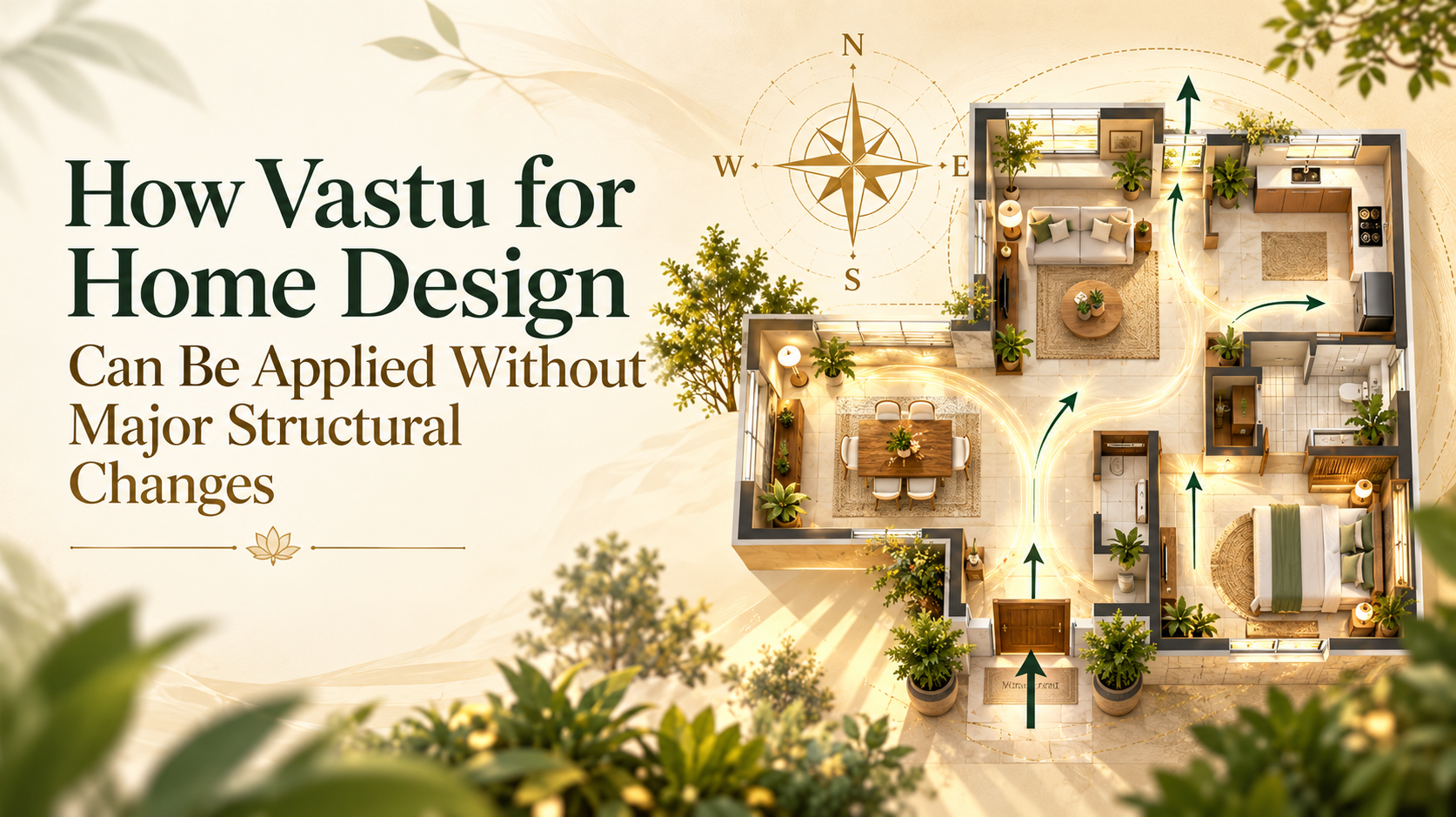
Excerpt:
Vastu for home design can be considered in existing properties without automatically requiring major structural modifications.
Furniture placement, room organization, lighting, ventilation, and the use of available spaces may offer practical opportunities for adjustment.
A property-specific approach helps homeowners consider traditional Vastu principles while maintaining safety and everyday functionality.
Introduction
Many homeowners become interested in Vastu Shastra after moving into a house or purchasing an apartment.
However, existing properties often have fixed entrances, kitchens, bathrooms, structural walls, and windows.
Changing these elements may be expensive, technically difficult, or restricted by building regulations.
Fortunately, applying vastu for home design does not always require major structural changes.
Homeowners can begin by reviewing the existing layout and identifying elements that can be adjusted without affecting the building's structure.
Furniture arrangement, room usage, storage, lighting, and interior organization may provide practical opportunities.
The goal should be to incorporate relevant traditional preferences without compromising safety, comfort, or functionality.
Understand the Existing Layout
Before making changes, review the property's current floor plan.
Identify the main entrance, kitchen, bedrooms, bathrooms, living room, windows, balconies, and circulation areas.
Confirm the orientation of the property.
This information helps homeowners understand how the existing layout relates to traditional vastu shastra for home principles.
It also reveals which elements are fixed and which can be modified.
Identify What Can Be Changed
Not every part of a house offers the same flexibility.
Structural columns, beams, load-bearing walls, plumbing shafts, and major service systems generally require professional assessment before modification.
Furniture, storage units, lighting fixtures, and the use of individual rooms may be easier to adjust.
A practical vastu for home plan review should distinguish between these categories.
This can prevent unnecessary renovation expenses.
Organize the Main Entrance
In many apartments and existing houses, relocating the entrance is not practical.
Instead, homeowners can focus on its organization and functionality.
The entrance should remain accessible, appropriately illuminated, and free from unnecessary obstruction.
Shoe storage, cabinets, and decorative elements should not restrict movement.
These adjustments can improve usability without structural changes.
Rearrange Living Room Furniture
Furniture placement is one of the simplest ways to modify a living room.
Homeowners can review the arrangement of sofas, tables, television units, and storage.
The objective should be to maintain clear circulation and make effective use of natural light.
When applying home plan design vastu, traditional furniture-placement preferences can be considered where practical.
However, furniture should not block windows, doors, or ventilation openings.
Adapt the Existing Kitchen
Kitchens are often difficult to relocate because they depend on plumbing, ventilation, electrical systems, and other services.
Instead of moving the kitchen, homeowners can review its internal arrangement.
Consider whether the cooking area, sink, refrigerator, preparation surfaces, and storage are positioned conveniently.
Traditional vastu shastra for home may include recommendations about cooking direction, but safety and efficient workflow should remain priorities.
Small organizational changes may improve the kitchen without requiring reconstruction.
Review Bedroom Furniture Placement
Bedrooms often allow greater flexibility in furniture arrangement.
Homeowners can evaluate the position of beds, wardrobes, desks, and storage units.
The arrangement should support comfortable movement and provide access to windows and doors.
When considering vastu for home design, traditional preferences can be incorporated where the existing room dimensions allow.
The bedroom should remain comfortable and practical.
Create a Dedicated Prayer Area
A separate prayer room may not be possible in every home.
However, a compact prayer area can sometimes be incorporated within an existing room.
Traditional Vastu commonly considers the northeast for prayer spaces.
The actual location should depend on available space and family requirements.
A small, organized area may be more practical than constructing additional walls.
Improve Natural Light
Natural light can influence how a room feels and functions.
Homeowners can review whether large furniture, heavy curtains, or unnecessary partitions are blocking available daylight.
Appropriate window treatments can help manage glare while allowing useful light.
These changes do not require altering the building's structure.
Improve Ventilation
Ventilation deserves attention in existing properties.
Ensure that available windows and ventilation openings remain functional.
Kitchens and bathrooms may require suitable exhaust systems.
Where airflow is limited, homeowners can consult relevant professionals about practical ventilation improvements.
A Vastu Shastra house plan review should not recommend blocking essential ventilation openings.
Organize Storage
Poor storage can make a house feel congested.
Review wardrobes, kitchen cabinets, shoe storage, utility areas, and general household storage.
Consider whether items can be organized more efficiently.
Storage solutions should support circulation rather than obstruct it.
Reconsider Room Usage
Sometimes, changing how an existing room is used may be more practical than modifying its structure.
A spare bedroom might become a home office, while a small study could serve as a prayer or meditation area.
The best arrangement depends on family requirements and the available floor plan.
A flexible vastu for home plan can evaluate these possibilities.
Use Lighting Thoughtfully
Lighting can improve the functionality of rooms that receive limited natural daylight.
Task lighting is useful in kitchens, study areas, and workspaces.
Ambient lighting can support living rooms and bedrooms.
Lighting changes should follow electrical safety requirements.
Avoid Unnecessary Demolition
Homeowners should be cautious about recommendations that require removing walls, shifting bathrooms, or altering structural elements.
Such modifications may affect building safety, plumbing, waterproofing, and legal compliance.
Before making structural changes, consult an architect, structural engineer, or other relevant professional.
Traditional preferences should never override safety requirements.
When Professional Guidance May Help
A property-specific Vastu consultation can help homeowners understand how traditional principles relate to their existing layout.
An architect or qualified building professional can assess the feasibility of proposed changes.
Together, these perspectives can help distinguish practical adjustments from modifications that may be unnecessary or unsafe.
Conclusion
Applying vastu for home design to an existing property does not always require major construction work.
Furniture arrangement, room usage, storage, lighting, ventilation, and entrance organization can provide opportunities for practical adjustments.
A customized approach to vastu shastra for home helps homeowners consider traditional preferences while respecting the limitations of the existing building.
The most effective changes are those that maintain safety, functionality, and comfortable everyday living.

 English
 Arabic
 French
 Spanish
 Portuguese
 Deutsch
 Turkish
 Dutch
Dutch
 Italiano
 Russian
 Romaian
 Greek
Greek
