


How Deep-Space Exploration Is Creating New Opportunities for Propulsion Manufacturers
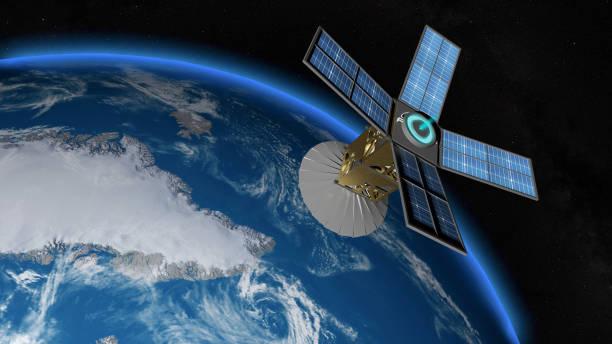
Space Propulsion Market to Reach USD 17.1 Billion by 2033
Overview
The global space propulsion market is entering a period of significant transformation as satellite deployment, commercial space activities, and deep-space exploration gain momentum. Growing investments from government space agencies and private aerospace companies are increasing demand for reliable, efficient, and cost-effective propulsion technologies.
The expansion of low Earth orbit (LEO) satellite constellations, rising launch frequency, and growing interest in lunar and planetary missions are creating new opportunities for propulsion system manufacturers. Technologies such as electric propulsion, chemical propulsion, and hybrid systems are becoming increasingly important for satellite positioning, orbital maintenance, and spacecraft manoeuvring.
According to the market estimates provided for this analysis, the global space propulsion market was valued at USD 6.9 billion in 2025 and is projected to reach USD 17.1 billion by 2033, registering a CAGR of 12.3% during the forecast period.
Space Propulsion Market Snapshot
-
Market Size (2025): USD 6.9 Billion
-
Projected Market Size (2033): USD 17.1 Billion
-
CAGR (2026–2033): 12.3%
-
Key Technologies: Chemical, electric, and hybrid propulsion
-
Major Applications: Satellites, launch vehicles, spacecraft, and deep-space missions
-
Key Growth Factors: Satellite constellations, commercial space investments, and exploration programmes
Request a Sample PDF: https://m2squareconsultancy.com/request-sample/space-propulsion-market/635
Key Growth Drivers of the Space Propulsion Market
1. Expansion of Satellite Constellations
The deployment of large satellite constellations is a major factor supporting market growth. Commercial operators are launching satellites for broadband connectivity, Earth observation, navigation, and communication services.
These satellite networks require propulsion systems for orbital insertion, station-keeping, collision avoidance, and end-of-life disposal. As constellation deployment increases, demand for compact, efficient, and dependable propulsion solutions is expected to grow.
2. Increasing Investments in Space Exploration
Government agencies and private space companies are investing in lunar exploration, Mars missions, scientific spacecraft, and other deep-space programmes. These missions require advanced propulsion technologies capable of supporting long-duration operations and complex orbital manoeuvres.
The growing focus on space exploration is encouraging innovation in high-efficiency propulsion systems and next-generation spacecraft technologies.
3. Growth in Commercial Space Activities
The expansion of the commercial space industry is increasing demand for launch services, satellite deployment, in-space transportation, and spacecraft operations. Lower launch costs and the growing participation of private aerospace companies are supporting a broader range of space missions.
This trend is creating opportunities for propulsion suppliers to develop scalable solutions for commercial satellites, launch vehicles, and emerging in-space services.
Emerging Trends in Space Propulsion Technology
Electric Propulsion Adoption
Electric propulsion systems, including Hall-effect thrusters and ion propulsion, are gaining attention because of their high propellant efficiency. They are particularly suitable for satellite station-keeping, orbit raising, and long-duration spacecraft operations.
Development of Green Propellants
Spacecraft manufacturers are exploring alternative propellants that can reduce toxicity and simplify handling compared with certain conventional propellants. These technologies could support safer and more efficient spacecraft operations, subject to mission requirements and qualification.
Reusable Launch Systems
The development of reusable launch vehicles is influencing propulsion engineering and system design. Reusability requires propulsion systems that can deliver consistent performance across multiple missions while meeting demanding reliability and maintenance requirements.
Advanced In-Space Mobility
Growing interest in satellite servicing, orbital transfers, and space logistics is creating opportunities for propulsion technologies designed for manoeuvrability and in-space transportation.
Market Segmentation
The space propulsion market can be analysed across several important segments:
-
By propulsion type: Chemical propulsion, electric propulsion, and hybrid propulsion.
-
By component: Thrusters, propellant management systems, power processing units, and propulsion control systems.
-
By platform: Satellites, launch vehicles, and spacecraft.
-
By application: Satellite operations, launch missions, orbital manoeuvring, and deep-space exploration.
-
By end user: Government space agencies, commercial space companies, and defence organisations.
Electric propulsion is particularly relevant to satellite operators seeking improved propellant efficiency, while chemical propulsion remains important for high-thrust applications and launch-related operations.
Read Full Report:
https://m2squareconsultancy.com/reports/space-propulsion-market
Regional Outlook
North America: The region benefits from established aerospace companies, government space programmes, commercial launch providers, and substantial investment in satellite infrastructure.
Europe: European space initiatives, satellite manufacturing capabilities, and investments in advanced propulsion research are supporting regional industry development.
Asia-Pacific: Growing space programmes, satellite deployment, and investments in domestic launch capabilities are creating opportunities for propulsion manufacturers across the region.
Rest of the World: Emerging space programmes and increasing participation in satellite-based services are gradually expanding demand for propulsion technologies.
Competitive Landscape
The space propulsion industry includes established aerospace contractors, satellite technology providers, and specialised propulsion developers. Competition is shaped by propulsion efficiency, reliability, system weight, mission suitability, cost, and technological innovation.
Companies active in the broader space propulsion ecosystem include:
-
ArianeGroup
-
Airbus
-
Thales Alenia Space
-
Northrop Grumman
-
L3Harris Technologies
-
Boeing
-
Lockheed Martin
-
Safran
-
OHB SE
-
Moog Inc.
The competitive landscape continues to evolve as companies invest in electric propulsion, advanced chemical systems, reusable launch technologies, and next-generation spacecraft platforms. This list represents selected industry participants rather than a verified market-share ranking.
Challenges in the Space Propulsion Market
Despite strong growth opportunities, the market faces several challenges. Developing and qualifying propulsion systems requires significant research and development investment, extensive testing, and compliance with demanding safety and mission-reliability standards.
Other challenges include supply-chain constraints, complex component manufacturing, propellant storage requirements, and the technical difficulty of operating propulsion systems in harsh space environments. Smaller manufacturers may also face barriers related to capital requirements and access to launch opportunities.
Future Outlook
The space propulsion market is expected to benefit from the continued expansion of satellite constellations, commercial launch activity, and deep-space exploration. Demand for efficient electric propulsion, advanced chemical systems, and emerging in-space mobility solutions is likely to influence product development and investment strategies.
As satellite networks become more extensive and space missions more complex, propulsion technologies will remain essential to spacecraft performance and mission success. Manufacturers that combine reliability, efficiency, and cost-effective engineering may be well positioned to capture future opportunities.
Frequently Asked Questions
1. What is the global space propulsion market size in 2025?
The global space propulsion market was valued at USD 6.9 billion in 2025, according to the estimates provided for this analysis.
2. What is the projected space propulsion market size by 2033?
The market is projected to reach USD 17.1 billion by 2033.
3. What is the expected CAGR of the space propulsion market?
The market is expected to register a CAGR of 12.3% during the forecast period.
4. What are the major types of space propulsion systems?
Major types include chemical propulsion, electric propulsion, and hybrid propulsion systems.
5. What is driving demand for space propulsion technologies?
Key factors include satellite constellation expansion, lower launch costs, commercial space investments, and growing government and private-sector exploration programmes.
6. Which companies operate in the space propulsion industry?
Selected participants include ArianeGroup, Airbus, Thales Alenia Space, Northrop Grumman, L3Harris Technologies, Boeing, Lockheed Martin, Safran, OHB SE, and Moog Inc.
Conclusion
The global space propulsion market is evolving alongside the expanding commercial and government space ecosystem. Increasing satellite deployment, advancements in propulsion engineering, and investment in deep-space exploration are creating opportunities across the industry. With the market projected to reach USD 17.1 billion by 2033 at a CAGR of 12.3%, propulsion technology is set to remain a critical part of the next generation of space infrastructure.
About M2Square Consultancy
M2 Square Consultancy is a purpose-driven market research and consulting firm dedicated to turning data into insight. Established in 2023, the company helps businesses make strategic, informed decisions through robust feasibility studies, competitor intelligence, and trend forecasting
Get in Touch
Ready to elevate your strategy or explore custom market insights? Reach out to the team directly:
Email: sales@m2squareconsultancy.com
Phone (India): +91 80978 74280
Phone (US): +1 929 447 0100

 English
 Arabic
 Spanish
 Portuguese
 Deutsch
 Turkish
 Dutch
 Italiano
 Russian
 Romaian
 Portuguese (Brazil)
 Greek
