


Understanding Inverter Stability in Weak Renewable Energy Grids
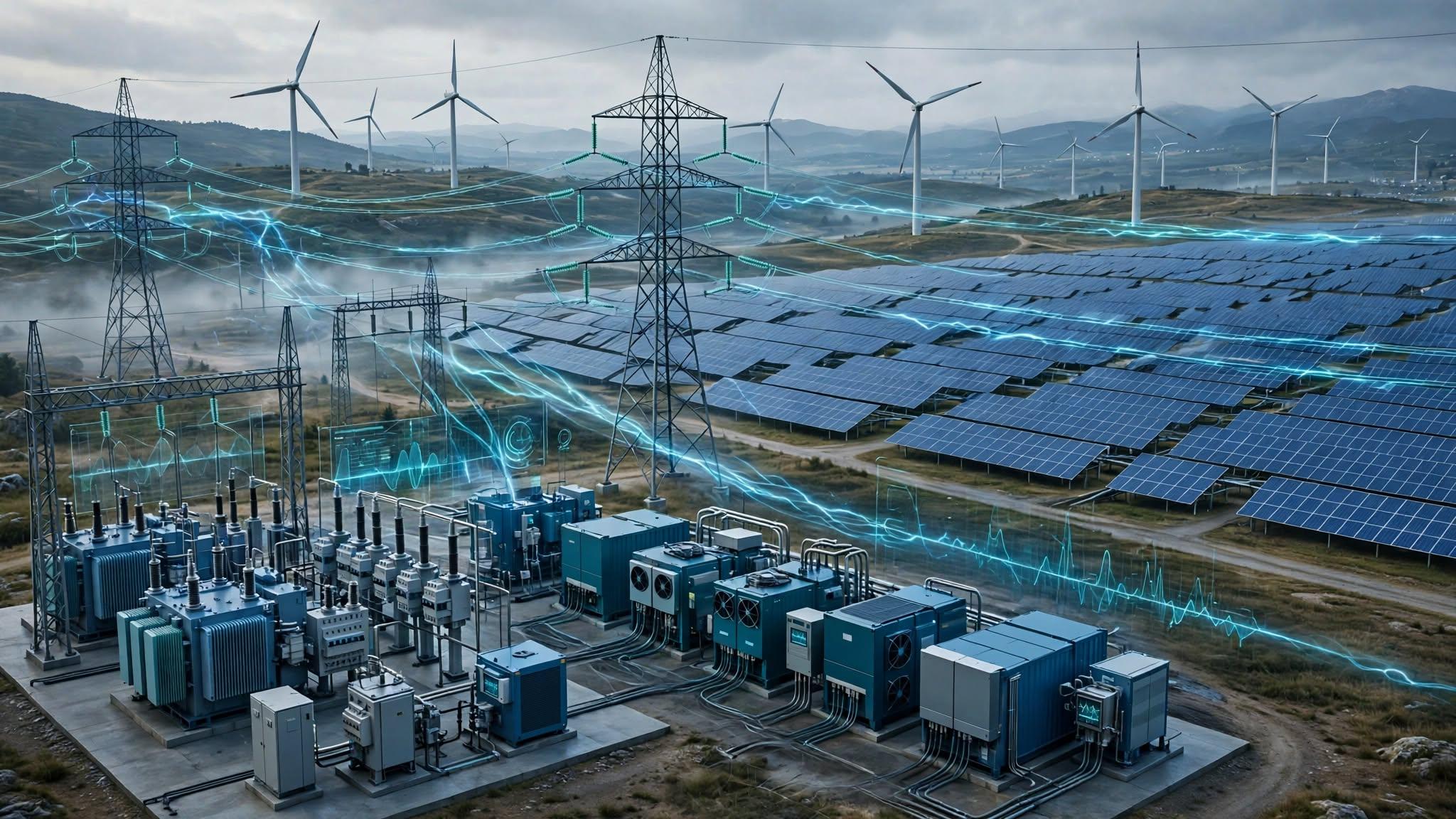
Renewable energy projects are becoming an essential part of modern power systems. Utility-scale solar farms, wind energy facilities, and battery energy storage systems are helping utilities and developers meet growing electricity demand while supporting cleaner energy generation. However, connecting these resources to the grid is not always straightforward. One important challenge is operating in areas where the electrical grid is relatively weak.
Weak grid conditions can influence how renewable energy facilities generate, deliver, and maintain stable electrical power. They can also create challenges for inverter controls, voltage regulation, and overall system reliability. As renewable energy penetration increases, understanding these challenges becomes increasingly important for project developers, utilities, and electrical engineers.
So, can weak grid conditions affect renewable energy project performance? Absolutely. The impact depends on the strength of the electrical network, inverter characteristics, control strategies, and the ability of the connected system to maintain stable operation.
1. What Makes an Electrical Grid Weak?
A weak electrical grid is generally characterized by a relatively high electrical impedance and limited short-circuit strength at a particular connection point. In simple terms, the grid has less capacity to maintain a stable voltage when electrical disturbances or changes in power flow occur.
One common way to evaluate grid strength is through the Short Circuit Ratio (SCR), which compares the available short-circuit capacity at the point of interconnection (POI) with the rated power of the connected generation facility.
A lower SCR generally indicates a weaker grid and potentially greater sensitivity to changes in active and reactive power.
Weak grid conditions are often encountered in remote renewable energy locations, including large solar installations, wind farms, and areas with long transmission lines. These locations may offer excellent renewable energy resources but have limited electrical infrastructure.
Understanding grid strength early in project development helps engineers identify potential connection challenges before they affect commissioning or commercial operation.
2. How Weak Grid Conditions Affect Inverter Stability
Modern solar and battery energy storage facilities rely heavily on power electronic inverters to convert DC power into grid-compatible AC electricity. Wind energy systems also use power electronic converters, depending on their generator configuration.
Unlike traditional synchronous generators, inverter-based resources depend on electronic control systems to regulate voltage, frequency, and power exchange with the grid.
In a weak electrical network, even relatively small changes in injected current can produce noticeable voltage variations. These variations may interact with inverter control systems and create unwanted oscillations.
This is where weak grid inverter stability becomes a major engineering consideration.
Several factors can contribute to instability:
-
Control system interactions: Multiple inverters operating close to one another may interact through the network impedance.
-
Voltage sensitivity: Changes in reactive power or active power can produce larger voltage fluctuations.
-
Control delays: Measurement, communication, and control response delays can influence system stability.
-
Impedance interactions: Electrical network characteristics may interact with inverter control loops and produce oscillatory behavior.
If these interactions are not properly evaluated, renewable energy facilities may experience unstable operating conditions, reduced performance, or unexpected protection responses.
3. The Impact on Renewable Energy Project Performance
Weak grid conditions can affect more than inverter operation. They may influence the overall electrical performance and operational reliability of a renewable energy project.
One major concern is voltage regulation. A weak network may struggle to maintain acceptable voltage levels when renewable generation changes due to cloud movement, wind speed variations, or fluctuations in system demand.
Another challenge is reactive power management. Renewable energy facilities often need to provide or absorb reactive power to support voltage regulation at the point of interconnection. However, weak grid conditions can make this process more complicated.
Other potential impacts include:
Power quality concerns: Voltage fluctuations, harmonic interactions, and electrical oscillations may affect the quality of power delivered to the network.
Reduced operating flexibility: Inverters may encounter operating restrictions when voltage or stability limits become difficult to maintain.
Protection system challenges: Weak grid conditions can influence fault current characteristics, requiring careful evaluation of relay settings and protection coordination.
Generation limitations: If grid connection requirements or stability limits cannot be satisfied, project operators may need to reduce output under certain operating conditions.
These issues can affect project availability, energy delivery, and long-term operational efficiency.
4. Why Weak-Grid Stability Analysis Is Important
Identifying grid-related risks before construction is much more effective than addressing them after a renewable energy facility has entered operation.
Weak-grid stability analysis helps engineers understand how inverter-based resources will behave under different electrical network conditions. It evaluates the interaction between the renewable energy facility, its inverter controls, and the surrounding transmission or distribution system.
Depending on project requirements, engineering assessments may include:
-
Short-circuit strength and SCR evaluation.
-
Voltage stability and reactive power assessments.
-
Small-signal stability and oscillation analysis.
-
Electromagnetic transient (EMT) simulations.
-
Harmonic impedance and resonance studies.
-
Fault ride-through and dynamic performance assessments.
EMT studies are particularly useful when detailed inverter control interactions need to be investigated. They can help identify fast electrical phenomena that may not be fully represented in conventional RMS-based simulations.
Engineers can also evaluate different grid-strength scenarios, including changes in network topology, transmission outages, and future generation additions.
The objective is to identify potential instability mechanisms, verify control system performance, and establish appropriate mitigation measures before they become operational problems.
5. Engineering Solutions for Improving Inverter Stability in Weak Grids
There is no single solution for every weak-grid connection. The appropriate approach depends on the project's electrical characteristics, inverter technology, grid requirements, and identified stability concerns.
Several engineering strategies can help improve inverter stability in weak grids.
Advanced inverter control strategies: Grid-forming and properly tuned grid-following controls can help address different stability challenges. Grid-forming inverters can establish voltage and frequency references, while grid-following inverters synchronize with an existing grid reference. Their suitability depends on system-level requirements and control interactions.
Reactive power compensation: Devices such as STATCOMs and other dynamic reactive power compensation systems can support voltage regulation and improve dynamic response.
Control system tuning: Adjusting inverter control parameters, including current control, phase-locked loop settings, and voltage regulation functions, may reduce undesirable interactions.
Network reinforcement: Upgrading transmission infrastructure or strengthening the electrical connection can improve short-circuit strength and reduce voltage sensitivity.
Energy storage integration: Battery energy storage systems can provide fast active and reactive power support when appropriately designed and controlled.
These solutions should be evaluated through detailed studies rather than selected independently. A technically effective solution must satisfy grid connection requirements while maintaining reliable operation across expected operating conditions.
6. Building More Reliable Renewable Energy Projects Through Better Grid Planning
Renewable energy performance depends on more than the quality of solar panels, wind turbines, or battery systems. The strength and characteristics of the electrical network play an equally important role.
For project developers, evaluating grid strength during early planning can help avoid costly design changes, commissioning delays, and unexpected operational limitations. It also provides a clearer understanding of the technical requirements at the point of interconnection.
At Keentel Engineering LLC, power system engineering assessments help renewable energy developers understand grid connection challenges and evaluate system performance. Through detailed power system studies, inverter stability assessments, and interconnection engineering support, projects can be evaluated against their electrical and operational requirements.
As inverter-based generation continues to expand, weak-grid stability analysis will remain an important part of reliable renewable energy integration. Addressing these challenges through sound engineering, appropriate modeling, and effective control strategies can help renewable energy facilities deliver dependable power while supporting a stronger and more resilient electrical grid.

 English
 Arabic
 French
 Portuguese
 Deutsch
 Turkish
 Dutch
 Italiano
 Russian
 Romaian
 Portuguese (Brazil)
 Greek
