


How to create IGNOU Project by ourself?
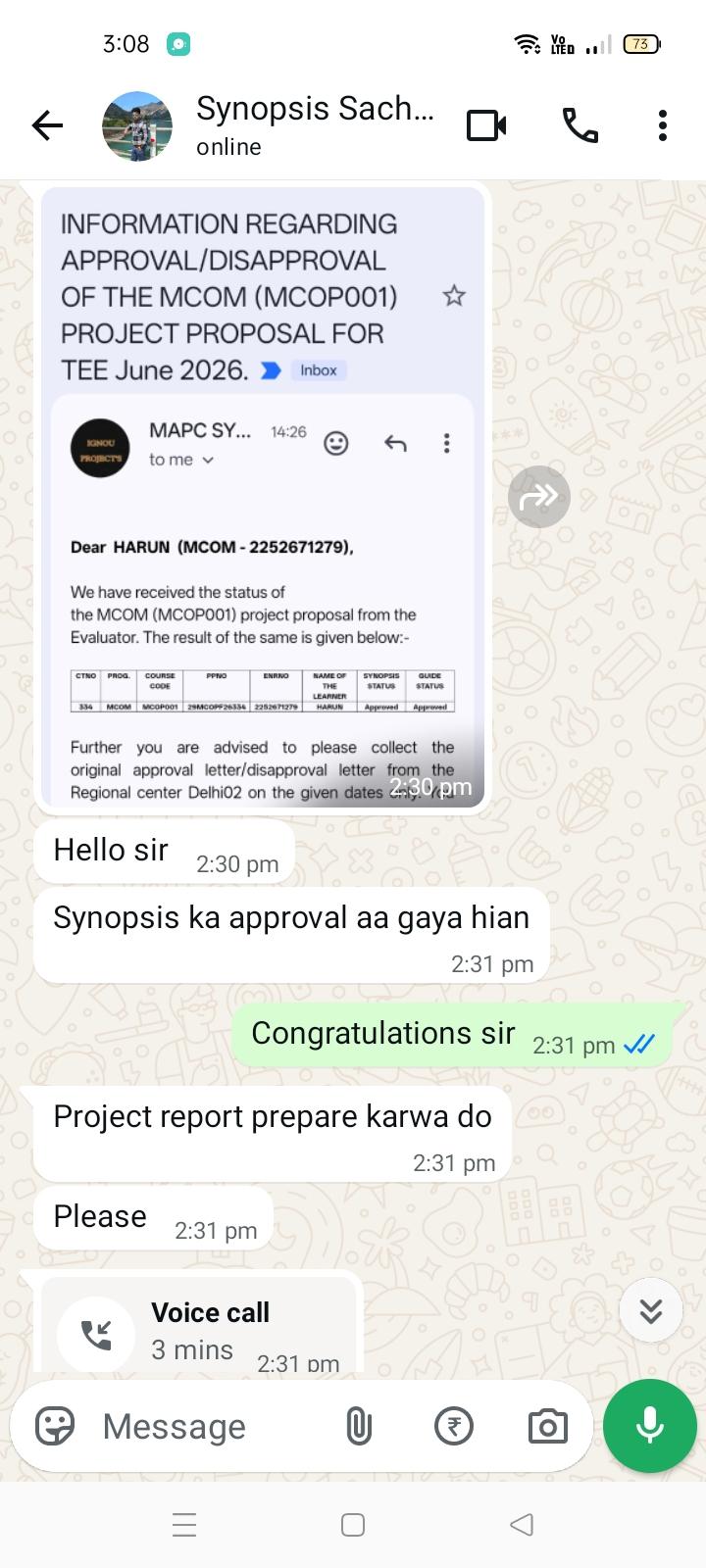
Creating an IGNOU Project by yourself may seem challenging at first, but with the right structure and understanding of the process, it becomes quite manageable. The key is to follow the proper format, especially focusing on the synopsis and proposal, which form the backbone of your project work. This article explains how you can independently create a well-structured IGNOU project in around 800 words.
Understanding the IGNOU Project Requirement
Before starting, carefully read your course guidelines provided by Indira Gandhi National Open University (IGNOU). Each program has specific requirements regarding project topics, format, word limits, and submission procedures. Make sure you know whether your project is research-based, case study-based, or practical-oriented.
Step 1: Choosing a Suitable Topic
Selecting the right topic is the foundation of your project. Choose a topic that:
- Is relevant to your course
- Matches your interest and knowledge
- Has enough study material available
- Is neither too broad nor too narrow
For example, if you are a commerce student, topics related to marketing strategies, financial analysis, or consumer behavior are often suitable.
Step 2: Preparing the IGNOU Synopsis
The synopsis is a short summary of your project and must be approved before you proceed. It usually includes the following components:
1. Title of the Project
Your title should be clear, concise, and descriptive. It should reflect the main objective of your study.
2. Introduction
Provide a brief background of the topic. Explain why the topic is important and relevant in the current context.
3. Objectives of the Study
List 3–5 clear objectives. These define what you aim to achieve through your project. For example:
- To analyze customer satisfaction levels
- To study the impact of digital marketing on sales
4. Research Methodology
Explain how you will collect and analyze data. Mention:
- Type of research (qualitative/quantitative)
- Data collection methods (survey, questionnaire, interviews)
- Sample size and target population
5. Scope of the Study
Describe what your study will cover and its limitations.
6. Chapter Plan
Provide a brief outline of chapters. For example:
- Chapter 1: Introduction
- Chapter 2: Literature Review
- Chapter 3: Research Methodology
- Chapter 4: Data Analysis
- Chapter 5: Findings and Conclusion
Once completed, submit the synopsis to your study center or supervisor for approval.
Step 3: Writing the Project Proposal
The proposal is a slightly detailed version of your synopsis and acts as a blueprint for your project. It expands on the ideas mentioned in the synopsis.
Include:
- Detailed introduction with context
- Problem statement (what issue you are addressing)
- Significance of the study
- Hypothesis (if applicable)
- Detailed methodology
- Expected outcomes
The proposal helps you stay focused and ensures your research is aligned with academic standards.
Step 4: Collecting Data
After approval, begin data collection. Depending on your methodology:
- Use questionnaires or Google Forms for surveys
- Conduct interviews if required
- Refer to books, journals, and reliable online sources
Make sure your data is relevant and properly recorded.
Step 5: Writing the Final Project Report
Now, expand your work into a full-length project. Follow the standard IGNOU format:
Chapter 1: Introduction
Explain the topic, background, objectives, and scope.
Chapter 2: Literature Review
Discuss previous studies related to your topic. This shows your understanding of existing research.
Chapter 3: Research Methodology
Explain in detail how the research was conducted.
Chapter 4: Data Analysis and Interpretation
Present your findings using tables, graphs, and charts. Interpret the data clearly.
Chapter 5: Findings and Conclusion
Summarize key results and provide conclusions. You may also include suggestions or recommendations.
Step 6: Formatting and Presentation
IGNOU projects require proper formatting:
- Use A4 size paper
- Font: Times New Roman, size 12
- Line spacing: 1.5
- Proper margins (usually 1 inch)
- Page numbering
- Include a cover page, certificate, declaration, and acknowledgement
Binding should be neat and professional.
Step 7: Plagiarism Check
Ensure your project is original. Avoid copying content directly from the internet or books. Becasue it can be acceptable for IGNOU Handwritten Assignment not for project replrt. So rewrite in your own words and cite sources properly. IGNOU may reject plagiarized work.
Step 8: Final Submission
Submit your completed project to your study center before the deadline. Keep a copy for your records. Some programs may also require a viva (oral examination), so be prepared to explain your project.
Conclusion
Creating an IGNOU project by yourself is a valuable learning experience. By carefully preparing your synopsis and proposal, selecting a suitable topic, and following a structured approach, you can successfully complete your project without external help. Stay organized, manage your time effectively, and focus on clarity and originality. With consistent effort, your project will not only meet IGNOU requirements but also enhance your practical knowledge and research skills.

 English
 French
 Spanish
 Portuguese
 Deutsch
 Turkish
 Dutch
Dutch
 Italiano
 Russian
 Romaian
 Portuguese (Brazil)
 Greek
Greek
