


What Does a Springs Maker Check Before Approving a Spring Design
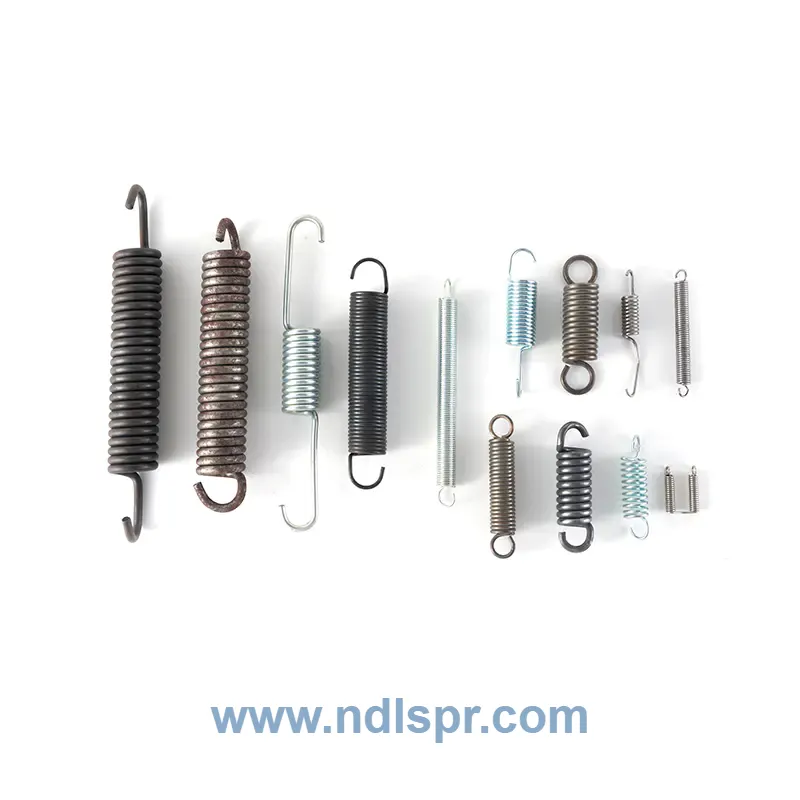
A spring that fails in the field causes damage far beyond its own cost, and manufacturers learn this lesson through warranty claims and lost customers. Fatigue life testing exists to prevent those failures before a single production unit ships. A Springs Maker that takes this stage seriously subjects designs to repeated cycling under controlled loads, watches for the first signs of change, and interprets the results with engineering judgment. The process is quieter than a sales presentation and considerably more useful. So what does a springs maker such as ndlspr actually do before releasing a design for production?
Fatigue failure rarely happens on the first compression or extension. It develops over thousands or millions of cycles, as tiny cracks initiate and grow until the spring can no longer carry its load. Test equipment reproduces this by cycling the spring between defined positions while measuring force and travel. The key word here is realistic, since a test that applies loads lighter than service conditions proves little. Testers set the travel range to match the actual application, and they hold that range constant across the run so results remain comparable between designs. Springs with different wire diameters, coil counts, and end configurations each need their own test parameters, which is why the setup stage takes as much attention as the cycling itself.
A spring does not need to break to fail. Loss of load height, changes in spring rate, and permanent set all indicate that fatigue is progressing, and these changes often appear before any visible crack. Testers record force at defined positions at intervals throughout the run, then compare the readings against the original specification. A spring that has lost a meaningful share of its load capacity will not perform its job in service, even if it remains physically intact. Visual inspection between runs catches surface defects, coating damage, and wear marks that suggest stress concentrations. This combination of force measurement and visual review gives a fuller picture than either method alone.
Raw cycle counts mean little without analysis. Engineers examine the trend rather than a single failure point, looking at how quickly performance degrades and whether the pattern suggests a design issue or a material issue. A spring that loses load steadily may point to stress relaxation, while one that fails suddenly may indicate a stress concentration at a bend or hook. Failure analysis at the fracture surface can reveal whether the cause was fatigue initiation, material defect, or incorrect heat treatment. This interpretation stage connects test results back to design decisions, and it is where experienced manufacturers add the value that separates a durable spring from a marginal one.
A tested prototype proves only that one sample performs well. Production release requires confidence that the process can repeat those results. Manufacturers examine incoming material, control heat treatment, and inspect finished parts to confirm that the tested design is the design being built. Testing facilities operated alongside production bases let engineering teams verify samples and monitor ongoing output against the same standards. Buyers evaluating a supplier should ask how test results feed back into production controls, because a test that does not influence manufacturing practice offers limited protection.
Purchasing teams often receive fatigue claims without supporting detail. Asking for test parameters, recorded measurements, and failure analysis separates suppliers who test from suppliers who estimate. Reference customers in demanding industries provide a further check, since their own experience confirms or contradicts the reported results. A springs maker that documents fatigue testing gives buyers evidence rather than assurances, and reviewing real product data at https://www.ndlspr.com/product gives technical teams a concrete starting point for that conversation. Springs proven through careful cycling carry a credibility that no specification sheet can match.

 English
 French
 Spanish
 Portuguese
 Deutsch
 Turkish
 Dutch
 Italiano
 Russian
 Romaian
 Portuguese (Brazil)
 Greek
