


Performance Differences Between Aluminum Tubes and Copper Tubes
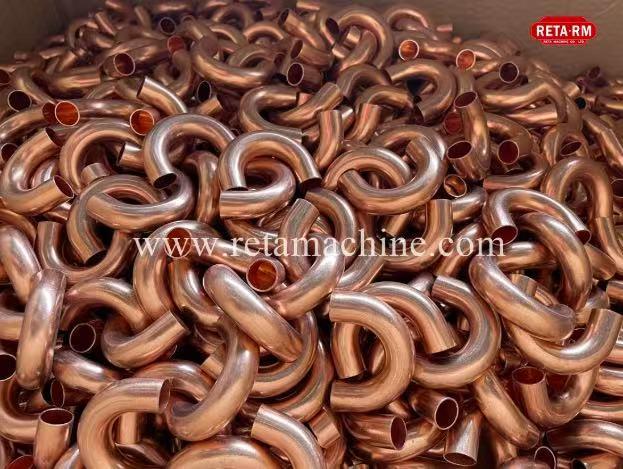
Aluminum tubes and copper tubes are two widely used non-ferrous metal tubes in heat exchangers, refrigeration systems, fluid pipelines and industrial equipment. Although both have good ductility and thermal conductivity, they differ greatly in physical properties, corrosion resistance, mechanical performance and cost, which determines their applicable scenarios.
Copper has outstanding thermal conductivity, about 401 W/(m·K), much higher than aluminum’s 237 W/(m·K). This advantage makes copper tubes the preferred choice for high-efficiency heat exchange equipment such as air conditioners and refrigerators. Heat can transfer quickly through copper walls, helping systems achieve faster temperature exchange and stable heat transfer efficiency. Meanwhile, copper features excellent ductility and weldability. It can be easily bent, flared and expanded without cracking, and brazing joints are tight and reliable, which is critical for sealed refrigerant pipelines.
However, aluminum tubes show obvious advantages in weight. The density of aluminum is only around one-third of copper. Under the same specification, aluminum tubes greatly reduce the overall weight of equipment, which helps cut transportation costs and lighten finished products for automotive and new energy industries. Aluminum also has natural oxidation resistance. A dense alumina film forms rapidly on its surface, protecting the base metal from oxidation in dry air. But this oxide layer brings drawbacks: aluminum is harder to braze, and it is vulnerable to galvanic corrosion when contacting dissimilar metals or humid, acidic environments.
In terms of mechanical strength and pressure resistance, copper performs better. Copper tubes can withstand higher working pressure and vibration, so they are suitable for high-pressure refrigeration and hydraulic pipelines. Aluminum tubes are more suitable for low and medium pressure working conditions. From the economic perspective, aluminum raw material price is far lower than copper. For large-scale heat exchanger production, replacing copper tubes with qualified aluminum tubes can significantly control material costs, though extra surface anti-corrosion treatment is usually required.
To sum up, copper tubes stand out for superior heat transfer, easy processing and high reliability, ideal for high-end refrigeration and precision heat exchange. Aluminum tubes win by light weight and low cost, a cost-effective option for low-pressure, dry working environments. Engineers need to balance heat demand, pressure rating, service environment and budget to select the proper tube material.

 Arabic
 French
 Spanish
 Portuguese
 Deutsch
 Turkish
 Dutch
 Italiano
 Russian
 Romaian
 Portuguese (Brazil)
 Greek
