


Building a Real-Time Golf Scoring App: Features, Architecture, and Technologies
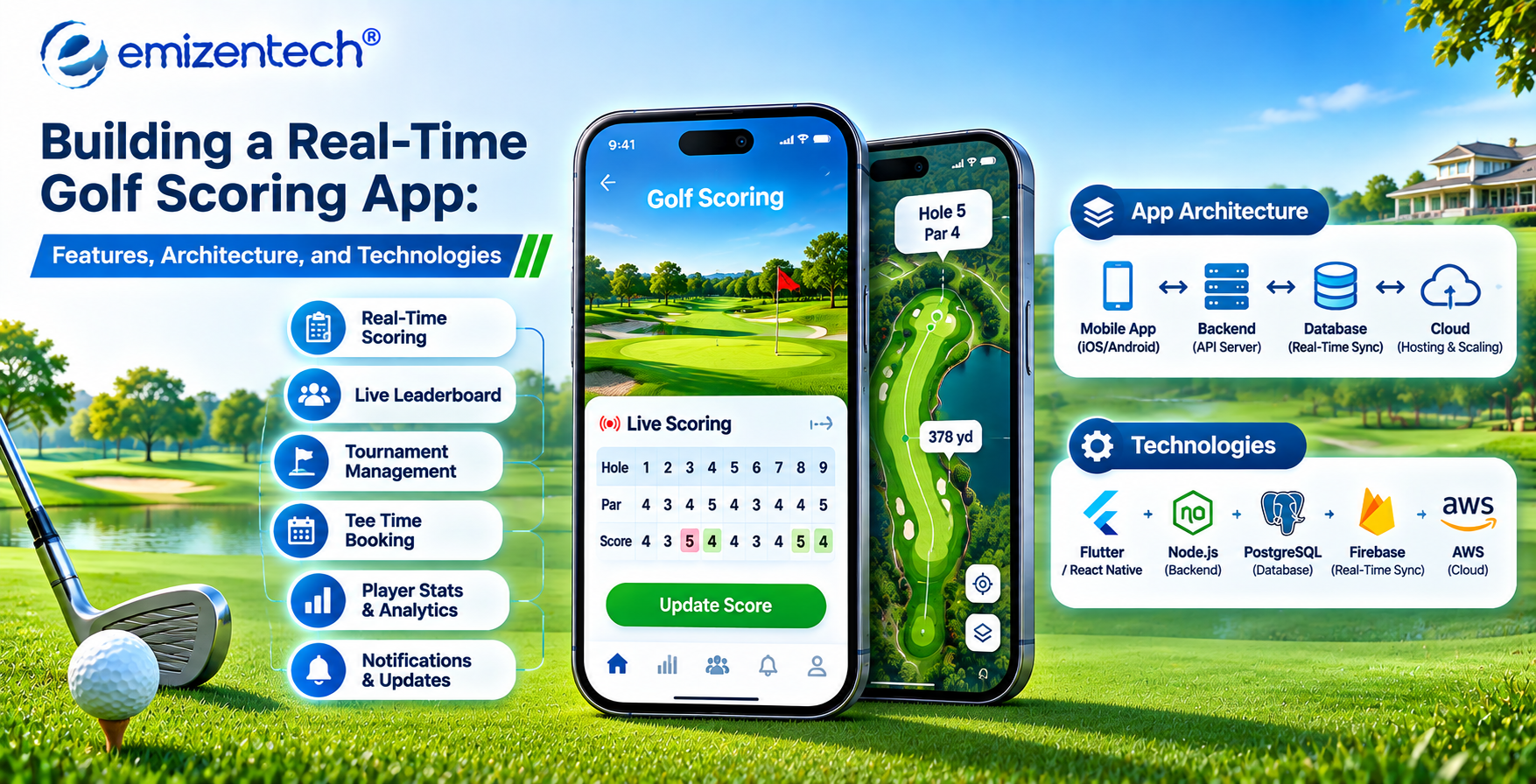
Paper scorecards and end-of-round phone calls are fading from the game. Golfers, club managers, and tournament organizers now expect scores to appear on a leaderboard within seconds of the final putt. Delivering that speed takes more than a clean interface. It needs well-chosen features, an architecture that handles live data reliably, and technologies that work on courses with patchy signal. This article walks through what a real-time golf scoring app includes, how it is structured, which tools suit it, what usually goes wrong, and what to settle before development begins.
Why Real-Time Scoring Matters in Golf Apps
Followers of the PGA Tour have long been used to leaderboards that update shot by shot, and club golfers now want the same for a Saturday competition. Live scoring removes arithmetic errors, speeds up prizegiving, and lets friends or members follow a round from the clubhouse. Apps like The Grint and 18Birdies already show how much golfers value fast score entry and shared leaderboards. A golf app development company that understands tee sheets, handicap rules, and on-course connectivity can turn that expectation into a dependable product, because the hard part is not displaying scores but keeping them accurate under real conditions.
Key Features of a Real-Time Golf Scoring App
A scoring app succeeds when the basics feel effortless. Live data now drives sports technology, including AI in sports, so features should serve players on the course, organizers, and spectators.
Fast Hole-by-Hole Score Entry
Players should log strokes, putts, and penalties in two taps. Support for scoring on behalf of a playing partner keeps rounds moving and matches how groups actually keep the card.
Live Leaderboards and Multiple Game Formats
Leaderboards should update within seconds and handle stroke play, Stableford, match play, and scrambles. Automatic handicap adjustment makes mixed-ability events fair, and organizers never need to calculate anything by hand.
GPS Yardages and Course Maps
Distances to the front, middle, and back of the green help players choose clubs. Hole maps with hazards marked add context, and the same GPS data can feed pace-of-play tracking.
Architecture Behind a Real-Time Golf Scoring App
Good mobile app architecture gives every layer one job. Keeping those jobs separate makes it easier to scale, test, and repair when something breaks mid-round, which matters for live scoring.
Mobile Client and Local Storage
The app records each score on the device first, then syncs it. This keeps entry instant even without signal, and a local copy protects the round if the phone restarts.
Real-Time Layer and Backend APIs
WebSockets or a managed service like Firebase push each validated score to connected devices, while backend APIs apply scoring rules, handicap math, and permissions before anything reaches the public leaderboard.
Database and Offline Sync
A relational database such as PostgreSQL suits events, players, and rounds, while a cache like Redis serves leaderboards quickly. Queued offline scores merge on reconnection using timestamps and clear conflict rules.
Technologies Used to Build a Golf Scoring App
No single stack is correct for every scoring app. The right choice depends on budget, team skills, expected user numbers, and the real-time traffic likely on busy club tournament days.
Cross-Platform Mobile Frameworks
Flutter and React Native let one codebase serve iOS and Android, which suits most scoring apps. Native Swift or Kotlin makes sense when deep watch integration or heavy sensor use is planned.
Backend and Real-Time Tools
Node.js handles many simultaneous connections well, and Firebase or AWS AppSync can cut build time by managing live data sync. Teams needing custom scoring logic often pair Node.js with Socket. IO.
Maps, GPS, and Course Data
Google Maps Platform or Mapbox displays holes and player position, while licensed course-data providers supply hole layouts and distances, saving teams from the slow job of mapping every course by hand.
Common Challenges in Building a Real-Time Golf Scoring App
Golf courses are surprisingly hard environments for software. Large open spaces, weak coverage, and bursts of simultaneous activity expose weaknesses that never show up during routine testing in an office.
Poor Connectivity on Courses
Remote holes often have little or no coverage. An offline-first design, with local storage and automatic retry, lets scoring continue and sends everything once the player is back in range.
Score Accuracy and Conflict Handling
Two players may submit different scores for the same hole. Attestation, where a designated marker confirms each score, plus clear timestamp rules, prevents disputes and keeps official leaderboard results trustworthy.
Battery Drain from GPS
Continuous GPS tracking can empty a battery before the back nine. Sampling location only when needed, using lower-power modes, and letting players pause tracking help a round finish without a dead phone.
Handling Traffic Spikes During Tournaments
Hundreds of spectators refresh the same leaderboard at once. Caching, pushing updates instead of polling, and load testing before the event keep the app responsive during the final few holes.
A Pre-Build Checklist
Settling a few decisions early prevents expensive rework later. Use this checklist to align stakeholders before design and development begin, especially when the app will be used in live competitions.
- Scoring formats and handicap rules: Confirm which formats the app must support and which handicap system applies, such as the World Handicap System, since changing scoring logic later affects every screen and report.
- Offline behavior: Decide what players can do without signal, how long data stays on the device, and how conflicts are resolved when phones reconnect.
- Peak load: Estimate the most spectators and simultaneous scorers you expect, then load test the backend at roughly double that number.
- Data privacy and consent: Plan how player profiles, location data, and results are stored and shared, and follow rules such as GDPR or CCPA where they apply.
- Course data source: Choose where hole layouts and yardages come from and who keeps them updated when a course changes.
Conclusion
A dependable real-time golf scoring app comes down to three things: features that make score entry effortless, an architecture that keeps working when the signal drops, and a stack that holds up on tournament day. Offline-first thinking and early load planning prevent most of the problems golfers notice. The EmizenTech team has worked on golf and sports apps where these decisions were made at the planning stage, and that is generally where a scoring app is won or lost. Start with the player's experience on the course, and build outward from there.
FAQs
1. What features should a real-time golf scoring app have?
At minimum: fast hole-by-hole score entry, live leaderboards, support for common game formats, handicap calculation, and GPS yardages. Push notifications and offline scoring make the experience far more reliable.
2. How does real-time score syncing work in a golf app?
The app sends each score to a server, which validates it and pushes the update to other devices through WebSockets or a managed real-time service, usually within a second or two.
3. Which technology is best for building a golf scoring app?
There is no single best option. Flutter or React Native paired with Node.js and a real-time layer such as Firebase or WebSockets suits most projects, depending on budget and scale.
4. How do golf scoring apps work without internet?
They save scores locally on the phone and queue them for upload. When the signal returns, the app syncs automatically and resolves any conflicts using timestamps and set rules.
5. How long does it take to build a golf scoring app?
A basic version usually takes around three to four months, while an app with GPS maps, multiple formats, and tournament tools can take six months or more, depending on scope.

 English
 Arabic
 French
 Spanish
 Deutsch
 Turkish
 Dutch
 Italiano
 Russian
 Romaian
 Portuguese (Brazil)
 Greek
