


Prenatal Chiropractic Care in Carlsbad for Pregnancy Pain: Back, Pelvis, Hips, Sciatica and More
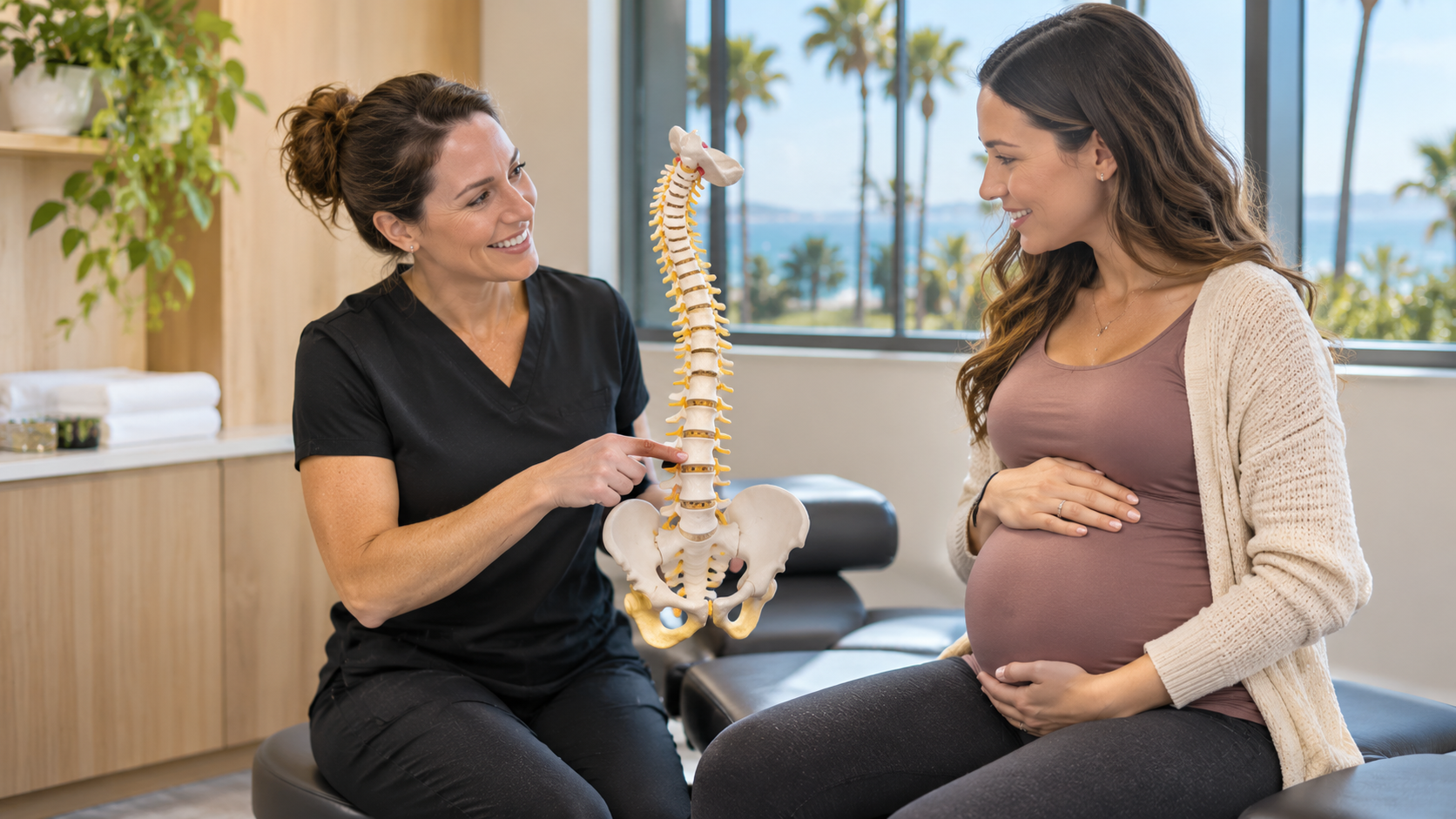
Prenatal chiropractic care in Carlsbad can help with many of the aches that come with pregnancy, including low back pain, pelvic girdle pain, hip pain, round ligament pain and sciatica-type pain down the leg. It works by keeping your spine and pelvis moving well, easing tight muscles and giving you practical ways to protect your body as it changes. It is not the right answer for every kind of pain, though, and some symptoms need your OB or midwife first.
I organized this post by where it hurts, because that is how most pregnant women search for help. You probably do not think "I need prenatal chiropractic care." You think "why does the front of my pelvis hurt when I roll over in bed?" or "why is there a burning pain down my leg?" So for each common type of pregnancy pain, I cover what is likely going on, what a prenatal chiropractor may do, what you can try at home and the warning signs to take seriously.
Why pregnancy causes so many aches
A few big changes explain most pregnancy pain.
Looser ligaments. Hormones such as relaxin soften the ligaments around your pelvis so it can widen for birth. That makes the pelvic joints more mobile and sometimes less stable.
A forward center of gravity. As your baby grows, your weight shifts toward the front. You lean back to compensate, which increases the arch in your lower back.
Weight gain and fluid. Extra weight and fluid put more load on your joints and can press on nerves, especially at the wrists and in the legs.
Changes in sleep and activity. Poor sleep, less movement and long hours sitting at a desk all make aches worse.
Back pain, in particular, becomes more common as pregnancy goes on. A 2023 meta-analysis put its prevalence at 28.3% in the first trimester, 36.8% in the second and 47.8% in the third. Pelvic pain is common too, as you will see below.
How prenatal chiropractic care works
Prenatal chiropractic care is chiropractic care adapted for pregnancy. A licensed chiropractor examines how your spine, pelvis and hips move, then uses gentle techniques to ease restriction and muscle tension. Common tools include:
- Light-force adjustments to the spine and pelvis
- The Webster Technique, a specific analysis and adjustment of the sacrum and pelvis
- Soft tissue work on tight muscles in the hips, glutes and low back
- Side-lying positions and pregnancy tables with belly support
- Home exercises, stretches and advice on sleep and posture
If you are looking for a local example, New Wave Chiropractic describes its approach to prenatal chiropractic care in Carlsbad, including Webster certified care and the pregnancy symptoms it commonly helps with, such as low back pain, round ligament pain, SPD, hip pain and sciatica.
Now, let's go through the most common types of pain one at a time.
Low back pain
Low back pain is the most common musculoskeletal complaint in pregnancy. It is usually a dull ache across the lower back, sometimes worse at the end of the day or after standing for a long time.
What is going on
The forward shift of your weight increases the curve in your lower back and loads the muscles and joints there. Looser ligaments mean the muscles have to work harder to keep things stable. Weak core muscles, long periods of sitting and back pain before pregnancy all raise the risk.
What a prenatal chiropractor may do
- Check how your lumbar spine and pelvis move
- Use gentle adjustments to restore movement in stiff joints
- Work on tight low back, glute and hip flexor muscles
- Teach you posture changes for sitting, standing and lifting
What you can try at home
- Stand tall and avoid locking your knees.
- Sit with your feet flat and a small cushion behind your lower back.
- Lift by bending your knees, not your waist, and keep the load close.
- Try a gentle cat-cow stretch on your hands and knees.
- Use heat on your back for short periods, as your provider allows.
When to call your OB or midwife
Back pain with cramping, contractions, bleeding, fever or burning when you urinate can be a sign of preterm labor or a urinary tract infection. Call right away. Also call if back pain is severe or lasts more than two weeks.
Pelvic girdle pain and symphysis pubis dysfunction (SPD)
Pelvic girdle pain is pain in the joints of the pelvis. When it is mainly at the front, where the two pubic bones meet, it is often called symphysis pubis dysfunction or SPD.
What it feels like
- Pain at the front of the pelvis, in the groin or inner thighs
- Pain at the back of the pelvis, near the dimples above the buttocks
- A clicking or grinding feeling in the pelvis
- Pain when walking, climbing stairs, getting out of bed or the car, standing on one leg or rolling over
What is going on
Relaxin and other hormones loosen the joints of the pelvis. If the joints move unevenly, they can become irritated and painful. A history of pelvic injury or back problems raises the risk. Cleveland Clinic notes that symphysis pubis dysfunction and pelvic girdle pain affect about 1 in 4 people during pregnancy, and it lists chiropractic care among the options that may help with movement and pain.
What a prenatal chiropractor may do
This is one of the areas where prenatal chiropractic care in Carlsbad is often used. A chiropractor may:
- Assess the sacroiliac joints and the pubic symphysis
- Use gentle pelvic adjustments, including the Webster Technique
- Ease tension in the adductors (inner thigh muscles), glutes and hip flexors
- Suggest a pregnancy support belt
- Teach you how to move in ways that protect the pelvis
What you can try at home
- Keep your knees together when getting in and out of bed or the car.
- Take stairs one step at a time.
- Avoid standing on one leg to put on pants. Sit down to get dressed.
- Sleep on your side with a pillow between your knees and lower legs.
- Choose low-impact exercise such as swimming.
When to get extra help
If walking becomes very difficult or the pain stops you from doing daily tasks, ask your OB or midwife for a referral to a pelvic health physical therapist. Many women do well with a combination of chiropractic care and physical therapy for this condition.
Round ligament pain
Round ligament pain is a sharp, brief pain on one or both sides of the lower belly or groin. It is most common in the second trimester.
What is going on
The round ligaments support your uterus. As the uterus grows, these ligaments stretch. Quick movements, such as standing up fast, rolling over, coughing or sneezing, can make them spasm.
What a prenatal chiropractor may do
- Check pelvic balance, since an uneven pelvis can add tension to these ligaments
- Use gentle pelvic adjustments
- Apply very light soft tissue work around the lower belly and hips
What you can try at home
- Move slowly when changing position.
- Bend and flex your hips before you cough or sneeze.
- Roll to your side before getting out of bed.
- Use gentle heat, if your provider agrees.
When to call your OB or midwife
Round ligament pain should be brief. Pain that is constant, severe or comes with bleeding, fever, chills, pain when urinating or contractions needs a call to your provider.
Sciatica-type pain
Sciatica is pain that runs from the lower back or buttock down the back of the leg. It may feel like burning, shooting or electric pain, sometimes with tingling.
What is going on
During pregnancy, true sciatica from a disc pressing on a nerve is less common than people think. Much of the "sciatica" pregnant women feel comes from irritation around the pelvis and buttock, including a tight piriformis muscle or a stiff sacroiliac joint.
What a prenatal chiropractor may do
- Find whether the pain is coming from the low back, the pelvis or the buttock muscles
- Use gentle adjustments to the pelvis and lower spine
- Work on the piriformis and other glute muscles
- Give you stretches for the hips and buttocks
What you can try at home
- Try a gentle figure-four stretch while seated in a chair.
- Avoid sitting for long periods. Get up and walk every 30 to 45 minutes.
- Sleep on the side that does not hurt, with a pillow between your knees.
- Use heat or cold on the buttock, as your provider allows.
Warning signs
Leg weakness, numbness that keeps spreading, trouble controlling your bladder or bowels, or numbness in the groin are urgent. Seek medical care right away.
Hip pain
Hip pain in pregnancy often shows up on the outer hip, especially at night when you lie on your side.
What is going on
Weight gain, changes in how you walk and long hours of side sleeping put more pressure on the outer hip. Tight hip muscles and an uneven pelvis can add to it.
What a prenatal chiropractor may do
- Check the hip joints and pelvis
- Use gentle adjustments and soft tissue work for the hips and glutes
- Suggest pillow setups for sleeping
What you can try at home
- Put a soft pillow or folded blanket under your hip at night.
- Keep a pillow between your knees.
- Strengthen the glutes with side-lying leg lifts and clamshells.
Upper back, neck and rib pain
As your breasts grow and your posture changes, your shoulders may round forward and your head may move forward. Later in pregnancy, your baby can also push up against your ribs.
What a prenatal chiropractor may do
- Gentle adjustments to the mid-back and neck
- Soft tissue work on the shoulders and upper back
- Mobility work for the ribs
- Posture advice for work and feeding
What you can try at home
- Raise your screen to eye level and keep your shoulders relaxed.
- Do chin tucks and gentle chest stretches through the day.
- Wear a well-fitting, supportive bra.
- For rib pain, try sitting up tall or stretching one arm overhead at a time.
Tailbone pain
Tailbone (coccyx) pain is a sharp or aching pain right at the base of the spine, often worse when sitting or moving from sitting to standing. It can show up late in pregnancy and sometimes lingers after birth.
What is going on
The coccyx sits at the bottom of the sacrum and is attached to the pelvic floor muscles. As the pelvis loosens and the baby moves lower, pressure on this area increases.
What a prenatal chiropractor may do
- Check how the sacrum and pelvis move
- Use gentle pelvic adjustments
- Work on tight glute and pelvic muscles around the area
What you can try at home
- Sit on a wedge or donut cushion.
- Lean forward slightly when sitting so you take weight off the tailbone.
- Avoid sitting on hard surfaces for long periods.
Wrist and hand pain (pregnancy carpal tunnel)
Some pregnant women develop numbness, tingling or pain in the thumb, index and middle fingers. Fluid retention can press on the median nerve at the wrist.
What a prenatal chiropractor may do
Some chiropractors work on the wrist, elbow and neck to ease pressure along the nerve path. New Wave Chiropractic, for instance, offers extremity adjustments for joints like the wrists, hips and feet in Carlsbad, which can be part of care when pain is not limited to the spine.
What you can try at home
- Wear a wrist splint at night to keep the wrist straight.
- Take breaks from typing and phone use.
- Avoid sleeping with your wrists bent under your pillow.
Tell your OB or midwife about hand numbness, and seek care quickly if you notice weakness or you drop things often.
What your first visit for pregnancy pain looks like
Your first appointment for prenatal chiropractic care in Carlsbad should start with questions, not an adjustment. Expect the chiropractor to ask where it hurts, when it started, what makes it better or worse and how it affects your sleep, work and daily life. They should also ask about your due date, any complications and the name of your OB or midwife.
Next comes a gentle exam. The chiropractor checks your posture, how you walk, how your pelvis and spine move and where you are tender. For pelvic pain, they may do simple tests such as asking you to lift one leg while lying on your back or to stand on one foot.
Then they should explain what they think is causing the pain and what they suggest. If everything looks appropriate, the first treatment may happen the same day. You should leave knowing what to do at home and what warning signs to watch for.
Which pains tend to show up when
Different aches tend to peak at different stages, although every pregnancy is different.
|
Stage |
Common aches |
|---|---|
|
First trimester |
Low back stiffness, neck tension, headaches |
|
Second trimester |
Round ligament pain, low back pain, early pelvic pain |
|
Third trimester |
Pelvic girdle pain, sciatica-type pain, hip, rib and tailbone pain |
Knowing this pattern helps you plan. Many women find that starting prenatal chiropractic care in Carlsbad before the third trimester makes the later months easier to manage, though starting later can still help.
When prenatal chiropractic care is not the right first step
Prenatal chiropractic care in Carlsbad is helpful for many musculoskeletal aches. It is not the right first call for every symptom. Contact your OB or midwife, or seek urgent care, for:
- Vaginal bleeding or fluid leaking
- Regular contractions or cramping before 37 weeks
- Fever, chills or burning when you urinate
- A sudden, severe headache, vision changes or swelling in your face and hands
- Severe abdominal pain
- Leg weakness, or bladder or bowel changes
- A noticeable decrease in your baby's movement
- Calf pain, swelling and warmth in one leg
- Any fall or car accident
These can signal problems that need medical evaluation, and a good chiropractor will tell you the same thing.
Is prenatal chiropractic care in Carlsbad safe?
For most healthy pregnancies, gentle chiropractic care from a trained, licensed chiropractor is considered a reasonable option. Talk with your OB or midwife before you start, and get clearance first if you have bleeding, placenta previa or abruption, signs of preterm labor, severe preeclampsia or a high-risk pregnancy.
A careful prenatal chiropractor will:
- Take a full pregnancy and health history
- Use pregnancy tables, cushions and side-lying positions
- Choose gentle, low-force techniques
- Stop or change anything that feels uncomfortable
- Coordinate with your birth team when needed
Mild soreness after a session can happen and usually fades within a day.
How to choose a prenatal chiropractor
When you are in pain, it is tempting to book the first available appointment. A few minutes of research helps.
- Ask about prenatal training. Webster certification and regular experience with pregnant patients are good signs.
- Ask about equipment. A pregnancy table or a clear plan for side-lying care matters.
- Listen to how they talk. Look for clear, honest answers about what chiropractic care can and cannot do.
- Check that they coordinate. They should be happy to work with your OB or midwife.
- Watch for pressure. Be cautious of big prepaid packages or promises about birth outcomes.
Building a pain-relief routine that lasts
In my experience, the women who feel best through pregnancy combine a few things rather than relying on one. A realistic weekly routine might include:
- Hands-on care. Prenatal chiropractic visits at a frequency that suits you.
- Movement. Daily walks and two or three short strength sessions focused on glutes, hips and core.
- Rest and sleep setup. Side sleeping with good pillow support.
- Workday changes. A better desk setup and regular breaks.
- Support tools. A pregnancy belt, a birth ball and supportive shoes.
- Professional input. Your OB or midwife, plus a pelvic health physical therapist if needed.
Track your pain and what you can do each day. A simple note on your phone works well: rate your pain from 0 to 10, write down what made it better or worse and note how you slept. After two or three weeks, patterns usually appear, and those notes make your conversations with your chiropractor and your OB or midwife far more useful. If something is not helping after a few weeks, change the plan.
After birth: the aches that follow
Many aches ease after delivery as hormone levels fall and your ligaments tighten. Pelvic pain usually improves within a few months, according to Cleveland Clinic. New strains appear, though: lifting a car seat, bending over a crib and long feeding sessions all load the back, neck and wrists.
Many women continue prenatal chiropractic care in Carlsbad into the postpartum months to help with these new demands, alongside pelvic floor rehabilitation. Check with your OB or midwife about timing, especially after a C-section.
My final thoughts
Pregnancy pain is common, but that does not mean you have to push through it quietly. Low back pain, pelvic girdle pain, round ligament pain, sciatica-type pain and hip pain often respond to gentle care, smart movement and good daily habits.
Prenatal chiropractic care in Carlsbad can be one useful part of that plan. Choose a chiropractor with real prenatal training, keep your OB or midwife informed, learn the warning signs and give yourself permission to rest. Feeling more comfortable during pregnancy is a reasonable goal, and you deserve it.
Frequently Asked Questions
1. Can a chiropractor help with back pain during pregnancy?
Many pregnant women use chiropractic care for low back pain. Mayo Clinic notes that some studies suggest chiropractic treatment may help. A prenatal chiropractor uses gentle adjustments, soft tissue work and posture advice. Check with your OB or midwife first, and call them right away if back pain comes with bleeding, cramping, fever or contractions.
2. What is symphysis pubis dysfunction?
Symphysis pubis dysfunction, or SPD, is pain at the front of the pelvis where the two pubic bones meet. It is a type of pelvic girdle pain and is common in pregnancy. It often hurts when walking, climbing stairs, rolling over in bed or standing on one leg. It usually improves after the baby is born.
3. Is chiropractic care safe for pelvic pain in pregnancy?
For most healthy pregnancies, gentle chiropractic care from a trained prenatal chiropractor is considered a reasonable option for pelvic pain. Cleveland Clinic lists chiropractic care among options that may help with SPD. Get clearance from your OB or midwife first, especially if you have any pregnancy complications.
4. What causes round ligament pain?
Round ligament pain happens when the ligaments supporting your growing uterus stretch and spasm, often with quick movements like standing up, rolling over or sneezing. It is usually sharp and brief and most common in the second trimester. Constant or severe pain, or pain with bleeding or fever, needs a call to your provider.
5. Can sciatica during pregnancy be treated without medication?
Many women manage sciatica-type pain in pregnancy with gentle stretching, heat or cold, changes in sitting and sleeping habits, physical therapy and chiropractic care. The best approach depends on the cause. Leg weakness, spreading numbness or bladder or bowel changes need urgent medical care.
6. How can I sleep better with hip pain while pregnant?
Sleep on your side with a pillow between your knees and lower legs, and try a soft pillow or folded blanket under your hip. A full-length pregnancy pillow can keep your pelvis level. Strengthening your glutes during the day and gentle chiropractic care may also ease nighttime hip pain.
7. Does a pregnancy support belt help?
A pregnancy support belt can help some women with low back pain and pelvic girdle pain by giving extra support when walking or standing. It works best alongside exercise and good movement habits. Ask your chiropractor or physical therapist which type suits your symptoms and how long to wear it each day.
8. When should I worry about back pain in pregnancy?
Call your OB or midwife right away if back pain comes with bleeding, fever, cramping, contractions, fluid leaking or burning when you urinate. Also call if the pain is severe, follows a fall or lasts more than two weeks. Leg weakness or bladder and bowel changes need urgent medical care.
9. How many chiropractic visits will I need for pregnancy pain?
It depends on the type of pain, how long you have had it and how far along you are. Some women feel better after a few visits, while others prefer regular care through the third trimester. Your chiropractor should explain their reasoning and adjust the plan based on how you respond.
10. Will pregnancy pain go away after birth?
Many pregnancy aches improve after delivery as hormone levels fall and your ligaments tighten again. Pelvic girdle pain usually eases within a few months. Some women have lingering pain, especially with new strain from caring for a baby. Talk with your provider if pain continues, since postpartum physical therapy or chiropractic care may help.

 English
 Arabic
 French
 Spanish
 Portuguese
 Turkish
 Dutch
 Italiano
 Russian
 Romaian
 Portuguese (Brazil)
 Greek
