


Why Smart Locker Systems Are Becoming Essential for Businesses in UAE
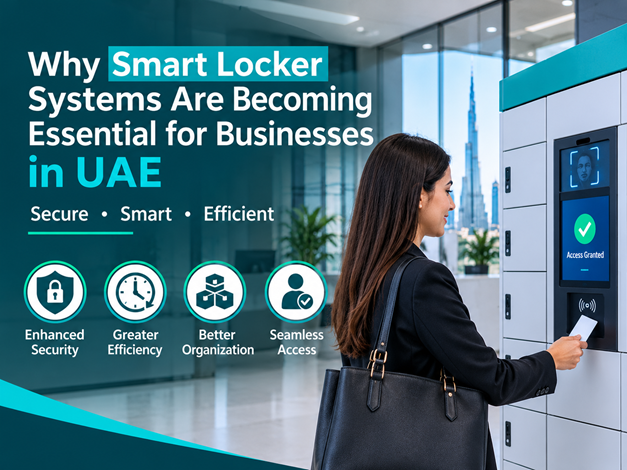
A Smart Locker System is quickly becoming standard equipment for UAE businesses that need to hand over parcels, devices, tools and personal belongings securely, at any hour and without tying up staff. Compartments open only for the right person at the right time, every opening is recorded, and nobody has to queue at a desk or chase a missing key.
This article explains why adoption is accelerating across the Emirates, what a modern platform includes, which benefits matter most, and how to plan a deployment that meets UAE privacy and cybersecurity expectations. It reflects the practical approach of Tektronix, a technology provider that delivers smart storage and security technology for demanding enterprises.
The UAE Context: Why Storage and Handover Need to Change
The UAE sets a high bar for service. Government programmes under We the UAE 2031, the Dubai 2040 Urban Master Plan and the Abu Dhabi digital agenda push organizations to deliver faster, more convenient and more connected experiences. Online retail keeps growing, hybrid working has changed how offices use space, and visitors expect the same smooth service in a hospital, a campus or a mall that they receive from a mobile app.
Behind the scenes, many organizations still depend on manual routines. Reception teams sign for parcels, security staff hand out keys from cabinets, shared cupboards have no record of who took what, and lost items trigger long searches. Each of these routines’ costs time, creates risk and frustrates users. Self-service lockers replace them with a consistent, auditable process that works the same way at three in the afternoon and three in the morning.
What a Modern Smart Locker Platform Includes
Cabinets, Locks and Interfaces
A well-designed Locker System starts with robust hardware: steel or powder coated cabinets, electronic locks, door position sensors, a control unit and a touchscreen or reader interface. Compartments come in mixed sizes so one cabinet can hold envelopes, parcels, laptops, uniforms, protective equipment or tools. Indoor and outdoor versions should be chosen to suit the site, because summer heat, humidity and dust place real demands on materials and electronics.
Credentials and Access Methods
Users can open a compartment with a PIN, QR code, staff card or smartphone credential, and the rules can differ by zone and user group. Where identity matters most, Face Recognition Locker Access confirms that the person standing at the cabinet is the person assigned to it, which protects shared devices, sensitive equipment and controlled items. Liveness checks help block photographs and screens, and a non-biometric alternative can be offered for users who prefer it.
Central Management and Integration
Behind every cabinet sits a central management platform that assigns compartments, sets time limits, sends notifications, manages users and records every event. Open interfaces let lockers connect with access control, visitor management, human resources, ticketing, parcel carriers and building systems, so a delivery alert or an employee assignment is created automatically instead of being typed by hand. Reports and dashboards give facility and security managers a single view across many sites.
Connectivity and Resilience
Reliability is a design requirement, not a bonus. Good units keep making decisions locally if the network drops, hold events in memory until the link returns, run on backup power for a defined period and offer a secure emergency release for authorised staff. Remote monitoring and alerts for faults, low battery or forced doors reduce service calls and keep availability high.
Business Benefits That Drive Adoption
Productivity and Service Quality
Lockers work around the clock. A courier can drop a parcel at midnight, an employee can collect it after a late shift and a student can return equipment on a weekend. Users receive a message with a code or QR credential and open the right compartment within seconds. Reception teams spend less time on routine handover and more time on visitors and higher value work.
Security and Accountability
Every opening is tied to a verified identity and a timestamp. Tamper and forced door alerts reach administrators immediately, compartments are assigned only for the needed period, and valuable items can require dual authorisation. When something goes missing, investigators review a clean audit trail instead of a handwritten register, and integration with video surveillance adds a visual record to sensitive events.
Cost Control and Space Efficiency
Manual parcel handling, key cabinets and storage rooms consume staff hours and floor space. Automated cabinets reduce reception workload, remove missing key problems and rekeying costs, cut search time and make better use of compact areas. Hot desk and shared storage models also let organizations support flexible working without building extra rooms.
Hygiene and Contactless Convenience
Opening a compartment with a phone or a quick facial check reduces shared surface contact, which matters in hospitals, clinics, schools and busy public venues. Large text, clear icons and Arabic and English interfaces make the experience simple for residents and visitors from many nationalities.
Data, Reporting and Sustainability
Every event becomes data. Managers can see peak collection times, average dwell time, locker utilisation, failed attempts and uncollected items, then adjust staffing, compartment mix and reminders. Fewer failed delivery attempts and fewer plastic cards issued also reduce waste and unnecessary travel, which supports corporate sustainability goals.
Industry Use Cases across the Emirates
Corporate Offices and Business Parks
Towers in Dubai International Financial Centre, Dubai Internet City and Abu Dhabi Global Market handle large volumes of parcels, documents and devices. Lockers provide parcel pickup, hot desk storage and shared equipment lending without extra reception staff.
Healthcare
Hospitals and clinics, including those in Dubai Healthcare City, use lockers for staff belongings, medical device storage and secure handover of items between shifts or departments. Touchless opening supports infection control policy.
Education, Retail and Hospitality
Universities and schools use lockers for student storage and equipment loans. Malls and retail centres use them for click and collect pickup, and hotels and resorts, including those on Yas Island, use them for guest luggage and concierge relief.
Residential, Logistics and Industrial Sites
Residential communities use lockers to receive deliveries safely when residents are away. Logistics hubs, workshops and industrial sites use them as tool cribs, spare parts stores and last mile pickup points, with each withdrawal linked to a named person.
Security Architecture and Data Protection
A locker is also a connected device, so it must be secured like one. Look for encrypted communication between cabinets and servers, secure boot and signed firmware updates, role-based administration, strong authentication for administrators and complete audit logs. Network segmentation keeps lockers away from sensitive business systems, and regular patching closes known weaknesses.
Where biometrics are used, templates should be stored in protected form rather than as raw images, retention should be limited and users should understand what is collected. Hosting options matter too: some organizations prefer a managed cloud service, while others require private cloud or fully on-premise installation so that data never leaves their own environment.
Compliance and Regulation in the UAE
The UAE Federal Decree Law No. 45 of 2021 on the Protection of Personal Data sets rules on consent, purpose, security and retention, and biometric data is treated as a sensitive category. The Telecommunications and Digital Government Regulatory Authority and the UAE Cybersecurity Council shape national information security expectations, and free zones such as the Dubai International Financial Centre and Abu Dhabi Global Market maintain their own data protection regimes. Healthcare operators must also consider requirements from the Dubai Health Authority or the Department of Health in Abu Dhabi.
Alignment with ISO/IEC 27001 gives security teams a recognised review framework. Life safety matters too: where lockers sit near escape routes, they must not obstruct exits, in line with the UAE Fire and Life Safety Code of Practice. Always confirm final obligations with legal and technical advisers, because requirements differ by sector and emirate.
Local Conditions across Dubai, Abu Dhabi and the Northern Emirates
Equipment must tolerate extreme summer temperatures, dust and coastal humidity, so material choice, ventilation and ingress protection ratings deserve attention. Interfaces should support Arabic and English at minimum, with clear icons for a multinational population. Dense districts in Dubai call for compact, scalable installations that can be managed across many buildings, while Abu Dhabi projects such as Masdar City and large healthcare campuses like Cleveland Clinic Abu Dhabi often involve stricter procurement, integration and data residency requirements. Service coverage across the Northern Emirates also matters for maintenance and spare parts.
A Practical Implementation Roadmap
Define the use case: parcels, staff storage, device lending, tool control or a mix of these.
Survey the site: choose locations with power, network, shade, passing traffic and clear escape routes.
Size the compartments: select a realistic mix of small, medium and large units for the items you handle.
Select access methods: combine PIN, QR, card, mobile and facial options by zone and user group.
Plan integration: connect to access control, visitor management, human resources and logistics tools.
Pilot and scale: install a small bank, gather feedback, tune rules and then roll out in phases with training.
Measuring Return on Investment
• Staff hours saved on parcel handling, key issue and item searches.
• Reduction in lost items, missed deliveries and rekeying costs.
• Locker utilisation, collection times and uncollected item rates.
• User satisfaction scores and reduced helpdesk calls.
• Audit trail value for investigations, insurance and compliance reviews.
Common Mistakes to Avoid
• Choosing compartments that are too small or too few, leading to overflow and frustration.
• Ignoring integration, which forces staff to retype data and weakens the business case.
• Skipping privacy review before enabling biometrics or collecting contact details.
• Placing cabinets in hot, unshaded or poorly lit locations without proper ratings.
• Neglecting maintenance, firmware updates and user training after handover.
How to Choose the Right Partner
• Use case fit: compartment sizes and workflows that match your items and user groups.
• Access flexibility: PIN, QR, card, mobile and facial options managed together.
• Open integration: documented interfaces to access control, visitor, HR and logistics systems.
• Resilience: offline operation, backup power and emergency opening.
• Data protection: encryption, retention controls, audit logs and hosting choices.
• Local support: response times, spare parts arrangements and Arabic and English training.
Why Organizations Choose Tektronix
Experience: Tektronix works with enterprise customers on identity and security technology, and that field exposure shapes practical choices about hardware placement, access methods and user workflows.
Expertise: TekLocker brings electronic locking, flexible access methods and central management together, backed by engineers who understand hardware, networks and software, and who design around how people actually use storage.
Authoritativeness: designs reference ISO/IEC 27001 for information security, the UAE personal data law for privacy and national cybersecurity expectations, so consultants and compliance officers can review the solution against familiar benchmarks.
Trust: a clear scope, a pilot installation and transparent support terms let decision makers see real results before full rollout. To begin, request a demonstration and test the workflow against your own handover needs.
Conclusion
Smart lockers are becoming essential because they combine security, convenience and measurable savings. Reliable Locker Management Software gives administrators live control, clear reports and instant access changes. Organizations planning Smart Locker System UAE projects should prioritize privacy, rugged hardware and Arabic support. Businesses in the commercial hub can scale quickly with Smart Locker System Dubai deployments, while capital projects benefit from Smart Locker System Abu Dhabi planning.
FAQs
1. What is an Electronic Locker System and how does it differ from a key lock?
An electronic system opens compartments with codes, cards, phones or biometrics instead of metal keys, assigns each compartment to a user for a set time and records every opening. Keys cannot be tracked, restricted by schedule or revoked instantly.
2. Is a Digital Locker System suitable for both parcels and staff storage?
Yes. The same platform can offer parcel pickup compartments, personal staff storage and shared device lending, each with its own rules, time limits and notifications.
3. Is facial access secure and private?
It can be, when it uses liveness checks, encrypted templates, clear consent and a non-biometric alternative for users who prefer it. Organizations should publish a retention policy and limit access to data by role.
4. Which UAE rules affect a smart locker project?
Consider the federal personal data law for personal and biometric data, national and free zone information security expectations, sector rules for healthcare, and the fire and life safety code for placement near escape routes. Confirm details with legal and technical advisers.
5. How long does installation take?
Timelines depend on the number of units, site preparation and integrations. A pilot bank of lockers can often be installed and configured within a few weeks, followed by a phased rollout to further locations.

 English
 Arabic
 French
 Spanish
 Deutsch
 Turkish
 Dutch
 Italiano
 Russian
 Romaian
 Portuguese (Brazil)
 Greek
