


Finding the Real Source of a Sofa That Squeaks
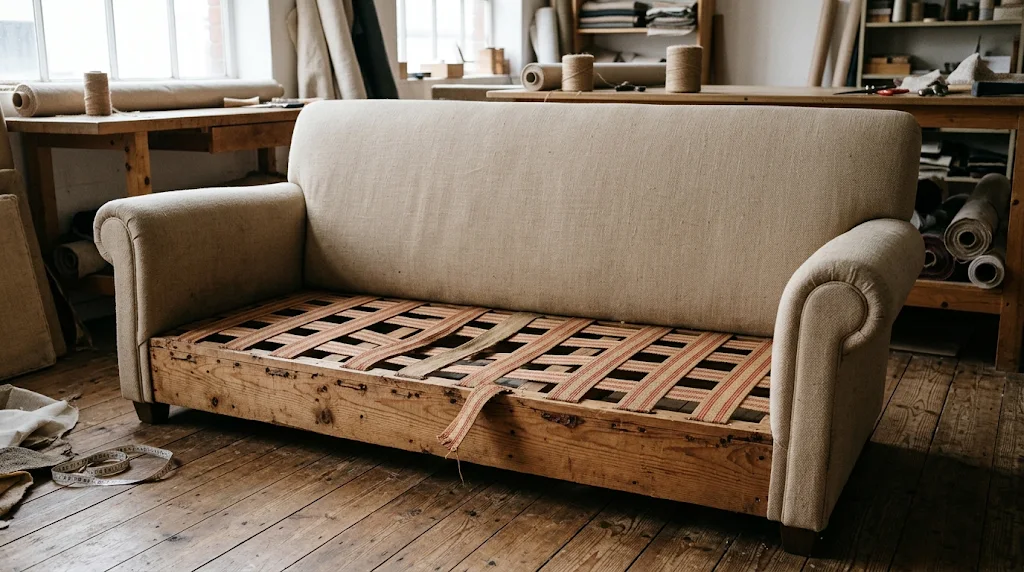
A squeak that moves when you move is rarely where you first assume it sits. Sound can travel along rails, through padding, and across joins before it reaches your ear. A worn spring clip, a stretched strap, or a bunching panel may all masquerade as a frame fault. Careful observation of what happens under load usually points to the true origin.
Restoring proper tension across the suspension and the cover removes many of these noises. The job is straightforward only when the timber underneath is sound. A joint that has opened or a rail that has cracked must be repaired first. Everything applied above a failing frame simply hides the problem for a few weeks.
Start by noticing when the sound appears. Does it follow the moment your weight lands, or does it trail as you rise? Does leaning sideways against an arm produce something new? Answers to those questions narrow the search before anyone opens the sofa.
Professionals who handle sofa upholstery services expect you to arrive with that kind of detail. Precise observations cut the diagnostic work and keep the focus on the real fault. Without them, a technician may spend the first hour simply chasing echoes.
When the work begins, sofa reupholstery exposes layers that are invisible from the outside. Once the cover lifts, movement in the seat deck becomes visible rather than imagined. What seemed mysterious through fabric often becomes obvious within minutes of opening.
Two zones that have to work together
As soon as you sit, the cushion compresses and passes your weight to the deck beneath it. That deck may rest on woven webbing, zigzag springs, or a lattice of tied coils. The suspension flexes downward under load and returns when you stand. Its fixings then hand the force over to the frame.
Tension lives in two separate places inside every sofa. The first is the suspension, where straps and springs must travel far enough without collapsing. The second is the outer cover, which must drape over the padding and remain steady in use. Neither zone can fully rescue the other when it fails.
Drawing the cover tighter can quiet a panel that rubs against a cushion or arm. It will not change how deeply the seat deck sinks. That distinction is why anyone working in sofa upholstery services looks below the cushions first. A seat that sags and squeaks together points underneath rather than outward.
The two zones can be checked in sequence. Load the uncovered deck and note where it travels furthest. Then restore the cushion and observe how the cover behaves at the same points. Disagreement between those readings isolates the zone that needs attention.
Webbing that stretches in one place first
Webbing crosses the seat frame in flat strips, carrying the deck directly or supporting springs above it. With use, individual straps stretch or start working loose from their staples. One section then gives more than its neighbours. The cushion above follows, dipping deepest in the corner people favour.
A drop at the arm end feels obvious once you sit there deliberately. If the deck sinks far enough for hardware underneath to meet a rail, friction produces a rubbing sound. Standing lifts the deck again, and the contact repeats on the way up. The deepest dip marks the place to start, though the contact point may sit a short distance away.
The right response depends on the strap and the timber holding it. A healthy strap with a lifted end can usually be refastened. Permanely stretched or rotten webbing has to come out entirely. After one repair, the whole seat is checked so neighbouring straps are judged under the same conditions.
Skilled sofa reupholstery treats that check as standard practice rather than an optional extra. The goal is a deck that gives at the same rate from arm to arm. Firmness on one side and softness on the other simply moves the problem next door. Even support is what keeps the original character of the piece intact.
Zigzag springs, coil ties, and the clips beneath
A sofa can feel firm under the hand and still squeak when someone sits. Zigzag springs span the seat and grip the frame at each end. When an end works against a worn clip during flexing, a short squeak marks every load over that spot. Pressing the cushion centre may load the springs differently and produce nothing.
Investigation therefore begins at the fitting rather than the cushion. The technician confirms the spring sits square, the clip holds it, and the timber behind still accepts fasteners. A fresh clip is pointless if it screws into wood that has failed. On coil-sprung seats, a slack or broken tie lets the spring tilt as the seat compresses.
Correcting the anchor point or retying the spring restores its designed path. Both systems are meant to move under load, so only the fixed points are examined. Sofa reupholstery often uncovers these faults while the seat is open and reachable. Silence at the anchors means the springs can travel as intended without lateral play.
Specialists providing sofa upholstery services confirm that suspension findings are reported before cover work proceeds. That sequencing keeps the repair honest. Covering a spring fault with fresh fabric costs time and leaves the noise in place. Fixing below the cover first gives the seat a stable base to sit on.
Fabrics and cushions that touch at the wrong moment
Not every squeak travels up from below. A loose inside-arm panel can gather fabric where the cushion presses against it. On a modular design, two padded blocks may rub together as someone settles near the join. Because the sound coincides with sitting, it mimics a spring perfectly.
Remove the cushions and press the bare seat to see what remains. Then replace them and sit in your usual spot. If the noise returns only when the cushion meets the arm, that contact is the clue. Cushions redirect your weight, so treat the comparison as evidence rather than certainty.
A well-fitted cover follows the sofa's lines and stays smooth while people use it. Pull too hard in one direction on a curved arm and the seam slides off centre. A fold appears where the arm meets the seat, ready to rub with every sit. Even tension keeps panels flat without distorting the padding below.
When a fold was the culprit, correcting the fit resolves the sound without touching the frame. This is the narrow category of faults that fabric work alone can fix. A technician can then concentrate on seam alignment and panel balance. The rest of the piece stays undisturbed.
Creaks that begin in the timber itself
A creak triggered by leaning against an arm or shifting sideways often sits in the frame. A loose leg, an open joint, or a weakened rail changes its note as the load moves. New wooden sofas occasionally settle with an occasional crack that fades over time. A sound that grows louder, or brings visible movement with it, needs inspection.
Opening the sofa during sofa reupholstery gives direct access to the suspect area. Pressure can be applied where the noise usually appears while the joint is watched. The technician may tighten a fitting, reglue a separation, or reinforce a damaged run of timber. Completing that repair before new suspension or fabric arrives prevents an early repeat.
Once the frame holds firm, the seat tension can be set against it. The area that previously creaked is loaded again and observed for any residual play. Only after that check does the underside close for good. A stable base is what lets suspension and cover do their work quietly.
Details to settle before arranging the appointment
When you contact sofa upholstery services, describe the exact movement that triggers the sound. "It clicks when I stand up from the left seat" tells a technician more than "it squeaks." Add whether the seat feels lower, whether the arm shifts, or whether removing a cushion helps. A short recording is useful when the noise refuses to appear on demand.
Clarify whether the quote covers inspection of both suspension and frame, and how later discoveries are handled. A loose panel rubbing against a cushion may need little more than refitting. Stretched webbing or a moving joint requires work below the surface. Getting that scope agreed beforehand avoids confusion once the sofa is open.
It also helps to confirm where the work will take place. Some pieces are handled in the home; others need a workshop bench. Knowing that early lets you plan around access and timing.
Repeating your usual routine on collection
When the sofa returns, sit exactly where the sound used to start. Lean against the arm, drift toward the middle, and stand again. The sequence that produced the squeak is one only you can perform accurately. Running it back in order makes any comparison meaningful.
If the seat sinks evenly and stays quiet through every step of that routine, the source has been addressed. A final pass through your normal movements is the simplest test available. Any sound that survives can now be described with precision. That clarity makes any follow-up straightforward if it is ever needed.

 Arabic
 French
 Spanish
 Portuguese
 Deutsch
 Turkish
 Dutch
 Italiano
 Russian
 Romaian
 Portuguese (Brazil)
 Greek
