


Molluscs Market: Innovations in Aquaculture and Harvesting Practices
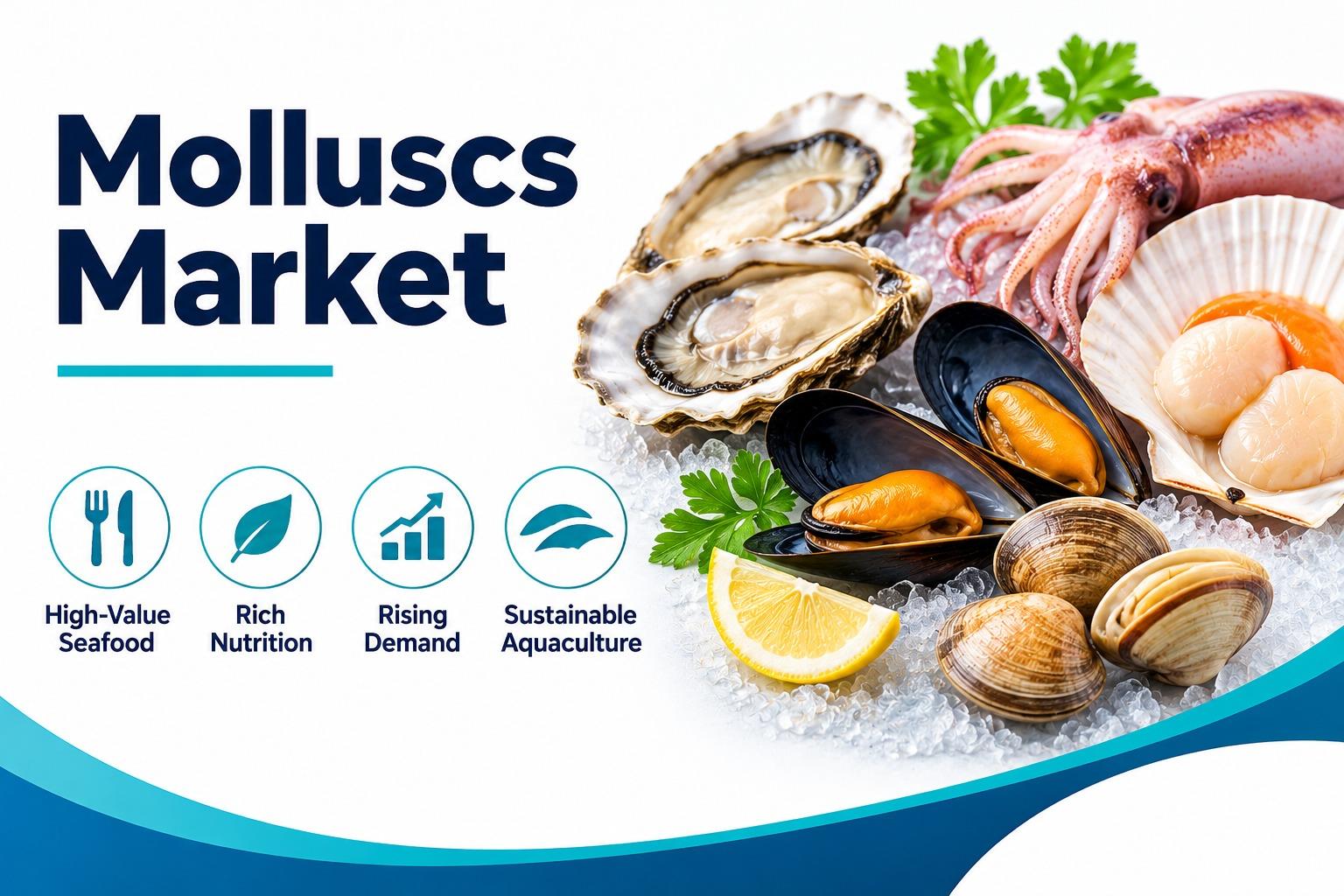
According to Straits Research, the global molluscs market size was valued at USD 21.24 billion in 2025 and is projected to grow from USD 22.84 billion in 2026 to USD 40.82 billion by 2034, registering a CAGR of 7.53% during the forecast period (2026–2034). Asia Pacific dominated the molluscs market with a share of 45.8% in 2025.
Molluscs are aquatic invertebrates that include species such as oysters, mussels, clams, scallops, squid, octopus, and snails. They are widely consumed as seafood and are valued for their protein content, minerals, and culinary versatility. The molluscs market includes products sourced through wild harvesting and aquaculture, supplied in fresh, frozen, canned, dried, and processed forms. Growing seafood consumption, expansion of commercial aquaculture, increasing demand for protein-rich foods, and improvements in seafood processing and distribution are supporting market growth.
Get Full Report: https://straitsresearch.com/report/molluscs-market
Growth Drivers of the Molluscs Market
Rising Global Seafood Consumption
Increasing consumption of seafood is driving demand for molluscs across household, restaurant, and foodservice markets. Oysters, mussels, clams, squid, and other molluscs are used in traditional and modern cuisines, supporting their demand across different regions.
Expansion of Mollusc Aquaculture
Aquaculture is an important source of commercial mollusc production. The expansion of oyster, mussel, clam, and scallop farming is helping suppliers meet seafood demand while supporting more controlled production and harvesting practices.
Growing Demand for Protein-Rich Foods
Molluscs provide protein and essential nutrients, making them an important part of seafood-based diets. Increasing consumer interest in diverse protein sources is supporting demand for mollusc products in retail and foodservice channels.
Increasing International Seafood Trade
Improvements in cold chain logistics, seafood processing, and international distribution are enabling mollusc suppliers to reach wider markets. Growing trade in frozen, processed, and value-added seafood products is supporting market expansion.
Growth of Restaurants and Foodservice Industries
Restaurants, hotels, seafood chains, and catering businesses use molluscs in a wide range of dishes. Expansion of foodservice operations and consumer interest in seafood cuisine are contributing to demand for fresh and processed mollusc products.
Advancements in Seafood Processing and Preservation
Improved freezing, packaging, refrigeration, and processing technologies are helping maintain product quality and extend shelf life. These developments support the distribution of molluscs across domestic and international markets.
Applications of the Molluscs Market
Food and Beverage
Food consumption represents a major application for molluscs. Oysters, mussels, clams, scallops, squid, and octopus are prepared in fresh, cooked, frozen, canned, and dried forms for household and commercial consumption.
Restaurants and Foodservice
Molluscs are widely used in seafood restaurants, hotels, catering services, and institutional kitchens. They are incorporated into soups, pasta, rice dishes, seafood platters, grilled meals, and regional specialties.
Processed Seafood Products
Molluscs are processed into canned seafood, frozen seafood mixes, dried products, ready-to-cook meals, and other packaged food products. Processing improves convenience and allows suppliers to serve consumers with different storage and preparation preferences.
Nutritional and Specialty Food Products
Mollusc-derived ingredients are used in selected food formulations and nutritional products. Their protein and mineral content supports applications in specialty food categories, although processing methods and product composition vary by species.
Pharmaceutical and Biomedical Applications
Certain mollusc species and their biological compounds are studied for potential pharmaceutical and biomedical uses. Research includes compounds associated with marine organisms, biomaterials, and bioactive substances, creating specialized opportunities beyond conventional seafood consumption.
Emerging Trends in the Molluscs Market
Increasing Adoption of Sustainable Aquaculture
Producers are focusing on responsible farming practices, improved hatchery management, and efficient cultivation methods. Sustainable aquaculture is gaining importance as suppliers seek to support long-term production while managing environmental impacts.
Growing Demand for Value-Added Mollusc Products
Consumers are increasingly offered convenient seafood formats such as ready-to-cook meals, marinated products, frozen portions, canned seafood, and prepared dishes. Value-added processing helps suppliers reach retail and foodservice customers with different preferences.
Expansion of Cold Chain and Traceability Systems
Refrigerated transportation, improved packaging, and digital traceability are becoming increasingly important in seafood supply chains. These systems help maintain product quality, support food safety, and provide information about sourcing and handling.
Increasing Focus on Food Safety and Quality Standards
Seafood producers and processors are strengthening quality control, testing, storage, and handling practices. Monitoring for contaminants, harmful algal toxins, and microbial risks is particularly important for molluscs because some species are consumed raw or lightly cooked.
Development of Advanced Aquaculture Technologies
Producers are exploring improved monitoring systems, water quality management, hatchery techniques, and automated feeding and harvesting equipment. These technologies can support more consistent production and better farm management.
Rising Interest in Diverse Seafood Species
Consumer interest in different seafood varieties is supporting demand for a broader range of mollusc species. Squid, octopus, scallops, oysters, and mussels are used in regional cuisines and international food markets, creating opportunities for product diversification.

 English
 Arabic
 French
 Spanish
 Portuguese
 Deutsch
 Turkish
 Dutch
 Russian
 Romaian
 Portuguese (Brazil)
 Greek
