


Public School Transformation India: Shikshagraha’s Vision for Transforming Public Education
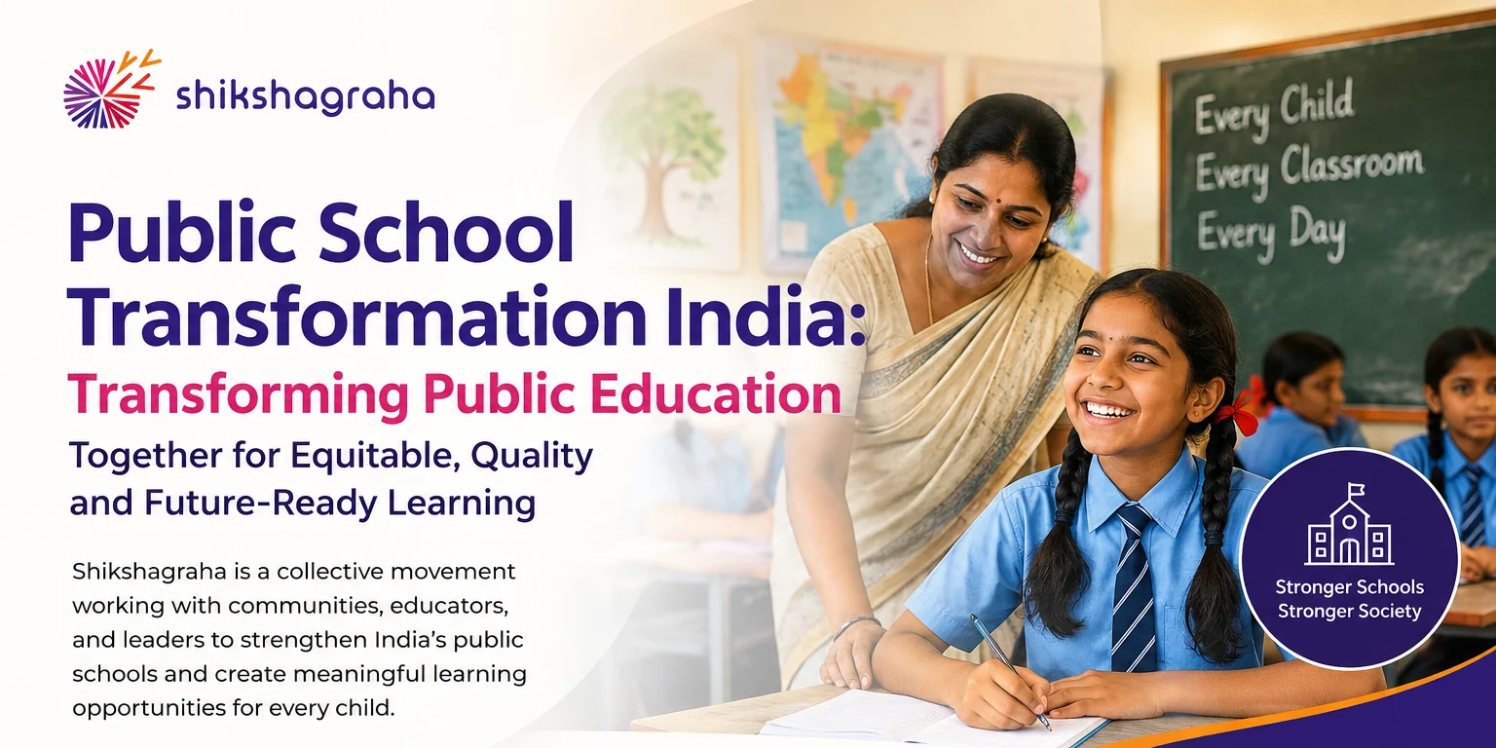
India's education system plays a vital role in shaping the country's social and economic future. Public schools, in particular, provide learning opportunities to millions of children from diverse backgrounds.
However, ensuring that every child receives quality education requires more than infrastructure and classroom facilities. It demands effective leadership, active community participation, improved teaching practices, and a shared commitment to long-term development. This is where public school reform becomes essential.
The journey towards Public school transformation India requires collective efforts from teachers, school leaders, parents, government institutions, and civil society organisations. Sustainable improvements happen when everyone involved in education understands their responsibility and works towards a common objective.
Shikshagraha is contributing to this movement by encouraging people across communities to participate in strengthening public education. Through collective leadership, local action, and collaborative partnerships, the initiative aims to create an education system where every child has access to an enriching learning experience and the opportunity to become future-ready.
Understanding the Need for Public School Reform in India
Public education is one of the strongest foundations for building an inclusive society. Government schools serve children from different economic, social, and geographical backgrounds. For many families, these institutions provide an essential opportunity for learning, personal development, and a better future.
However, several challenges can affect the overall quality of education. These challenges are interconnected and cannot be addressed through isolated solutions.
Some important areas that require attention include:
-
Learning outcomes: Children need opportunities to develop critical thinking, communication, creativity, and problem-solving abilities.
-
School leadership: Headteachers and school leaders require the support and resources to guide teachers and improve school environments.
-
Teacher development: Continuous professional learning helps educators adopt effective classroom practices.
-
Community participation: Parents and local communities should have meaningful opportunities to contribute to school development.
-
Equitable opportunities: Every child deserves access to a safe, supportive, and engaging learning environment.
-
Institutional collaboration: Government bodies, education organisations, and community groups need to work together towards common goals.
Addressing these priorities requires a shift in how society understands public education. Instead of viewing school improvement as the responsibility of a single institution, it should become a shared commitment involving everyone connected to a child's learning journey.
Public School Transformation India: Moving Beyond Traditional Approaches
Improving public education requires a comprehensive approach that considers both classroom experiences and the wider education ecosystem. Infrastructure development, digital learning facilities, and academic resources are valuable, but their impact becomes stronger when supported by effective leadership and community involvement.
A meaningful transformation begins when schools identify their specific challenges, understand the needs of students, and introduce practical improvements that can be sustained over time.
Some approaches that can support this process include:
1. Strengthening School Leadership
School leaders influence the overall learning environment. Their ability to guide teachers, encourage innovation, coordinate activities, and engage with parents directly contributes to school development. Leadership development programmes can help school leaders become active participants in continuous improvement.
2. Encouraging Collaborative Learning
Teachers benefit from sharing experiences, discussing classroom challenges, and learning from successful practices. Peer learning and professional networks create opportunities for educators to exchange ideas and introduce better teaching methods.
3. Building Community Ownership
Parents and community members understand the local challenges affecting children. Their participation in school activities, discussions, and improvement initiatives can strengthen trust between schools and communities.
4. Promoting Student-Centred Education
Learning should extend beyond memorising information. Activities that encourage exploration, communication, collaboration, and independent thinking help students develop skills that are relevant to everyday life.
5. Creating Sustainable Improvement Practices
Schools need improvement strategies that can continue beyond individual projects or short-term interventions. Regular reflection, local ownership, and collaborative decision-making help establish lasting progress.
These approaches demonstrate that meaningful transformation is not always dependent on large-scale interventions. Consistent actions, when supported by the right people and systems, can create significant improvements.
How Shikshagraha Encourages Collective Action for Education
Education transformation becomes more effective when individuals and institutions work towards a shared vision. Shikshagraha approaches public education as a collective responsibility and encourages different stakeholders to contribute according to their roles, experiences, and local contexts.
Its broader vision is to strengthen India's one million public schools so that every child can experience meaningful learning and become prepared for the future.
The movement recognises that teachers, school leaders, parents, young people, civil society organisations, and government stakeholders all have important roles to play.
Its approach includes several important dimensions:
-
System Leadership Collective: Encourages collaboration between governments and civil society organisations to strengthen public schools.
-
Women Leadership Collective: Creates opportunities for women to lead and participate in school improvement efforts.
-
Youth Leadership Collective: Encourages young people to contribute their perspectives, experiences, and ideas to education development.
-
Shikshagraha Commons: Provides open-source resources, tools, and assets that support public education initiatives.
-
Shikshagraha Awards: Recognises education leaders and highlights meaningful contributions towards improving schools.
-
Shiksha Samvaad: Creates opportunities for dialogue and shared understanding among people working towards education improvement.
These initiatives help connect local experiences with wider system-level efforts. They also encourage individuals to move beyond working independently and become part of a broader network focused on equitable and sustainable education.
Practical Ways to Improve Public Schools Through Local Participation
School improvement becomes more meaningful when solutions are developed with an understanding of local needs. A strategy that works in one school may require adjustments in another because communities have different challenges, resources, and priorities.
To improve public schools effectively, stakeholders should focus on practical actions that can be implemented, reviewed, and strengthened over time.
Here are some important steps:
For Teachers
-
Introduce interactive classroom activities that encourage student participation.
-
Share effective teaching practices with colleagues.
-
Identify students who need additional academic support.
-
Encourage curiosity, creativity, and collaborative learning.
For School Leaders
-
Create a clear school improvement vision.
-
Encourage regular discussions among teachers.
-
Monitor classroom practices and student engagement.
-
Build stronger relationships with parents and local communities.
For Parents and Communities
-
Participate in school meetings and development activities.
-
Encourage children's regular attendance and learning habits.
-
Share feedback about school-related challenges.
-
Support initiatives that create a positive learning environment.
For Civil Society Organisations
-
Collaborate with local education departments and schools.
-
Provide capacity-building opportunities for educators.
-
Support leadership development and community engagement.
-
Document successful practices and share knowledge across networks.
Small improvements can create meaningful momentum when they are consistently implemented and shared with others. A classroom activity, a new communication practice, or a collaborative school meeting may become the starting point for wider institutional change.
Transforming Public Education Through Leadership and Shared Responsibility
The future of education depends on how effectively different stakeholders work together. Teachers may understand classroom-level challenges, parents may recognise barriers affecting children's participation, and government institutions may have the authority to strengthen policies and systems. Each perspective contributes something valuable.
Transforming public education therefore requires an environment where these perspectives are connected rather than treated separately.
Leadership plays an important role in bringing people together. Effective education leadership is not limited to administrative responsibilities. It also involves building trust, encouraging new ideas, supporting collaboration, and creating opportunities for others to take initiative.
A shared leadership approach can contribute to education development in several ways:
-
It encourages individuals to take ownership of common challenges.
-
It creates opportunities for women and young people to participate in decision-making.
-
It strengthens relationships between schools and communities.
-
It supports the exchange of knowledge and successful practices.
-
It creates stronger connections between grassroots action and institutional priorities.
When people work together with a common purpose, school improvement becomes more than an individual responsibility. It develops into a collective movement that can influence the wider education system.
Measuring Progress Beyond Infrastructure and Enrolment
The success of education initiatives should not be measured only through the number of classrooms constructed, facilities introduced, or students enrolled. These indicators are important, but they do not fully explain the quality of children's learning experiences.
A broader approach to evaluating school development should consider both measurable outcomes and changes in everyday practices.
Regular monitoring helps stakeholders understand what is working, identify areas that need attention, and make informed decisions.
It is equally important to document stories of change. Experiences from teachers, students, parents, and school leaders provide valuable insights into how improvements are happening on the ground.
Combining data with real experiences creates a more complete understanding of progress and helps successful practices reach other schools and communities.
Building a Future-Ready Education System for Every Child
Children today need more than academic knowledge to navigate an increasingly complex world. They require the ability to think independently, communicate effectively, solve problems, collaborate with others, and respond to changing circumstances.
Public schools must create learning environments where these capabilities can develop naturally through meaningful educational experiences.
A future-ready education system should prioritise:
-
Critical thinking: Helping students understand information, ask questions, and make informed decisions.
-
Creativity: Providing opportunities to explore ideas and develop original solutions.
-
Communication: Encouraging students to express themselves confidently.
-
Collaboration: Helping children learn through teamwork and shared activities.
-
Digital awareness: Developing responsible and effective use of technology.
-
Social responsibility: Encouraging empathy, participation, and respect for different perspectives.
Achieving these outcomes requires strong support systems around schools. Teachers need opportunities to develop their skills, school leaders need the confidence to encourage innovation, and communities need to recognise their role in children's education.
This is why public education improvement must remain a long-term priority rather than a series of disconnected activities.
The Way Forward: Making Education a Collective Movement
India's public education system has enormous potential to create opportunities for future generations. Realising this potential requires consistent collaboration, local leadership, and a willingness to rethink traditional approaches to school development.
The progress of Public school transformation India will depend on how effectively communities, educators, institutions, and policymakers come together to address shared challenges. Shikshagraha reflects this approach by encouraging people to take meaningful action and contribute to a wider movement for education equity.
Every teacher who introduces a better classroom practice, every parent who actively participates in school development, every young person who shares an important perspective, and every organisation that builds a meaningful partnership can contribute to lasting change.
Ultimately, public school reform is not simply about changing school infrastructure or introducing new programmes. It is about strengthening the people, relationships, and systems that make quality education possible.
A stronger public education system begins with collective responsibility and grows through consistent action. When every stakeholder becomes part of the solution, schools can become more inclusive, engaging, and supportive spaces where every child has the opportunity to learn, grow, and build a brighter future.

 English
 Arabic
 French
 Spanish
 Deutsch
 Turkish
 Dutch
 Italiano
 Russian
 Romaian
 Portuguese (Brazil)
 Greek
