


A Complete Guide to Understanding Hair Transplant in Pune
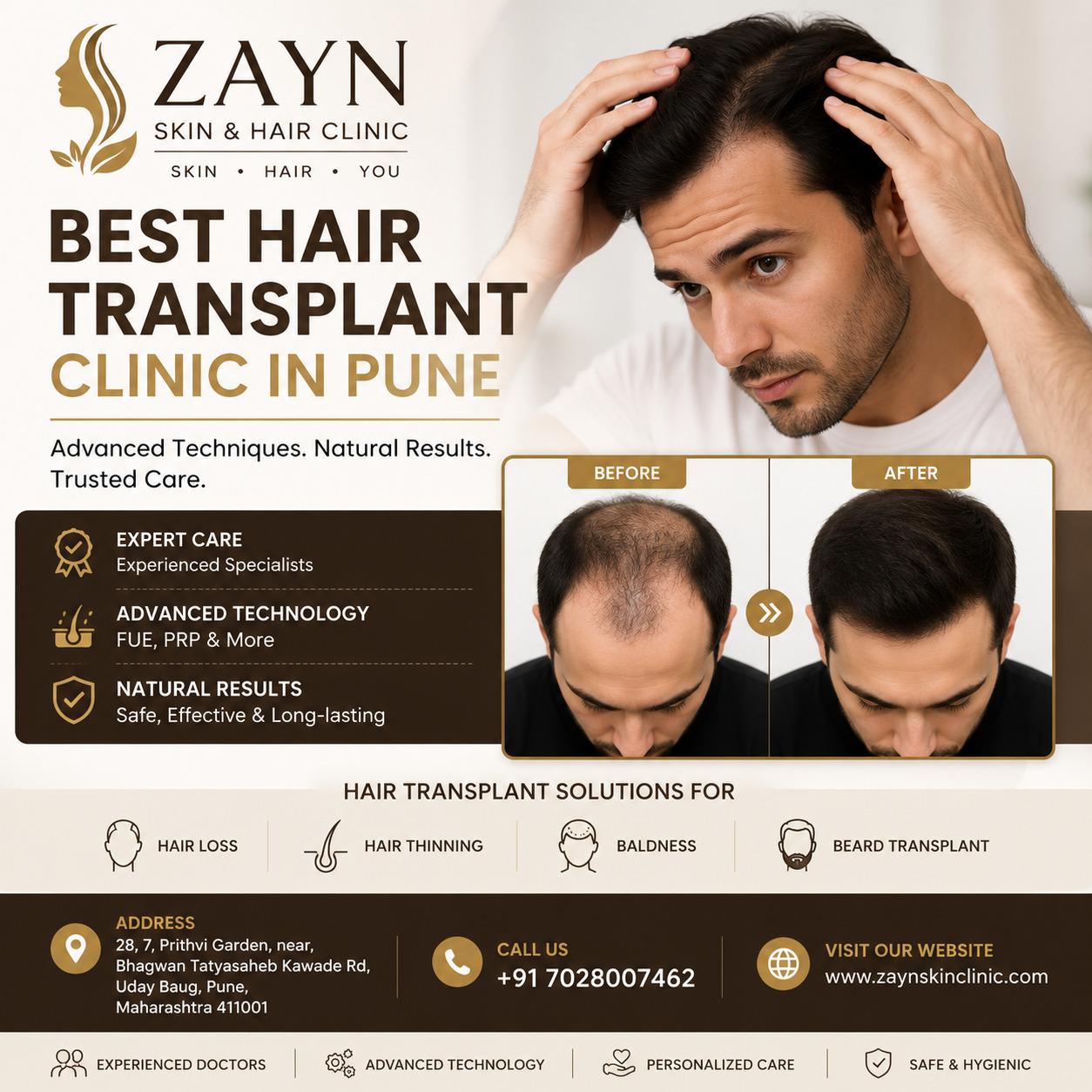
Hair loss can affect people at different stages of life and may influence both appearance and confidence. While temporary hair shedding can sometimes improve with appropriate care, persistent hair thinning or pattern hair loss may require professional evaluation. For people considering hair transplant in pune, understanding the procedure, consultation process, suitability, recovery, and realistic expectations can help them make a more informed decision.
Understanding Hair Loss
Hair loss can have several causes. Genetics, age, hormonal changes, nutritional factors, certain medical conditions, stress, and other factors may contribute to thinning hair.
The pattern and severity of hair loss can also vary significantly between individuals. Some people may notice a receding hairline, while others may experience thinning around the crown or more general loss of density.
Before considering a transplant, it is important to understand why the hair is thinning. A professional evaluation can help determine whether transplantation is an appropriate option.
What Is a Hair Transplant?
A hair transplant is a procedure in which hair follicles are taken from a suitable donor area and placed into areas where hair density has decreased.
The goal is to create a natural-looking appearance by strategically placing follicles in areas affected by hair loss. The exact technique and treatment plan depend on factors such as the pattern of hair loss, donor hair availability, and individual goals.
A consultation is therefore an important first step before deciding on any procedure.
Why Consultation Matters
Not everyone experiencing hair loss is automatically a suitable candidate for transplantation. A professional needs to assess the condition of the scalp, the pattern of hair loss, the quality of donor hair, and the patient's expectations.
During consultation, you can discuss:
-
Your current pattern of hair loss
-
How long you have experienced thinning
-
Previous hair-loss treatments
-
Your desired appearance
-
Available donor hair
-
Expected results
-
Recovery requirements
This discussion can help create a treatment plan based on your individual circumstances.
Understanding Donor Hair
The donor area is an important part of a hair transplant. Hair follicles are generally selected from areas where the hair is more resistant to the pattern of hair loss being addressed.
The quality and density of donor hair can influence the overall treatment plan. A professional assessment helps determine how much donor hair may be available and how it can be used effectively.
This is one reason why an individual consultation is more useful than comparing procedures based only on photographs or advertisements.
Common Hair Transplant Techniques
Modern hair restoration can involve different techniques. Two commonly discussed approaches are Follicular Unit Extraction and Follicular Unit Transplantation.
The appropriate technique depends on individual factors, including hair characteristics, donor-area condition, the extent of hair loss, and the professional's recommendation.
Patients should discuss the differences between techniques during consultation rather than selecting a method simply because it is widely advertised.
Creating a Natural-Looking Hairline
The hairline is one of the most visible parts of a hair restoration procedure. Its design can have a significant effect on the overall appearance.
A natural-looking hairline generally needs to take into account factors such as age, facial proportions, existing hair pattern, and future hair loss.
A professional should discuss the planned hairline and expected density before the procedure.
Realistic Expectations Are Important
Hair transplantation is not an instant solution. New growth takes time, and the final appearance may develop gradually.
Patients should understand that results can vary depending on donor hair quality, individual healing, the extent of hair loss, and other factors.
It is important to discuss realistic expectations during consultation rather than assuming that a transplant will automatically produce a specific density or appearance.
Recovery After the Procedure
Recovery requirements can vary depending on the technique and individual circumstances. Patients generally receive specific instructions regarding scalp care, washing, physical activity, and other aspects of aftercare.
Following professional instructions carefully can help support the healing process.
Patients should also ask when they can return to work, exercise, or their normal hair-care routine.
Post-Procedure Care Matters
Aftercare is an important part of the overall hair-restoration process. Patients should follow the instructions provided by their medical team rather than experimenting with products or treatments immediately after the procedure.
It is also important to attend recommended follow-up appointments. These visits allow the professional to monitor progress and address any concerns.
Choosing the Right Clinic
Selecting a suitable clinic requires more than comparing prices. Consider the qualifications and experience of the treating professional, the consultation process, clinic hygiene, available techniques, and transparency about expected results.
A professional clinic should explain the procedure clearly and allow you to ask questions before making a decision.
Be cautious of advertisements that focus only on extremely low prices or guarantee unrealistic outcomes.
Ask About the Procedure Before Deciding
A consultation is an opportunity to understand the complete process. You can ask about the number of grafts that may be required, the proposed technique, recovery time, potential risks, aftercare, and expected timeline for visible growth.
You can also ask how the clinic approaches hairline design and donor-area management.
Having these discussions before treatment can help you feel more prepared.
Hair Transplant and Long-Term Planning
Hair loss can continue to progress even after transplantation. Existing hair that has not been transplanted may continue to thin depending on the underlying cause.
For this reason, long-term planning can be important. A professional may discuss options for maintaining existing hair alongside restoration.
Understanding the possibility of future hair loss can help patients develop more realistic expectations about the long-term appearance.
Avoid Comparing Results Too Quickly
People often compare their progress with photographs or videos found online. However, healing and hair growth can vary considerably between individuals.
The appearance immediately after a procedure is not necessarily representative of the final result. Hair growth can take time, and changes may occur gradually.
Following professional aftercare and attending follow-up appointments is generally more useful than constantly comparing progress with someone else's timeline.
Final Thoughts
Considering a hair transplant is a personal decision that should begin with professional evaluation and realistic expectations. Understanding the cause of hair loss, donor-area availability, treatment techniques, hairline design, recovery, and long-term planning can help you make a more informed choice.
If you are exploring hair restoration, focus on professional expertise, transparent consultation, appropriate treatment planning, and proper aftercare rather than choosing a clinic based solely on promotional offers.
A carefully planned approach can help you understand what may be achievable and whether hair transplantation is an appropriate option for your individual hair-loss concerns.

 Arabic
 French
 Spanish
 Portuguese
 Deutsch
 Turkish
 Dutch
 Italiano
 Russian
 Romaian
 Portuguese (Brazil)
 Greek
