


CNC Machining for Industrial Cylindrical Parts
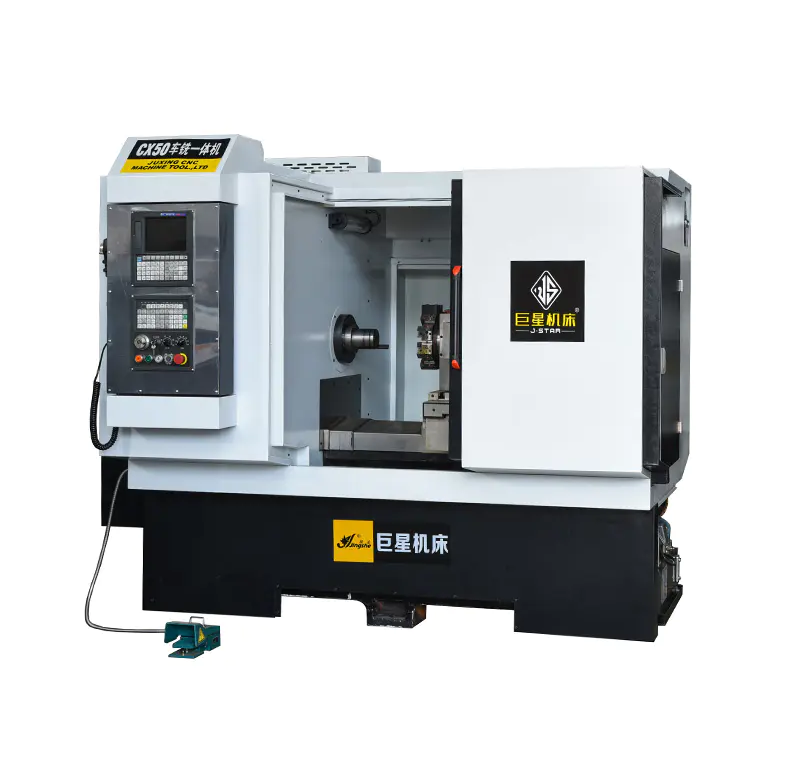
Industrial production requires reliable and repeatable machining methods, especially when producing large volumes of cylindrical components. The CNC Turning Lathe plays a critical role in achieving this requirement by enabling automated, high-speed material removal with consistent quality.
CNC turning works by rotating the raw material while a cutting tool moves linearly along the surface. This subtractive process is ideal for parts that are symmetrical around a central axis. Common materials include carbon steel, alloy steel, brass, copper, and engineering plastics.
Typical industrial components produced using CNC turning include rollers, shafts, pins, hydraulic connectors, and machine spacers. These parts often require consistent diameter control, smooth surface finish, and precise threading.
In production environments, spindle speed and feed rate are carefully optimized. For example, aluminum may be machined at speeds above 2500 RPM with higher feed rates, while stainless steel requires slower speeds to prevent tool wear. Feed rates typically range from 0.05 mm/rev to 0.3 mm/rev depending on operation type.
A CNC Turning Lathe supports multiple operations in one setup. Rough turning removes excess material quickly, while finishing passes refine surface quality. Thread cutting ensures compatibility with mating components, and grooving enables sealing or locking functions.
Another important factor is production efficiency. CNC turning reduces the need for multiple machine setups, which improves repeatability and shortens lead time. It also allows continuous bar feeding systems for mass production environments, increasing output stability.
Industrially, CNC turning is essential for hydraulic systems, industrial automation equipment, and mechanical transmission systems. These applications demand high reliability and dimensional consistency, which traditional manual machining cannot consistently achieve.
With advancements in CNC control systems, modern lathes can now detect tool wear, adjust parameters automatically, and ensure stable machining quality across long production runs.

 Arabic
 French
 Spanish
 Portuguese
 Deutsch
 Turkish
 Dutch
Dutch
 Italiano
 Russian
 Romaian
 Portuguese (Brazil)
 Greek
Greek
