


Advanced Materials Used by Racing Seats Manufacturer
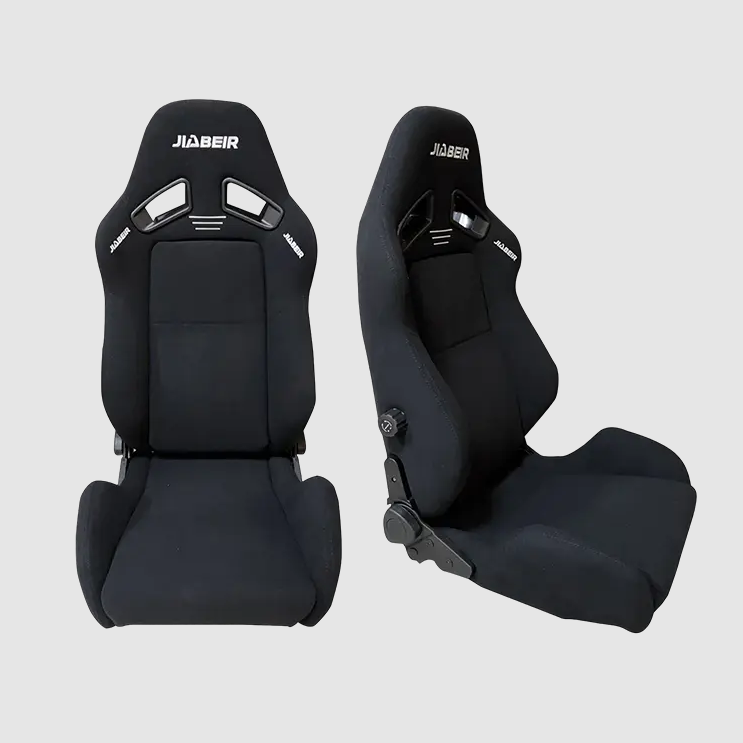
The evolution of racing seats has been strongly influenced by advancements in material science. A modern Racing Seats Manufacturer selects materials based on strength-to-weight ratio, energy absorption capability, and durability under repeated stress cycles.
Fiberglass remains one of the most widely used materials due to its balanced properties. It typically provides tensile strength around 300–500 MPa while maintaining relatively low production cost. This makes it suitable for entry-level and semi-professional racing applications.
Carbon fiber, on the other hand, offers significantly higher performance characteristics. With tensile strength exceeding 600 MPa and weight reduction of up to 40% compared to fiberglass, it is widely used in professional motorsport environments. However, it requires precision layering techniques such as vacuum infusion or autoclave curing to ensure structural consistency.
Some hybrid racing seats combine fiberglass shells with carbon reinforcement zones at high-stress points such as shoulder and hip areas. These hybrid constructions enhance durability without significantly increasing cost.
Foam materials also play an important role. Energy-absorbing foam with density ratings between 30–60 kg/m³ is often used to reduce impact shock while maintaining driver stability. Fire-resistant fabrics are commonly applied in FIA-approved seats, capable of withstanding temperatures above 200°C for short durations.
In addition, anti-vibration coatings and surface laminates are used to improve fatigue resistance during long-distance racing.
Material selection directly influences performance, safety, and comfort, making it one of the most critical aspects in racing seat development.

 English
 Arabic
 French
 Spanish
 Portuguese
 Deutsch
 Turkish
 Dutch
Dutch
 Italiano
 Russian
 Romaian
 Greek
Greek
