


How to Prevent Burst Pipes During Winter
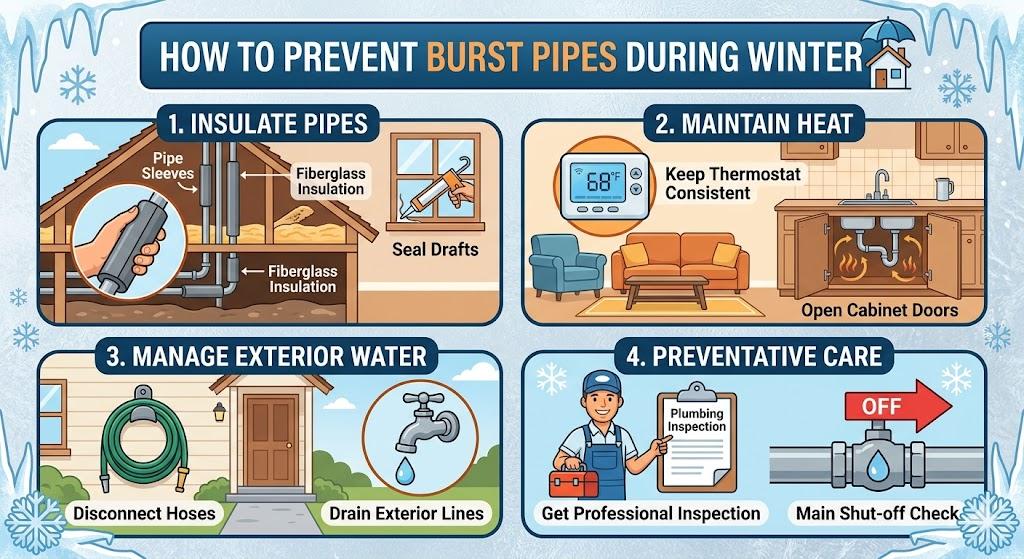
Freezing temperatures present a significant hazard to residential and commercial plumbing systems. When water freezes inside a pipe, it expands, creating immense hydrostatic pressure that can rupture even strong metal or plastic lines. A burst pipe often results in severe structural damage, mold growth, and expensive restoration bills.
Taking proactive measures before the onset of extreme winter weather is the most effective strategy to safeguard a property. Implementing a few systemic adjustments can prevent catastrophic freezing and ensure uninterrupted water flow throughout the colder months.
1. Insulate Vulnerable Plumbing Lines
Pipes located in unheated areas of a building are at the highest risk of freezing. Sub-floors, attics, crawl spaces, basements, and exterior walls are frequently exposed to bitter cold currents.
-
Apply Pipe Sleeves: Installing foam pipe insulation or fiberglass sleeves over exposed pipes offers a reliable thermal barrier.
-
Seal Air Leaks: Inspecting the property for gaps around electrical wiring, dryer vents, or masonry allows property owners to seal drafts using caulk or expanding foam, keeping cold ambient air away from adjacent plumbing lines.
2. Maintain Consistent Indoor Temperatures
Fluctuating indoor temperatures can inadvertently allow hidden pipes to drop below the freezing threshold. Maintaining a steady thermal environment minimizes this risk.
-
Keep Thermostats Stable: Rather than lowering the thermostat at night, maintaining a consistent temperature during the day and night keeps internal wall spaces warm.
-
Open Cabinet Doors: Allowing warm air from the living spaces to circulate around kitchen and bathroom sinks helps protect the plumbing hidden beneath cabinetry.
-
Keep Main Lines Active: During periods of historic lows, letting faucets drip slightly keeps water moving continuously, making it much harder for ice crystals to form and lock up the line.
3. Manage Exterior Water Sources
Exterior plumbing fixtures are directly exposed to winter elements and must be winterized well before the first hard freeze arrives.
-
Disconnect Hoses: Leaving garden hoses attached can trap water inside the outdoor spigot, causing the faucet mechanism or the pipe inside the wall to split.
-
Drain Exterior Lines: Shutting off the valve to outdoor spigots and opening the exterior taps allows any remaining water to drain completely out of the system.
4. Invest in Preventative Evaluations and Rapid Emergency Response
Undetected vulnerabilities, such as minor cracks, weak joints, or existing blockages, accelerate the likelihood of a major failure under winter pressure. Arranging for comprehensive plumbing inspection services allows professionals to assess insulation quality, identify high-risk zones, and reinforce the system prior to a freeze.
| Action Item | Preventative Benefit | Risk Level If Ignored |
| System Inspection | Catches weak joints and vulnerable insulation. | High risk of hidden line failure. |
| Main Shut-off Check | Ensures immediate water control during a rupture. | Excessive flooding and structural decay. |
| Thermostat Regulation | Prevents localized freezing in exterior walls. | High risk of sudden midnight pipe bursts. |
If a pipe does rupture despite preventative efforts, turning off the main water valve immediately is critical to halting the influx of water. Resolving an active plumbing failure requires the immediate intervention of an emergency plumber columbia sc to mitigate water damage and safely replace the compromised section of the line. Ultimately, collaborating with a licensed columbia sc plumber remains the most dependable method to secure a property against seasonal structural threats and maintain long-term asset value.

 English
 Arabic
 French
 Spanish
 Portuguese
 Deutsch
 Turkish
 Dutch
Dutch
 Russian
 Romaian
 Portuguese (Brazil)
 Greek
Greek
