


Understanding Artificial Neurons and Layers
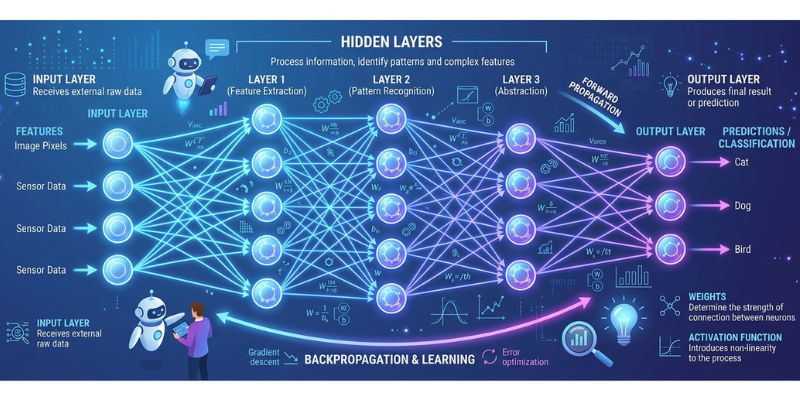
Artificial intelligence has transformed the way computers solve problems, recognize patterns, and make decisions. Many AI systems use artificial neural networks. These networks are designed to work like the human brain when it processes information. Grasping the concept of artificial neurons and layers is important for anyone interested in understanding how contemporary AI technologies function. If you want practical knowledge and hands-on learning, consider enrolling in the Artificial Intelligence Course in Bangalore at FITA Academy to strengthen your understanding of AI concepts.
Artificial neural networks are designed to process data and identify patterns. They consist of interconnected units called artificial neurons that work together to analyze information. These networks are widely used in applications such as image recognition, language translation, recommendation systems, and many other AI-driven solutions.
What are Artificial Neurons?
Artificial neurons act as the basic building blocks of a neural network. They are designed to receive information, process it, and produce an output. Each neuron accepts one or more inputs and assigns importance to them before generating a result.
The purpose of an artificial neuron is to mimic a simplified version of how biological neurons function in the human brain. While artificial neurons are much less complex than real neurons, they can still perform powerful computations when combined into large networks. By working together, thousands or even millions of neurons can solve challenging problems that traditional programming methods may struggle to handle.
How Artificial Neurons Process Information
An artificial neuron receives data from different sources and performs calculations on that data. It evaluates the inputs and determines whether the information should be passed to the next stage of the network. This process allows the network to learn patterns and improve its performance over time.
During training, the network adjusts the importance assigned to different inputs. As more data is processed, the system becomes better at making predictions and recognizing patterns. This learning process is one of the key reasons neural networks are so effective in modern artificial intelligence applications.
Understanding Layers in Neural Networks
Artificial neurons are organized into groups known as layers. These layers help the network process information in a structured way. A neural network usually comprises an input layer, multiple hidden layers, and an output layer.
The input layer receives raw data from the outside world. This data can include numbers, text, images, or other forms of information. The hidden layers perform calculations and extract meaningful features from the input. The output layer provides the final result or prediction.
As information moves through different layers, the network gradually learns more detailed patterns. This layered structure enables neural networks to solve complex tasks with impressive accuracy. If you are interested in developing deeper expertise in neural network architecture, you can take the Artificial Intelligence Course in Hyderabad to gain practical exposure and build stronger AI skills.
Why Hidden Layers are Important
Hidden layers are essential for the learning capabilities of neural networks. They enable the system to recognize connections that might not be readily apparent in the raw data. Each hidden layer processes information differently and contributes to a more accurate final output.
For example, in image recognition, early layers may detect simple shapes and edges. Deeper layers can identify objects, patterns, and complex visual features. This gradual learning process helps neural networks perform tasks that require advanced pattern recognition.
The number of hidden layers often depends on the complexity of the problem. Simple tasks may require only a few layers, while advanced applications such as speech recognition or computer vision may use many layers to achieve better performance.
How Neurons and Layers Work Together
Artificial neurons and layers work together to create an intelligent system capable of learning from data. Neurons perform individual calculations, while layers organize those calculations into meaningful stages. This combination enables neural networks to process information efficiently and make accurate predictions.
As data flows through the network, each layer contributes to refining the information. The final output is generated after multiple processing steps, allowing the system to recognize patterns and solve problems effectively.
Understanding artificial neurons and layers provides a strong foundation for learning artificial intelligence and deep learning. Artificial neurons act as the processing units of a network, while layers organize information to enable efficient learning. Together, they form the backbone of modern neural networks and power many of the AI applications used today. If you are ready to advance your AI knowledge and gain industry-focused skills, you can join the AI Course in Ahmedabad and continue building your expertise in this exciting field.

 English
 Arabic
 French
 Spanish
 Portuguese
 Deutsch
 Turkish
 Dutch
 Italiano
 Russian
 Romaian
 Greek
