When people admire a bridge, stadium, or skyscraper, they usually focus on its size, appearance, or engineering complexity. What often goes unnoticed is one of the most important principles behind safe structural design: redundancy.
In simple terms, structural redundancy means a building has alternative load paths that allow it to remain stable even if one component fails. While the concept may not be as visible as architectural design or construction technology, it plays a critical role in protecting lives and preventing catastrophic failures.
The strongest structures are not necessarily those built with the most material. They are often the ones designed with backup systems that keep working when unexpected problems occur in the services of structural engineering.
Why Structures Need Backup Plans
No structure operates under perfect conditions forever.
Over time, buildings experience:
- Material deterioration
- Extreme weather events
- Unexpected loads
- Construction defects
- Accidental impacts
- Natural disasters
Engineers understand that it is impossible to predict every future event with complete accuracy. Because of this, modern structural design focuses not only on strength but also on resilience.
Redundancy provides an additional layer of protection when things do not go according to plan.
Understanding Load Paths
Every structure transfers loads from one component to another until they eventually reach the ground.
For example:
A floor transfers loads to beams.
Beams transfer loads to columns.
Columns transfer loads to foundations.
Foundations transfer loads into the soil.
If one element fails and no alternative load path exists, a local problem can potentially spread throughout the structure.
Redundant systems help prevent this chain reaction.
Lessons from Historical Failures
Many engineering failures have demonstrated the importance of redundancy.
In some cases, the failure of a single critical component triggered widespread structural collapse because there was no secondary system available to redistribute the load.
These events have influenced building codes and design practices around the world.
Today, engineers place greater emphasis on ensuring that structures can tolerate localized damage without suffering disproportionate consequences.
Redundancy in Modern Buildings
Structural redundancy appears in many forms.
Multiple Load Paths
Modern buildings are often designed so loads can travel through more than one route.
If one structural element becomes damaged, other members can help carry the load.
Continuous Framing Systems
Rather than relying on isolated components, many structures use interconnected framing systems that improve overall stability.
Structural Connections
Connections between beams, columns, and other elements are often designed to provide additional resistance during unexpected events.
Lateral Stability Systems
Bracing systems, shear walls, and moment frames frequently work together to resist wind and seismic forces.
This layered approach improves reliability and performance.
Why Redundancy Matters During Extreme Events
Extreme events rarely affect structures exactly as engineers expect.
Earthquakes, hurricanes, explosions, vehicle impacts, and severe storms can create unusual load conditions.
Structures with higher levels of redundancy generally perform better because they have multiple ways to redistribute forces.
This does not mean damage cannot occur. Instead, it means the structure has a greater chance of remaining stable long enough for occupants to evacuate safely and for repairs to be performed.
The Balance Between Efficiency and Safety
Modern construction constantly seeks efficiency.
Developers want lower costs.
Contractors want faster schedules.
Designers aim to optimize material usage.
However, excessive optimization can sometimes reduce redundancy if not carefully managed.
Structural engineers must balance efficiency with reliability, ensuring that cost savings do not compromise long-term safety.
This balance is one of the most important aspects of responsible engineering.
Technology Is Improving Structural Reliability
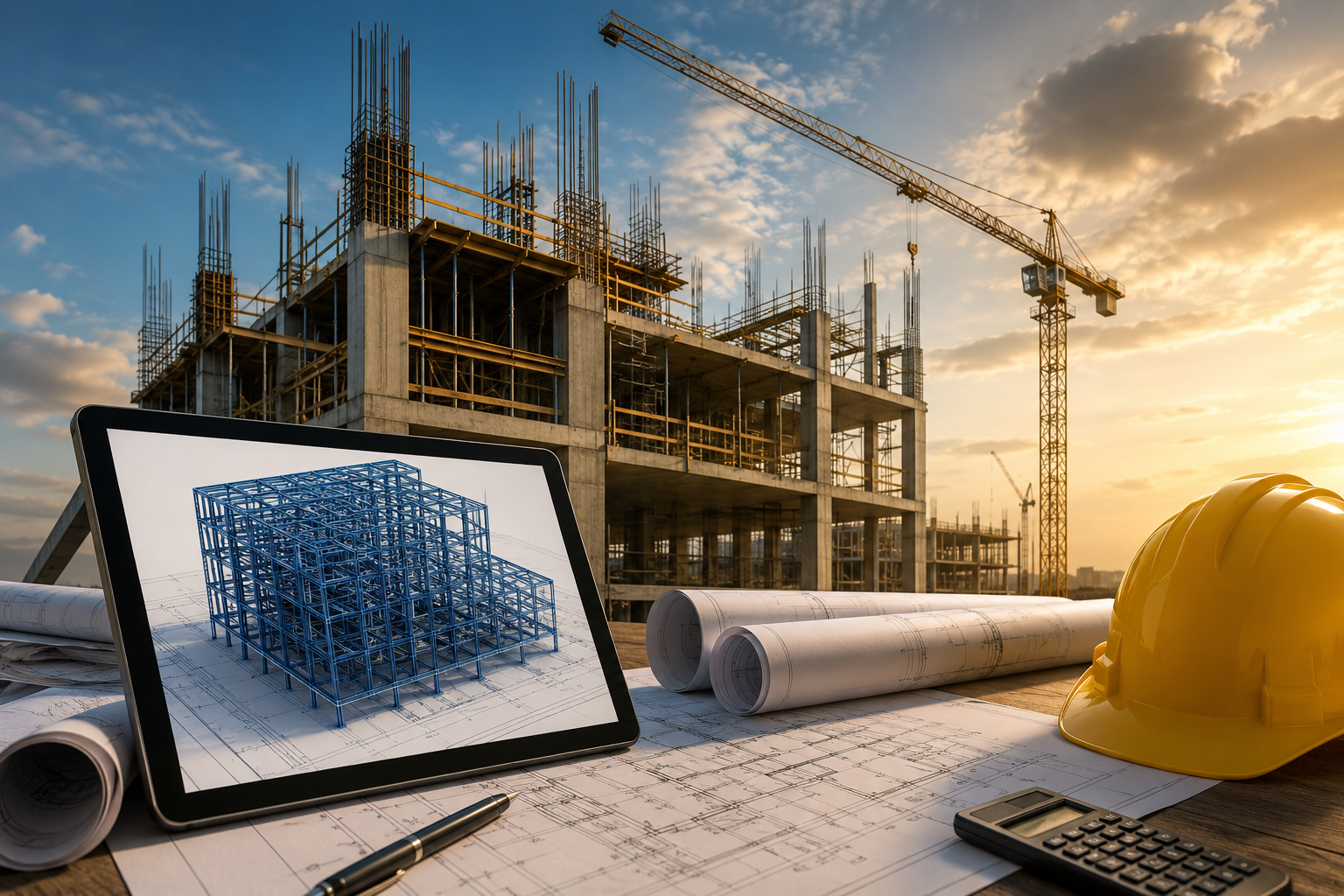
Advanced engineering software now allows designers to evaluate structural behavior in far greater detail than ever before.
Engineers can simulate:
- Earthquakes
- Wind events
- Progressive collapse scenarios
- Dynamic loads
- Material failures
These tools help identify vulnerabilities and improve redundancy during the design process.
Digital modeling has become an essential part of creating safer and more resilient structures.
Designing for an Uncertain Future
Future buildings will face challenges that are difficult to predict today.
Climate conditions are changing.
Cities are becoming denser.
Infrastructure demands continue increasing.
Because uncertainty is unavoidable, redundancy remains one of the most valuable principles in structural engineering.
A structure designed with multiple layers of protection is better prepared to adapt to future challenges.
Final Thoughts
Structural redundancy rarely receives public attention because it is largely invisible once construction is complete. Yet it remains one of the most important factors in creating safe, resilient, and reliable buildings.
Good structural engineering is not simply about making a building stand. It is about ensuring that the building can continue performing even when unexpected events occur. In many cases, the difference between a minor incident and a major disaster is not the strength of a single component but the presence of a well-designed backup system working quietly in the background.




 English
 Arabic
 French
 Spanish
 Portuguese
 Deutsch
 Turkish
 Dutch
Dutch
 Italiano
 Romaian
 Portuguese (Brazil)
 Greek
Greek
