


CD Investment: A Smart Way to Grow Your Savings?
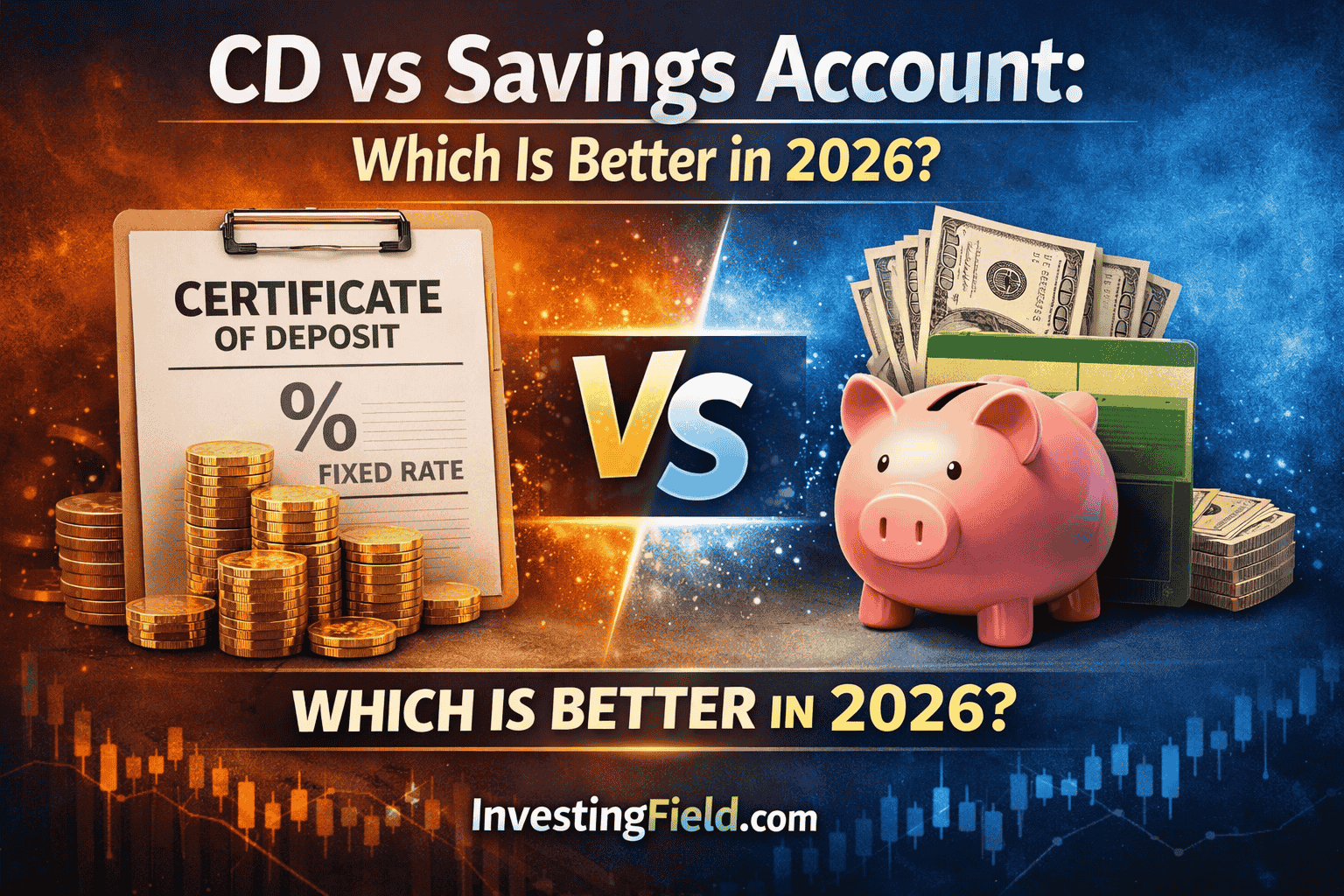
For investors seeking predictable returns with minimal risk, a CD investment can be an attractive option. Certificates of Deposit (CDs) offer fixed interest rates, protection of principal, and a structured way to grow savings over time.
In a financial environment where market volatility remains a concern, many investors are asking: Are CDs a good investment? The answer depends on your financial goals, liquidity needs, and risk tolerance.
This guide explains how CD investments work, compares CD vs savings accounts, and helps you determine which option aligns best with your investment strategy.
What Is a CD Investment?
A Certificate of Deposit (CD) is a savings product offered by banks and credit unions that pays a fixed interest rate for a specified period.
When you invest in a CD, you agree to keep your money deposited for a set term, which can range from a few months to several years. In return, the financial institution generally offers a higher interest rate than a traditional savings account.
Key Features of CD Investments
- Fixed interest rate
- Guaranteed returns if held to maturity
- FDIC insurance up to $250,000 per depositor at participating banks
- Defined maturity date
- Early withdrawal penalties may apply
Unlike stocks, cryptocurrencies, or mutual funds, CDs do not fluctuate in value based on market conditions.
How Does a CD Investment Work?
The process is straightforward:
- Deposit a specific amount of money.
- Choose a CD term (6 months, 1 year, 3 years, etc.).
- Earn a fixed interest rate throughout the term.
- Receive your original deposit plus accumulated interest at maturity.
Example
Suppose you invest $10,000 in a 12-month CD with a 4.5% annual percentage yield (APY).
At maturity, you would earn approximately $450 in interest, assuming rates remain fixed throughout the term.
Because the return is guaranteed, many conservative investors use CDs to preserve capital while generating predictable income.
Are CDs a Good Investment?
Quick Answer
Yes, CDs can be a good investment for investors seeking safety, stability, and guaranteed returns.
However, they may not be ideal for individuals looking for high growth or immediate access to cash.
Benefits of CD Investments
1. Low Risk
CDs are among the safest financial products available. Deposits are typically protected by FDIC insurance, reducing the risk of loss.
2. Predictable Returns
Unlike stock market investments, CDs provide fixed earnings that are known in advance.
3. Protection During Market Volatility
When markets decline, CD holders continue earning interest without worrying about price fluctuations.
4. Higher Rates Than Traditional Savings Accounts
Many banks offer significantly higher APYs on CDs compared to standard savings products.
Drawbacks of CD Investments
Limited Liquidity
Withdrawing money before maturity often results in penalties.
Inflation Risk
If inflation rises above your CD's interest rate, your purchasing power may decrease.
Lower Long-Term Growth
Historically, stocks have generated higher long-term returns than CDs.
CD vs Savings: Which Is Better?
One of the most common questions investors ask is how CD vs savings accounts compare.
Both products help you save money safely, but they serve different purposes.
Comparison Table: CD vs Savings Account
| Feature | Certificate of Deposit (CD) | Savings Account |
|---|---|---|
| Interest Rate | Usually Higher | Usually Lower |
| Liquidity | Limited | High |
| Fixed Rate | Yes | Often Variable |
| Early Withdrawal Penalty | Yes | Usually No |
| Risk Level | Very Low | Very Low |
| Best For | Long-Term Savings Goals | Emergency Funds |
Key Takeaway
If you need frequent access to your money, a savings account may be the better choice.
If your goal is maximizing interest while keeping funds secure, a CD investment may provide superior returns.
Difference Between CD and Savings Account
Understanding the difference between CD and savings account is essential before choosing where to place your money.
Savings Accounts
Savings accounts offer flexibility and easy access to funds. You can typically deposit and withdraw money whenever needed.
Certificates of Deposit
CDs require a commitment period. In exchange for locking up funds, banks reward depositors with higher interest rates.
The Main Difference
The primary difference between CD and savings account products is the balance between:
- Accessibility (Savings Account)
- Yield Potential (CD)
Investors who prioritize returns often prefer CDs, while those needing liquidity generally choose savings accounts.
When Should You Choose a CD Investment?
A CD may be suitable if:
- You have money that you will not need immediately.
- You want guaranteed returns.
- You are saving for a future purchase.
- You prefer low-risk investments.
- You want portfolio diversification.
Common Uses for CDs
- House down payments
- Education savings
- Retirement income planning
- Emergency funds beyond immediate needs
CD Laddering: A Smart Strategy
Many experienced investors use a strategy called CD laddering.
This involves dividing funds across multiple CDs with different maturity dates.
Example of a CD Ladder
- $5,000 in a 1-year CD
- $5,000 in a 2-year CD
- $5,000 in a 3-year CD
- $5,000 in a 4-year CD
As each CD matures, the money can be reinvested into longer-term CDs with potentially higher rates.
Benefits include:
- Better liquidity
- Reduced interest rate risk
- Consistent access to maturing funds
Current Interest Rate Environment and CDs
In recent years, rising interest rates have made CDs increasingly attractive.
Many banks have offered CD rates exceeding 4% APY, levels not commonly seen during previous low-rate periods.
When rates are elevated, locking in a strong CD yield can be a valuable strategy for conservative investors.
However, investors should always compare rates among multiple banks and credit unions before opening a CD.
Who Should Avoid CD Investments?
CDs may not be ideal if:
- You need immediate access to funds.
- You seek aggressive growth.
- You have high-risk tolerance.
- You are investing for very long-term wealth accumulation.
In these situations, diversified stock portfolios, ETFs, or other growth-oriented investments may offer greater potential returns.
Chart Idea
Title: Historical Comparison of Average CD Rates vs Savings Account Rates (2015–2025)
Description:
A line chart showing the average annual percentage yield (APY) of 1-year CDs compared with standard savings accounts over the past decade. This visualization would help readers understand how CDs have historically offered higher returns than traditional savings products.
Frequently Asked Questions
Are CDs a good investment during a recession?
Yes. CDs are generally considered safe investments during economic downturns because they provide guaranteed returns and protect principal from market volatility.
What is the biggest disadvantage of a CD?
The main drawback is limited liquidity. Early withdrawals typically trigger penalties that can reduce earnings.
Can I lose money in a CD investment?
Under normal circumstances, no. If held to maturity at an FDIC-insured institution, your principal is protected within insurance limits.
Is a CD better than a savings account?
It depends on your goals. CDs usually offer higher returns, while savings accounts provide easier access to funds.
How long should I keep money in a CD?
The ideal term depends on your financial objectives. Common options range from 6 months to 5 years.
Final Thoughts
A CD investment remains one of the safest and most predictable ways to grow savings. For investors focused on capital preservation, fixed returns, and financial stability, CDs can play an important role in a diversified portfolio.
When comparing CD vs savings accounts, the right choice depends on whether you value higher returns or greater liquidity. Understanding the difference between CD and savings account products allows investors to make informed decisions based on their goals.
Before opening a CD, compare rates, evaluate your cash-flow needs, and consider strategies such as CD laddering to maximize flexibility and returns.
Whether you're a beginner investor or an experienced saver, CDs can provide a dependable foundation for long-term financial planning.
Ready to make smarter investing decisions? Explore more expert investing guides, market insights, and personal finance strategies on InvestingField.com.

 English
 Arabic
 French
 Spanish
 Portuguese
 Deutsch
 Turkish
 Italiano
 Russian
 Romaian
 Portuguese (Brazil)
 Greek
Greek
