Introduction
The use of batteries has increased significantly across industries due to the growing demand for electric vehicles, consumer electronics, energy storage systems, industrial equipment, and portable electronic devices. While batteries are essential for modern technology, improper disposal can create serious environmental and public health concerns because they contain hazardous materials and valuable recyclable resources.
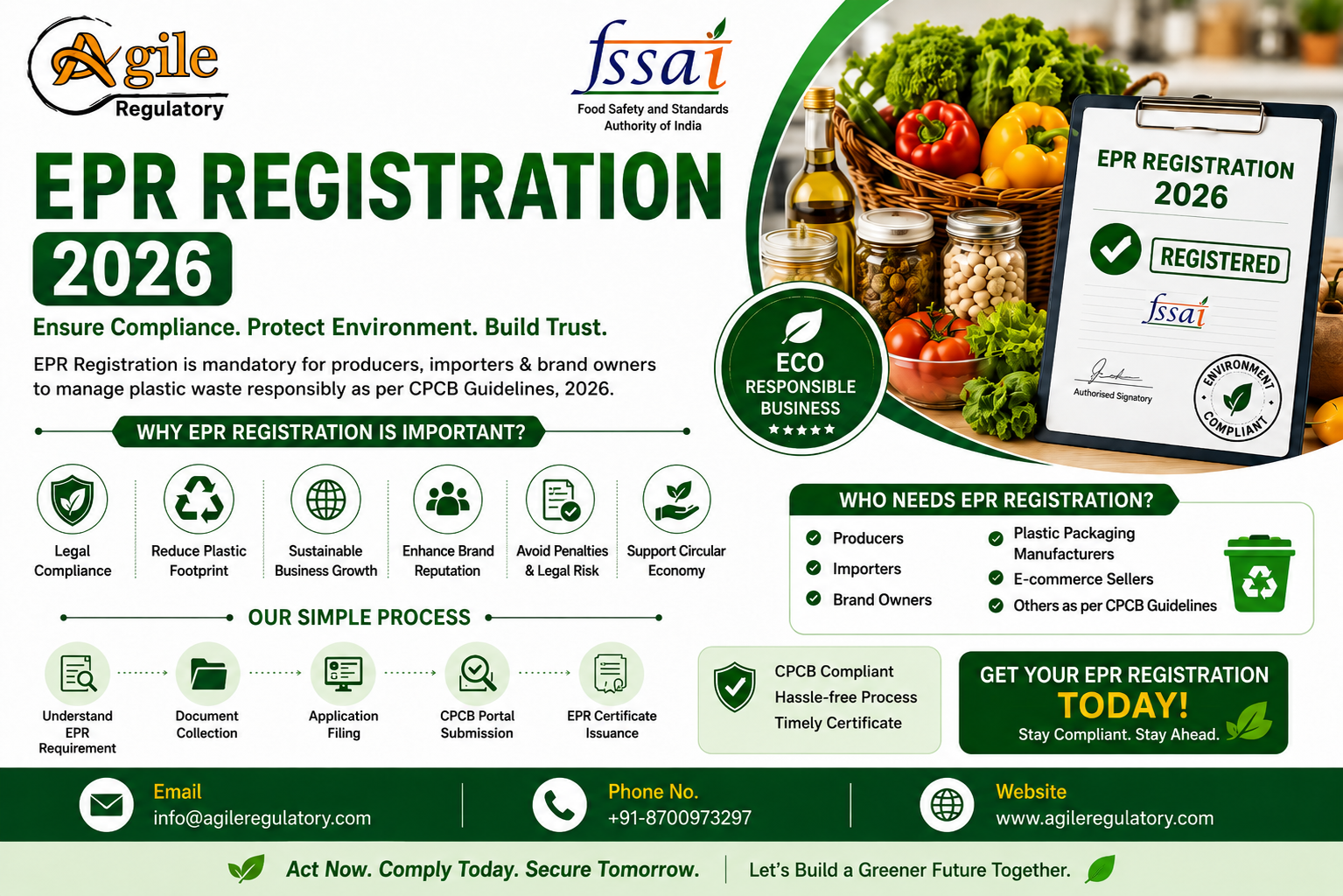
To address this challenge, the Government of India has introduced Battery Waste Management Rules that require producers, importers, manufacturers, and brand owners to take responsibility for the collection, recycling, and environmentally sound disposal of battery waste. As a result, obtaining epr battery registration has become a mandatory compliance requirement for many businesses operating in the battery supply chain.
Whether you import batteries, manufacture battery-powered products, or sell batteries under your brand name, understanding EPR compliance is essential for legal business operations. This guide explains the complete registration process, CPCB requirements, documentation, compliance obligations, and approval procedures in 2026.
What is EPR Battery Registration?
Epr battery registration is an authorization issued under India's Battery Waste Management framework that ensures businesses take responsibility for managing battery waste generated from products introduced into the market.
The registration is generally issued through the Central Pollution Control Board (CPCB) portal and confirms compliance with Extended Producer Responsibility obligations.
The objective is to improve battery collection, encourage recycling, recover valuable materials, and reduce environmental pollution.
Why Battery Waste Management is Important
Battery waste contains materials such as lithium, nickel, cobalt, lead, and other substances that can be harmful if disposed of improperly.
Effective battery waste management helps:
- Reduce environmental contamination
- Promote responsible recycling
- Recover valuable resources
- Minimize landfill waste
- Support sustainable manufacturing
- Improve regulatory compliance
EPR regulations encourage businesses to participate actively in responsible waste management practices.
Who Needs EPR Battery Registration?
Several categories of businesses may require battery EPR authorization.
These include:
- Battery manufacturers
- Battery importers
- Brand owners
- Electric vehicle companies
- Electronics manufacturers
- Energy storage system suppliers
- Consumer electronics businesses
Any organization introducing batteries into the Indian market should assess its compliance obligations carefully.
Types of Batteries Covered Under EPR Regulations
Battery Waste Management Rules cover multiple battery categories.
| Battery Category |
Examples |
| Portable Batteries |
Mobile phone and laptop batteries |
| Automotive Batteries |
Vehicle batteries |
| Industrial Batteries |
Power backup and industrial systems |
| EV Batteries |
Electric vehicle battery packs |
The applicable compliance requirements may vary based on battery category and business activity.
EPR Certificate Registration Process for Batteries
The EPR certificate registration process follows a structured regulatory framework.
| Step |
Process |
| Step 1 |
Business eligibility assessment |
| Step 2 |
Documentation preparation |
| Step 3 |
CPCB portal registration |
| Step 4 |
Application submission |
| Step 5 |
Compliance review |
| Step 6 |
Authority verification |
| Step 7 |
EPR authorization issuance |
Accurate information and proper documentation help improve approval timelines.
Documents Required for Battery EPR Registration
Applicants generally need:
- Company incorporation documents
- GST registration certificate
- PAN card
- Import Export Code (IEC)
- Authorized signatory details
- Battery product information
- Business activity details
- Compliance declarations
Additional documentation may be requested depending on the applicant category.
EPR Certificate Apply Online Process
The EPR Certificate apply online facility allows businesses to complete registration through digital systems.
The process typically includes:
- User account creation
- Online application submission
- Document upload
- Compliance declaration filing
- Regulatory review
- Certificate issuance
Digital processing has made compliance management more efficient and transparent.
EPR Registration Certificate and Its Importance
An epr registration certificate serves as official proof that a business has complied with battery waste management regulations.
The certificate may be required for:
- Regulatory inspections
- Import compliance
- Government tenders
- Vendor approvals
- Environmental audits
Maintaining valid authorization is important for continued business operations.
CPCB EPR Registration Certificate
The Cpcb epr registration certificate is issued after successful evaluation of the application by the Central Pollution Control Board.
The certificate confirms that the applicant has met the requirements prescribed under Battery Waste Management Rules and is authorized to operate within the applicable regulatory framework.
The approval also demonstrates the organization's commitment to environmental responsibility.
EPR Registration Certificate Online Management
The Epr registration certificate online system allows organizations to manage compliance obligations electronically.
Businesses can:
- Monitor application status
- Submit compliance reports
- Update registration information
- Access regulatory notifications
- Manage authorization records
Online systems have significantly streamlined regulatory administration.
EPR Registration Certificate Download
Once approved, businesses can generally access Epr registration certificate download facilities through the CPCB portal.
Maintaining updated records is important for inspections, audits, compliance reviews, and regulatory verification.
Companies should securely retain copies of their certificates for future reference.
EPR Certificate Cost
Many businesses seek information regarding epr certificate cost before initiating registration.
The overall cost may depend on:
- Battery category
- Business activity
- Quantity introduced into the market
- Compliance obligations
- Consultancy and support services
Organizations should evaluate both registration and ongoing compliance costs as part of their regulatory planning.
Benefits of Battery EPR Compliance
Obtaining epr battery authorization offers several advantages beyond legal compliance.
Major benefits include:
- Regulatory approval
- Improved corporate image
- Environmental responsibility
- Better stakeholder confidence
- Sustainable operations
- Reduced compliance risks
Companies increasingly view battery EPR compliance as an important component of ESG and sustainability initiatives.
Common Challenges During Registration
Businesses frequently encounter issues such as:
- Incomplete documentation
- Incorrect product classification
- Compliance reporting errors
- Delayed application submissions
- Regulatory interpretation challenges
Proper planning and expert support can help minimize these obstacles.
Why Businesses Choose Professional Consultants
Battery waste regulations involve both registration and ongoing compliance obligations.
Professional consultants assist with:
- Applicability assessment
- Documentation preparation
- Portal registration
- Application filing
- Compliance reporting
- Regulatory coordination
Expert guidance often helps businesses secure approvals more efficiently.
Why Choose Agile Regulatory?
Agile Regulatory provides comprehensive support for battery EPR registration and environmental compliance across India.
Our services include:
- EPR battery registration assistance
- CPCB compliance consulting
- Documentation preparation
- Online application filing
- Compliance management support
- End-to-end regulatory assistance
Our experienced professionals help businesses obtain approvals quickly and maintain long-term compliance.
Conclusion
Epr battery registration is a critical requirement for manufacturers, importers, producers, and brand owners dealing with batteries in India. Proper registration helps organizations comply with Battery Waste Management Rules, reduce environmental risks, and support sustainable waste management practices. By understanding CPCB requirements, documentation standards, application procedures, and compliance obligations, businesses can successfully navigate the regulatory framework and maintain lawful operations. Agile Regulatory provides complete support throughout the registration process, helping organizations achieve seamless environmental compliance.
FAQs
1. What is EPR battery registration?
It is a registration issued under Battery Waste Management Rules that requires businesses to manage battery waste responsibly.
2. Who needs EPR battery registration?
Battery manufacturers, importers, producers, and brand owners may require registration.
3. What is an EPR registration certificate?
It is an official document confirming compliance with applicable Extended Producer Responsibility regulations.
4. Can I apply for EPR registration online?
Yes, applications are generally submitted through the CPCB online portal.
5. What is CPCB EPR registration certificate?
It is the authorization issued by the Central Pollution Control Board after successful approval.
6. What is the EPR certificate cost?
The cost varies depending on the battery category, compliance obligations, and related requirements.
7. How can Agile Regulatory help with EPR battery registration?
Agile Regulatory provides complete assistance with documentation, application filing, compliance reporting, and regulatory approvals.






 English
 Arabic
 French
 Spanish
 Portuguese
 Deutsch
 Turkish
 Dutch
Dutch
 Italiano
 Romaian
 Portuguese (Brazil)
 Greek
Greek