


What Makes PU Coated Oxford Fabric Flexible Yet Durable?
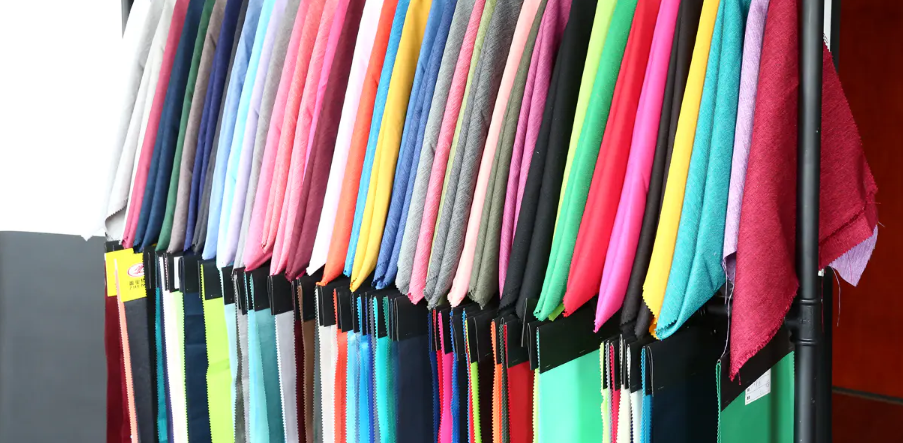
Material selection in industrial textile design often involves balancing waterproof performance, weight control, and processing efficiency. 300D Oxford Fabric PU is frequently selected because it provides a middle-ground solution between lightweight fabrics and heavy coated tarpaulin materials.
Fabric architecture and density control
The fabric begins with polyester filament yarns arranged in a tight Oxford weave. This structure increases abrasion resistance while maintaining manageable weight levels.
Key specifications:
Denier level: 300D polyester yarn
Fabric density: typically 64T–84T weave structure
GSM range: 140–210 gsm depending on coating intensity
Tensile strength: moderate-high depending on finishing
Abrasion resistance: enhanced through interlaced fiber geometry
Compared with lighter fabrics, 300D construction offers better resistance to surface wear. Compared with heavier 600D or 1000D materials, it remains more flexible for folding applications.
PU coating engineering and waterproof behavior
The polyurethane coating defines the functional performance of the material. It is applied as a continuous film that fills micro gaps between yarns.
Common technical parameters:
Hydrostatic head: ~1000–1800 mm standard range
Coating layer thickness: adjustable by production requirement
Water resistance mechanism: film barrier + surface tension control
Adhesion strength: determines long-term delamination risk
The coating also affects tactile properties. Thin PU layers maintain softness, while thicker coatings increase stiffness and structural stability.
Mechanical response under stress
When mechanical force is applied, the fabric demonstrates anisotropic load distribution. This means stress is not concentrated in one direction but redistributed across weave intersections.
Behavior characteristics:
Reduced crack propagation speed
Stable elongation under tension
Controlled folding memory effect
Recovery after repeated bending cycles
These properties support repeated use in portable and collapsible product systems.
Manufacturing adaptability
One important advantage of 300D Oxford Fabric PU is compatibility with modern production techniques. Unlike traditional textiles requiring heavy stitching, this material can integrate with bonding technologies.
Supported processes include:
Thermal lamination bonding
RF welding for sealed structures
Automated CNC cutting systems
Edge tape reinforcement
Multi-material composite assembly
This reduces production complexity in high-volume manufacturing environments.
Industrial application scenarios
The fabric is widely applied in functional and semi-industrial products such as:
Equipment protective covers
Transport storage bags
Outdoor modular enclosures
Lightweight industrial curtains
Foldable logistics containers
Each application benefits from the combination of waterproof behavior and mechanical flexibility.
Performance balance consideration
Designers often evaluate trade-offs between:
Weight vs durability
Softness vs coating thickness
Waterproof rating vs breathability limitation
PU coating improves water resistance but reduces airflow. This makes the material more suitable for external protective layers rather than breathable garments.

 English
 Arabic
 French
 Spanish
 Portuguese
 Turkish
 Dutch
Dutch
 Italiano
 Russian
 Romaian
 Portuguese (Brazil)
 Greek
Greek
