


What Makes Multi-Cavity Cable Tie Molds Stable?
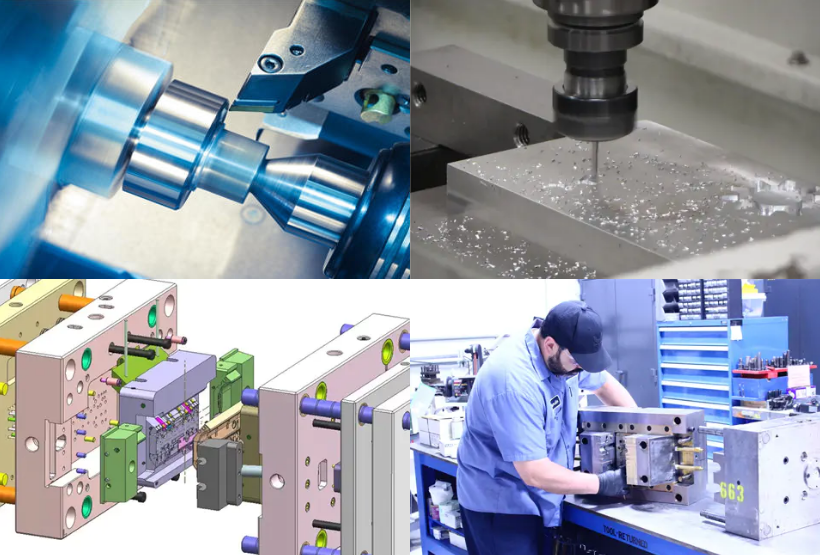
High-volume manufacturing of automotive fastening components relies on tooling systems that can operate continuously with stable output. The Automotive Cable Tie Mold plays a critical role in achieving this balance between efficiency, precision, and durability.
In mass production environments, multi-cavity molds are widely used. A single Automotive Cable Tie Mold may contain 32, 64, 96, or even more cavities depending on machine tonnage and product size. Each cavity must maintain identical flow resistance to avoid inconsistent filling. Flow balance is achieved through carefully designed hot runner manifolds and symmetrical runner distribution.
Hot runner systems are typically maintained at 250°C–300°C for PA66 nylon processing. This ensures consistent melt viscosity across all cavities. Nozzle tip temperature control is essential to prevent drooling or premature solidification at gate points.
Steel selection directly affects mold lifespan. High-grade tool steels such as H13 are commonly used for core components due to their thermal fatigue resistance. For cavity inserts, corrosion-resistant materials like S136 may be applied to handle long production cycles and moisture-sensitive nylon materials.
Injection molding parameters are tightly controlled. Melt temperature for PA66 generally ranges from 275°C to 315°C depending on reinforcement content. Injection speed is usually set in a multi-stage profile: a fast initial fill phase followed by a controlled packing phase to reduce flash and maintain dimensional accuracy.
Cooling efficiency is a key factor in cycle time reduction. The Automotive Cable Tie Mold integrates conformal cooling channels or deep-drilled water circuits positioned close to cavity surfaces. Cooling water temperature is typically maintained at 15°C–25°C, ensuring stable solidification and reducing overall cycle time to approximately 10–18 seconds per shot depending on part geometry.
Structural design also includes venting systems. Micro vents with depths around 0.02–0.05 mm are added at the end of flow paths to release trapped air. Without proper venting, defects such as burn marks or incomplete filling may occur, especially in long, thin strap sections.
Ejection systems in multi-cavity molds require synchronized movement. A central ejector plate drives all pins simultaneously to maintain uniform part release. Ejector stroke is usually controlled between 8–20 mm depending on tie length.
Dimensional accuracy is another critical aspect. Automotive cable ties often require tolerance control within ±0.05 mm in key locking regions. This level of precision ensures consistent locking force and prevents premature release under vibration conditions in vehicles.
Surface finish of the cavity affects both flow and appearance. Polished cavity surfaces reduce friction, improving melt flow consistency and reducing injection pressure requirements.
In modern automotive supply chains, production stability is just as important as product strength. A well-designed Automotive Cable Tie Mold ensures continuous operation, stable cycle time, and repeatable quality across large production volumes.

 English
 Arabic
 French
 Spanish
 Portuguese
 Deutsch
 Turkish
 Dutch
Dutch
 Russian
 Romaian
 Portuguese (Brazil)
 Greek
Greek
