


What Controls Precision in Cable Tie Manufacturing?
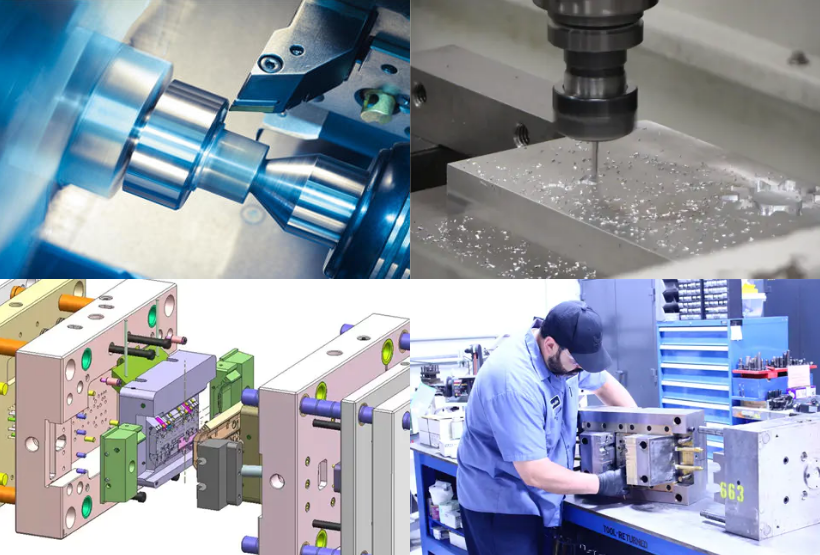
Automotive cable management systems depend heavily on consistent fastening components, where dimensional stability and tensile strength play a decisive role. The Automotive Cable Tie Mold is a core tool in producing these fastening products, shaping both the structural accuracy and long-term reliability of nylon cable ties used in vehicles.
A typical automotive-grade cable tie is produced using PA66 nylon material reinforced with additives such as heat stabilizers or UV resistance compounds. During production, the mold cavity defines every detail of the final product, including locking teeth geometry, strap thickness, and head locking mechanism. Even slight deviations in cavity precision can affect tensile performance and locking reliability.
In modern injection systems, the Automotive Cable Tie Mold is usually manufactured using hardened tool steels such as H13, P20, or S136. These steels are selected for their wear resistance and thermal stability under continuous injection cycles. Mold hardness is commonly maintained around HRC 48–52 for structural components, while cavity surfaces may be polished to Ra 0.2–0.4 μm to reduce flow resistance.
Multi-cavity design is widely adopted. A single mold may contain 16 to 144 cavities depending on production scale. Each cavity is connected through a hot runner system, allowing molten nylon to maintain stable viscosity during flow. Runner temperature control typically ranges between 260°C and 310°C to prevent premature solidification.
Injection parameters are highly sensitive. Barrel temperatures are often set in the range of 270°C to 320°C depending on PA66 formulation. Mold temperature is usually controlled at 75°C to 95°C to improve crystallization balance and reduce internal stress. Injection pressure may reach 80–140 MPa in high-cavity molds to ensure complete cavity filling.
Cooling design also plays a major role. Water channels are strategically embedded inside the mold base, maintaining cooling cycles between 6–12 seconds depending on part thickness. Uneven cooling can lead to warpage, especially in long strap sections of cable ties.
Gate design influences surface quality and weld line formation. Pin gates and edge gates are commonly used in Automotive Cable Tie Mold structures to ensure smooth flow into narrow cavity sections. Gate diameter is usually controlled between 0.6 mm and 1.2 mm for precision flow balancing.
Ejection systems are designed with ejector pins positioned at low-stress areas to avoid deformation marks. Ejection force must be carefully balanced because PA66 material tends to shrink strongly after cooling, requiring stable demolding pressure.
Automotive applications demand strict consistency. Cable ties must maintain tensile strength above 180–220 N depending on specification, and locking failure rates must remain extremely low across production batches. Mold stability directly determines whether these requirements can be achieved.

 English
 Arabic
 French
 Spanish
 Portuguese
 Deutsch
 Turkish
 Dutch
Dutch
 Italiano
 Russian
 Portuguese (Brazil)
 Greek
Greek
