


Is a Monoblock Forged Wheel Worth the Upgrade?
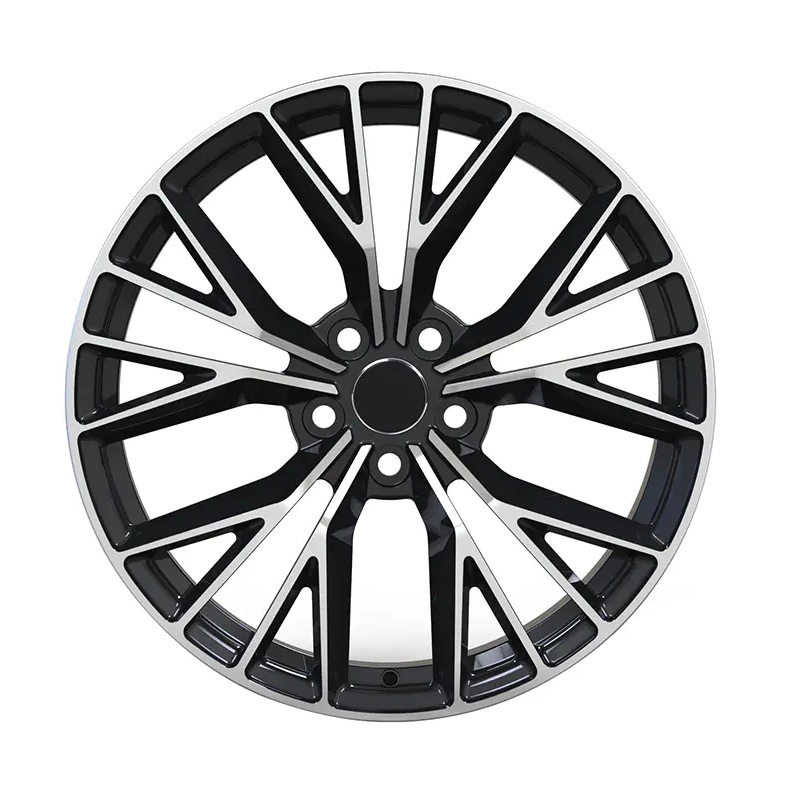
Automotive wheel engineering has evolved into a highly specialized field where structural strength, weight efficiency, and precision machining define performance outcomes. Among modern wheel designs, the Monoblock Forged Wheel represents a construction approach built from a single billet of aluminum, shaped under extreme pressure and refined through CNC machining.
A typical manufacturing process begins with a cylindrical billet of 6061-T6 aluminum alloy. This material is widely used due to its balanced mechanical properties, including tensile strength around 290–310 MPa and excellent fatigue resistance. The billet is heated to a controlled temperature range of approximately 400–500°C before being subjected to forging pressures that can exceed 8,000 to 12,000 tons. Under this force, the metal’s grain structure is compressed and aligned, forming a dense internal matrix that enhances load-bearing capability.
A Monoblock Forged Wheel differs from cast wheels in one key structural aspect: absence of porosity. Casting processes often leave microscopic air pockets that reduce long-term durability under stress. Forging eliminates most internal voids, producing a more uniform density across spokes, hub, and barrel sections.
From a performance perspective, unsprung mass reduction plays a critical role. A typical forged wheel set can reduce rotational weight by 15%–25% compared to conventional cast designs. This directly influences acceleration response, braking efficiency, and suspension behavior. Lower rotational inertia allows the drivetrain to deliver torque more effectively, especially during mid-speed acceleration phases.
Thermal performance is another factor often overlooked. Brake systems generate significant heat during repeated deceleration cycles, and wheel materials must dissipate this energy efficiently. A forged aluminum structure provides improved thermal conductivity, typically around 150–170 W/m·K, allowing heat transfer away from braking components more effectively than denser cast alternatives.
Structural rigidity is further improved due to grain flow alignment. During forging, aluminum grains are compressed along stress lines that follow spoke geometry. This directional alignment allows load distribution across the wheel face, reducing deformation during cornering loads or uneven road impact conditions.
Dimensional precision also benefits from CNC finishing after forging. Tolerances within ±0.05 mm are commonly achieved, ensuring proper hub centering and reducing vibration at high rotational speeds. This precision is particularly important for performance vehicles operating above 200 km/h, where even minor imbalance can affect stability.
A Monoblock Forged Wheel is often designed with variable spoke thickness. Engineers use finite element analysis (FEA) to simulate stress points under lateral acceleration forces. Spoke geometry is then optimized to remove unnecessary material while maintaining structural safety factors typically above 2.0–2.5.
Aesthetic flexibility also plays a role in modern wheel demand. Deep concave profiles, stepped spoke layouts, and directional spoke patterns are achievable without compromising strength due to forging’s material efficiency. Despite visual complexity, the structural integrity remains consistent across design variations.
From a lifecycle perspective, forged wheels exhibit improved fatigue resistance under cyclic loading. Laboratory testing often involves radial fatigue cycles exceeding 500,000 repetitions under simulated vehicle loads. Forged structures maintain integrity longer under these conditions compared to cast equivalents.
Maintenance requirements are generally lower due to higher resistance to micro-cracking. However, periodic inspection remains important, especially after high-impact events such as pothole strikes or track usage.
Overall, the Monoblock Forged Wheel combines material science, mechanical engineering, and precision manufacturing into a single integrated structure. Its performance advantages are rooted not in surface design but in internal grain alignment and density control, making it a preferred choice in applications where reliability and dynamic response are critical.

 English
 Arabic
 French
 Spanish
 Portuguese
 Turkish
 Dutch
Dutch
 Italiano
 Russian
 Romaian
 Portuguese (Brazil)
 Greek
Greek
