


Qhpreformmould Plastic Preform Mould Manufacturer Technology
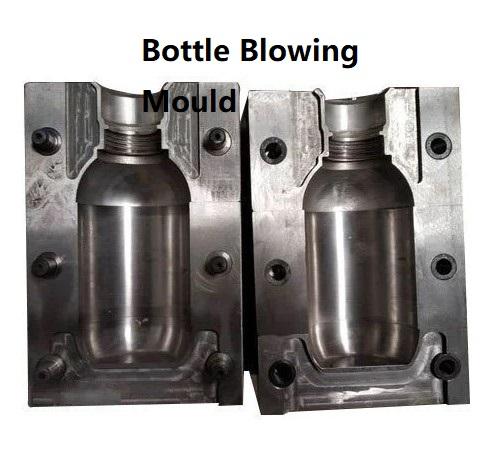
As packaging technology advances across international markets, Plastic Preform Mould Manufacturer solutions have become fundamental to efficient container production, while Plastic Preform Mould Manufacturer innovations support higher productivity through precision machining, balanced cooling systems, intelligent engineering, and flexible cavity configurations that satisfy demanding requirements in beverage, food, pharmaceutical, cosmetic, and household product manufacturing. Modern production facilities increasingly depend on reliable tooling that combines long service life with exceptional dimensional consistency.
Engineering Accuracy for Consistent Performance
Every successful molding project begins with detailed engineering analysis. Designers carefully evaluate material behavior, injection balance, pressure distribution, and thermal management before manufacturing starts. Digital simulation software predicts filling performance and identifies opportunities for optimization before machining operations begin.
Precision CNC equipment produces mold components with extremely tight tolerances, ensuring proper alignment during assembly. Carefully polished cavity surfaces improve finished product appearance while reducing friction and extending operational stability. High-quality steel selection further contributes to durability under continuous industrial production.
Advanced cooling channel layouts distribute temperature evenly throughout the mold, minimizing cycle times and helping manufacturers achieve stable productivity without sacrificing quality.
Qhpreformmould Smart Manufacturing Expertise
Qhpreformmould develops engineering solutions focused on reliability, precision, and long-term manufacturing efficiency. Every tooling project undergoes comprehensive quality verification from design validation through final inspection. Coordinate measuring equipment confirms dimensional accuracy, while assembly testing verifies smooth operation under production conditions.
Continuous research supports improvements in structural design, maintenance accessibility, and operating performance. Flexible customization options allow customers to select tooling suitable for different production capacities, product geometries, and manufacturing objectives.
Experienced engineering teams collaborate closely with customers throughout development, ensuring practical solutions that integrate efficiently into existing production environments.
Automation Enhances Industrial Productivity
Modern molding facilities increasingly integrate automated technologies that improve manufacturing efficiency while reducing operational variability. Intelligent control systems monitor temperature, pressure, injection timing, and cooling performance throughout every production cycle.
Real-time production data enables engineers to identify optimization opportunities immediately. Robotic handling equipment transports finished components safely between production stages while reducing manual intervention and contamination risks.
Predictive maintenance software analyzes operational trends and recommends service schedules before failures occur, minimizing downtime and improving long-term equipment utilization across high-volume manufacturing operations.
Sustainable Design Supports Modern Industry
Environmental responsibility has become an important objective for manufacturers worldwide. Advanced tooling contributes directly to sustainability by improving material utilization, shortening cycle durations, and reducing energy consumption throughout production.
Optimized runner systems minimize resin waste while balanced cooling designs decrease overall power requirements. Compatibility with recycled materials further supports environmentally responsible manufacturing initiatives without compromising dimensional accuracy or finished product quality.
These improvements help businesses reduce operating expenses while supporting long-term sustainability goals and responsible resource management.
Future Trends in Intelligent Mold Engineering
The next generation of industrial tooling will combine artificial intelligence, digital monitoring, and cloud connectivity to improve production management. Smart algorithms may automatically optimize operating parameters according to environmental conditions and material variations.
Remote diagnostics will enable engineers to monitor multiple facilities from centralized locations, improving maintenance planning and operational consistency. Advanced manufacturing materials may also provide greater wear resistance and longer service life for increasingly demanding applications.Companies seeking innovative packaging tooling and precision engineering expertise can learn more by visiting https://www.qhpreformmould.com/

 English
 Arabic
 Spanish
 Portuguese
 Deutsch
 Turkish
 Dutch
 Italiano
 Russian
 Romaian
 Portuguese (Brazil)
 Greek
