


The Role of Key Lifecycle Management in Preventing Cloud Data Breaches
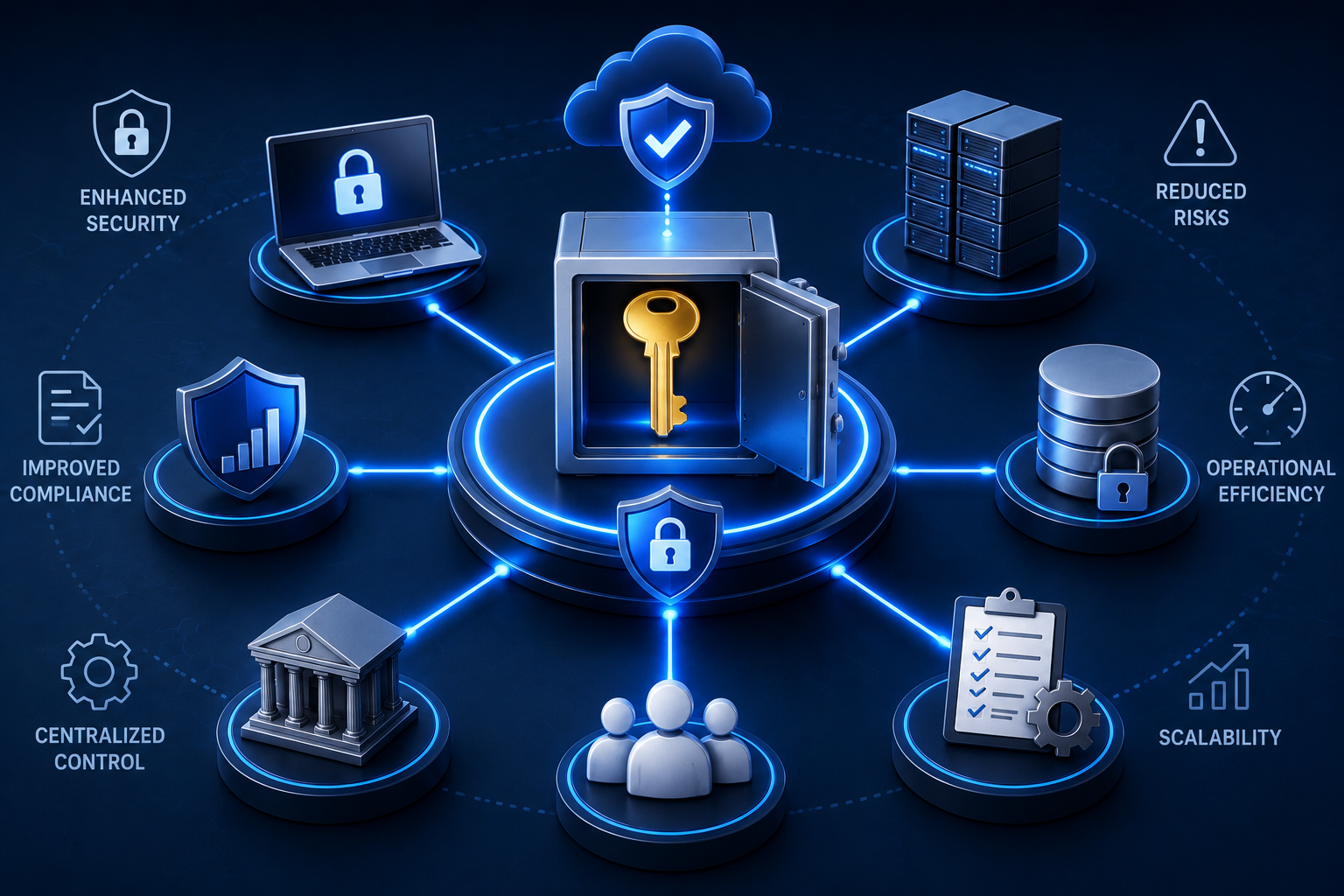
As enterprises continue shifting workloads to the cloud, protecting sensitive data has become more complex than ever. Cloud environments are dynamic, distributed, and constantly scaling, which increases the risk of misconfiguration, unauthorized access, and data breaches. While encryption is a core defense mechanism, its effectiveness depends entirely on how encryption keys are managed. This is where key management solutions and, more specifically, key lifecycle management play a critical role.
Key management in cryptography refers to the complete handling of encryption keys—from creation to destruction. Without proper lifecycle controls, even strong encryption can be rendered ineffective, leaving cloud data exposed to potential attacks.
1. Why Key Lifecycle Management Matters in Cloud Security
Every encryption key has a lifecycle that includes generation, distribution, usage, rotation, storage, and eventual retirement. If any stage is poorly managed, it creates a vulnerability.
Effective lifecycle management ensures:
-
Keys are created using secure cryptographic standards
-
Access is tightly controlled throughout usage
-
Keys are rotated regularly to reduce exposure risk
-
Compromised or outdated keys are safely revoked
This structured approach significantly reduces the attack surface in cloud environments.
2. Preventing Unauthorized Access Through Controlled Key Usage
In cloud systems, multiple applications, users, and services may interact with encrypted data. Without proper controls, this can lead to unauthorized access.
Strong key management in cryptography helps organizations:
-
Restrict decryption access to approved identities only
-
Enforce role-based and policy-based access controls
-
Prevent misuse of long-lived or static keys
By tightly controlling key usage, organizations ensure that even compromised credentials do not automatically lead to data exposure.
3. Reducing Risk Through Automated Key Rotation
One of the most effective ways to prevent cloud data breaches is frequent key rotation. Manual processes often lead to delays or inconsistencies.
Modern key management solutions automate this process by:
-
Rotating keys at predefined intervals
-
Replacing older keys without service disruption
-
Ensuring backward compatibility during transitions
This reduces the window of opportunity for attackers to exploit compromised keys.
4. Centralized Control Across Multi-Cloud Environments
Most organizations operate across multiple cloud providers and hybrid systems, increasing complexity in key management.
Solutions like Thales key management provide centralized control, enabling organizations to:
-
Manage all encryption keys from a single platform
-
Enforce consistent policies across AWS, Azure, GCP, and on-premise systems
-
Maintain visibility over key usage across distributed environments
Centralization eliminates blind spots that attackers often exploit in fragmented systems.
5. Secure Key Storage and Protection Against Theft
If encryption keys are stolen, encrypted data can be easily compromised. Secure storage is therefore essential.
Key lifecycle management ensures:
-
Keys are stored in hardened vaults or hardware security modules (HSMs)
-
Access is strictly monitored and logged
-
Sensitive operations require multi-factor authentication
This significantly reduces the risk of internal and external key theft.
6. Ensuring Safe Key Retirement and Destruction
Many organizations overlook the final stage of the key lifecycle—retirement. Old or unused keys can become security liabilities.
Proper lifecycle management ensures:
-
Expired keys are securely destroyed
-
Archived keys are stored with strict access controls
-
Legacy systems do not retain unnecessary cryptographic access
This prevents attackers from exploiting outdated or forgotten keys.
7. Best Practices for Preventing Cloud Data Breaches
To strengthen cloud security through key lifecycle management, organizations should:
-
Implement centralized key management solutions across all cloud platforms
-
Automate key generation, rotation, and revocation processes
-
Enforce strict access control policies using role-based permissions
-
Continuously monitor key usage and audit logs
-
Use enterprise-grade systems like Thales key management for scalability and compliance
Conclusion
Cloud data breaches often occur not because encryption is weak, but because encryption keys are poorly managed. Effective key lifecycle management ensures that keys remain secure at every stage, reducing vulnerabilities and strengthening overall cloud security.
By adopting advanced key management in cryptography, organizations can prevent unauthorized access, reduce operational risk, and maintain continuous protection across complex cloud environments. In today’s threat landscape, robust key management solutions are not optional—they are essential for safeguarding enterprise data in the cloud.

 Arabic
 French
 Spanish
 Portuguese
 Deutsch
 Turkish
 Dutch
Dutch
 Italiano
 Russian
 Romaian
 Portuguese (Brazil)
 Greek
Greek
