


Nante Outdoor Electrical Distribution Panel Engineered For Reliability
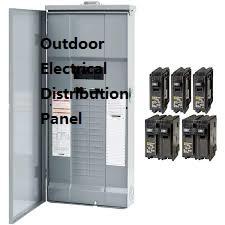
In outdoor power systems, site resilience often depends on the enclosure — a well-specified Outdoor Electrical Distribution Panel installed correctly protects circuits from weather and simplifies maintenance, while a poor choice accelerates failures. Careful attention to ventilation, surge protection, and cable entry design makes the Outdoor Electrical Distribution Panel a system-level component that improves uptime and safety for operators and assets.
Environmental Challenges and Site Assessment
Before selecting an outdoor panel, assess the local environment: precipitation patterns, freeze–thaw cycles, airborne salt near coasts, dust loads, and UV exposure. These factors influence IP and IK ratings, material choice, and protective coatings. Consider microclimates around buildings, splash zones from drainage, and likely contaminants (chemical aerosols or grit) so the panel’s sealing strategy and fastener materials match the real-world stresses.
Materials, Coatings, and Corrosion Management
Materials set the baseline for longevity. Stainless steel and powder-coated galvanized steel offer structural strength; GRP (glass-reinforced polyester) provides electrical insulation and corrosion immunity at reduced weight. Specify pretreatment and high-quality powder coatings for steel boxes in corrosive environments, and choose marine-grade fasteners and passivated hinges to avoid galvanic reactions. Replaceable sacrificial washers and zinc anodes are practical on coastal installations.
Internal Layout, Thermal Management, and Protection Devices
Good internal design separates high-heat components from sensitive control electronics. Use compartmentalized layouts, DIN rails for modular devices, and accessible cable channels with generous bend radii. Integrate appropriately rated surge protection devices (SPDs), circuit breakers, and thermostatically controlled vents or heaters where condensation risks exist. Proper thermal management prevents nuisance trips and extends component life.
Installation Practices and Accessibility
Design panels for straightforward installation: captive screws, removable gland plates, and pre-marked mounting templates reduce on-site labor. Ensure doors swing wide without stressing cables, and include lockable handles for safety. Provide clear labeling for circuits and phased connections to speed commissioning. For temporary or mobile sites, prefer captive covers and recessed connections to resist impact damage.
Compatibility, Standards, and Schneider Integration
Meet or exceed local regulatory standards (IEC, UL, or regional codes) and request test reports for IP, IK, and salt-spray performance. For retrofit projects, compatibility with major manufacturer footprints eases replacement; many facilities appreciate panels that accept Schneider and other popular modular components, simplifying spares management and future upgrades.
Maintenance Strategies That Reduce Downtime
Schedule visual inspections for gasket compression, corrosion at joints, and loose hardware. Torque-check terminal connections and replace brittle gaskets proactively. Keep spare gland plates, gaskets, and standardized fuses on hand to expedite repairs. Logging maintenance actions and component ages helps predict replacements before failures occur.
Smart Monitoring and Remote Diagnostics
Adding simple telemetry — temperature and humidity sensors, door-open switches, and power quality monitors — provides early warnings of problems. Low-power sensors that communicate over existing networks enable predictive maintenance without compromising sealing integrity. Place sensors in serviceable, sealed pockets so they can be replaced or upgraded without breaching the main enclosure.
Designing for Sustainability and End-of-Life
Choose recyclable materials when feasible and design for disassembly: standard fasteners, modular interiors, and separable coatings reduce waste. Prioritize replaceable wear items (gland plates, seals, contactors) rather than one-piece replacements. Lifecycle cost analysis often shows that slightly higher initial material investment reduces long-term environmental impact and total cost of ownership.
In short, an outdoor distribution panel is more than a box — it’s the hub that protects power distribution from environmental stress while enabling safe, fast service. Matching materials, sealing, internal layout, and monitoring to the actual site conditions turns a vulnerable point into a predictable, durable part of infrastructure. For technical details, installation guidance, and product variants, visit https://www.nante.com/news/industry-news/outdoor-electrical-distribution-panel-nante.html

 English
 Arabic
 French
 Spanish
 Deutsch
 Turkish
 Dutch
Dutch
 Italiano
 Russian
 Romaian
 Portuguese (Brazil)
 Greek
Greek
