


Are Straw Hats Still Handmade Today?
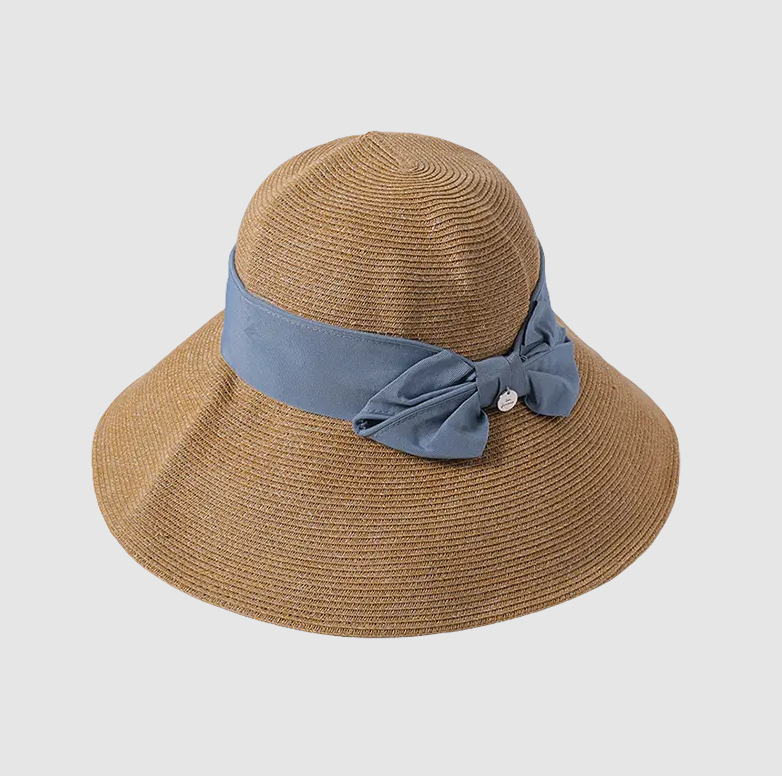
The evolution of natural fiber headwear has kept handcrafted techniques relevant even in modern production environments. Handcrafted Straw Hats for Women are created through a combination of manual weaving, spiral assembly, and controlled shaping processes that influence both appearance and performance.
Raw material processing and fiber preparation
Straw fibers used in hat production come from multiple botanical sources, including palm leaves, grasses, and reed-based plants. Each fiber type requires different preparation before it becomes suitable for weaving.
Common preparation steps include:
Leaf stripping to isolate usable fibers
Washing to remove impurities
Natural or light chemical bleaching for color consistency
Drying under controlled humidity conditions
Technical fiber properties:
Average fiber thickness: 1.0 mm – 3.0 mm
Flexibility rating: medium to high depending on plant type
Surface texture: smooth or slightly fibrous depending on processing
Natural color range: beige, golden, pale brown tones
Proper preparation ensures stability during weaving and reduces breakage during shaping.
Spiral weaving architecture
Most straw hats rely on a spiral construction pattern. A central knot begins at the crown and expands outward. This continuous spiral creates a stable load distribution system across the hat structure.
Two key structural approaches are commonly used:
Single-fiber hand weaving
Continuous strand forming entire hat
Seamless surface appearance
Higher time requirement per unit
Braided coil assembly
Straw braid stitched layer by layer
Easier to standardize diameter control
Suitable for mass-consistent designs
Weaving precision is often measured by:
Stitch spacing consistency
Spiral alignment accuracy
Edge tension balance
Crown symmetry tolerance
Even small variations in spacing can affect final brim curvature and hat stability.
Structural reinforcement techniques
To maintain durability, additional reinforcement is introduced during production. This may include hidden wire insertion along the brim edge or reinforced stitching near stress points.
Reinforcement parameters:
Wire gauge: 0.5 mm – 1.2 mm
Edge stitching density: 3–6 stitches per cm
Stress zone reinforcement: crown base and brim junction
Shape retention improvement: up to 40% compared to unreinforced versions
These enhancements allow Handcrafted Straw Hats for Women to maintain shape during repeated wear.
Blocking, pressing, and final shaping
Once weaving is complete, the hat is mounted onto a form block. Steam softening allows fibers to adapt to the mold without breaking. The hat is then dried under controlled airflow to lock the shape.
Typical shaping conditions:
Steam exposure duration: 3–8 minutes per section
Drying environment humidity: below 50%
Cooling phase: gradual to prevent shrink deformation
Final inspection tolerance: symmetry deviation under 3%
This process defines crown height, brim curvature, and overall silhouette.
Functional performance characteristics
Straw hats are valued for both comfort and environmental adaptability. Their woven structure creates passive ventilation channels that support airflow.
Key functional data:
Thermal comfort range: suitable for warm weather conditions
Air exchange rate: depends on weave openness
Weight distribution: balanced across crown and brim
Fold resistance: higher in braided reinforced models
The combination of natural fiber and structured weaving results in a lightweight yet stable headwear solution.
Design variation and market usage
Modern handcrafted straw hats can be adapted into multiple design directions, including minimalist everyday styles and more decorative fashion-oriented forms. Variations are achieved through adjustments in weave density, brim width, and crown height.
Common design parameters:
Brim width range: 6 cm – 15 cm
Crown depth: 8 cm – 12 cm
Weave density levels: open, medium, tight
Surface finishing: natural, polished, or lightly dyed
Closing perspective
The production of Handcrafted Straw Hats for Women reflects a balance between traditional weaving knowledge and controlled structural engineering. From fiber preparation to final shaping, each stage contributes to comfort, durability, and visual design, making these hats a consistent presence in seasonal accessory categories.

 English
 Arabic
 French
 Spanish
 Portuguese
 Deutsch
 Turkish
 Dutch
Dutch
 Russian
 Romaian
 Portuguese (Brazil)
 Greek
Greek
