


How Is a Brass Shackle Padlock Manufactured?
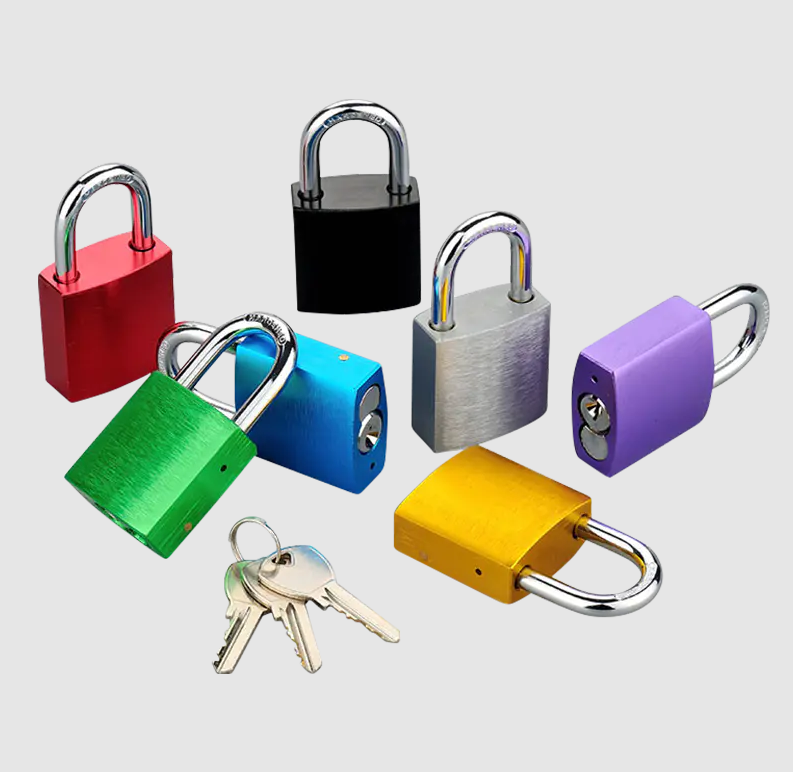
The production of a brass shackle padlock involves multiple precision manufacturing stages, combining metal forming, machining, assembly, and surface finishing processes. Each stage plays a role in determining the final durability, security level, and operational smoothness of the lock.
Brass Body Formation Process
The lock body is typically produced using brass casting or forging methods. Brass alloy is melted at controlled temperatures and injected into molds that define the external shape of the padlock body. After cooling, the rough casting undergoes machining to refine internal chambers.
Key machining operations include:
Cylinder bore drilling
Shackle slot milling
Pin chamber boring
Surface polishing and deburring
The internal cavity must maintain tight tolerance alignment to ensure smooth movement of locking components.
A finished brass shackle padlock body often has a density designed to resist deformation under moderate physical impact.
Internal Lock Cylinder System
Inside the brass body, a pin tumbler cylinder is installed. This is the core security component.
Typical structure includes:
Bottom pins
Driver pins
Springs
Plug housing
Shear line interface
When the correct key is inserted, the pins align at the shear line, allowing the plug to rotate freely. This rotation releases a locking cam that retracts the shackle.
In some models, double locking mechanisms are used. This means both ends of the shackle are independently secured inside the body, improving resistance to torsion force.
Shackle Material Processing
The shackle in a brass shackle padlock is rarely brass itself. Instead, it is commonly hardened steel due to its superior tensile strength.
Processing steps include:
Steel rod cutting
Heat treatment for hardness increase
Surface plating (nickel or chrome)
Bending into U-shape form
Dimensional calibration
Shackle diameter usually ranges between 5 mm and 10 mm depending on security level. Hardened treatment increases resistance to cutting tools and bending stress.
Assembly and Quality Testing
After component production, assembly takes place in controlled environments. Springs, pins, and cylinder plugs are installed into the brass housing. The shackle is then inserted and tested for smooth engagement.
Quality testing often includes:
Key rotation cycle testing (thousands of cycles)
Pull force resistance checks
Shackle alignment verification
Environmental corrosion simulation
A brass shackle padlock must maintain consistent locking behavior throughout repeated cycles to ensure reliability in real-world use.
Surface Finishing and Protection
Final finishing includes polishing and sometimes protective coating. Brass naturally resists rust, but surface treatment improves appearance and reduces oxidation staining. Internal lubrication is also applied to ensure smooth pin movement.
Conclusion
The manufacturing of a brass shackle padlock combines metallurgy, precision machining, and mechanical engineering. From brass casting to final assembly, each stage contributes to a compact yet functional locking device capable of serving in residential and light industrial security applications.

 English
 Arabic
 French
 Spanish
 Portuguese
 Turkish
 Dutch
Dutch
 Italiano
 Russian
 Romaian
 Portuguese (Brazil)
 Greek
Greek
