


How Does Heat Transfer Film Perform in Sportswear?
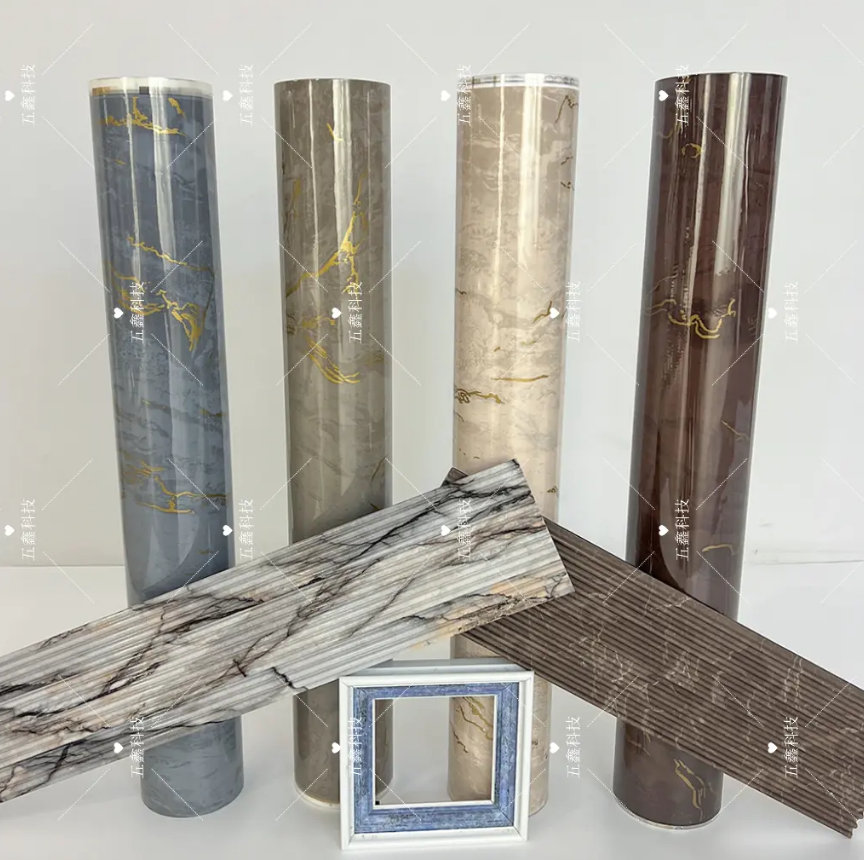
Sportswear and performance apparel require decoration materials that can endure repeated movement, washing cycles, and varying environmental conditions. Traditional flat heat transfer materials often fail to deliver both durability and comfort in high-motion garments.
Fabric-textured heat transfer film introduces a structured surface that enhances mechanical bonding and reduces visual plasticity on athletic garments. Its textured profile improves both adhesion stability and flexibility under dynamic stress.
1. Structural Engineering of the Film
This film type is designed with micro-embossed geometry that simulates textile weave patterns. Common structures include:
Honeycomb microtexture
Linear ribbed pattern
Cross-weave imitation
Micro-dot friction surface
Technical specifications:
Thickness range: 180–320 microns total system
Emboss depth: 20–60 microns
Tensile strength: 18–25 MPa
Elongation at break: up to 200%
These structural elements help distribute mechanical stress during stretching or bending.
2. Heat Transfer Process Parameters
Sportswear application requires controlled low-to-medium heat exposure:
Press temperature: 145°C – 155°C
Pressure: 2.5–4 bar
Time: 8–12 seconds
Cooling stage: 15–30 seconds before peel (cold peel preferred)
Lower temperature reduces fabric deformation, especially for polyester-based athletic textiles.
In double-layer systems, a second post-press cycle may be applied at 130°C for 6–10 seconds to stabilize adhesion.
3. Compatibility with Performance Fabrics
This film is optimized for:
Polyester sports jerseys
Nylon-based outerwear panels
Spandex blended compression fabrics
Mesh ventilation textiles
Challenges include dye migration on dark polyester and edge lifting on ultra-stretch fabrics. To mitigate this, anti-sublimation barrier layers are sometimes integrated.
Moisture-wicking fabrics require precise pressure calibration to prevent adhesive saturation into fiber gaps.
4. Functional Advantages in Athletic Use
Key performance properties:
Flex fatigue resistance: stable under repeated stretch cycles
Sweat resistance: stable adhesive performance under moisture exposure
Breathability preservation: microtexture avoids full surface sealing
Lightweight profile: reduces garment stiffness increase
Compared with flat films, textured surfaces reduce crack visibility because stress is dispersed across uneven geometry.
5. Production Considerations
Industrial production lines typically integrate:
Roll-to-roll lamination systems
Controlled embossing rollers (pressure 2–6 tons)
Inline adhesive coating units
Heat stabilization chambers (60–90°C curing stage)
Quality control parameters include peel strength testing, wash cycle simulation, and stretch recovery measurement.
Conclusion
The use of Fabric-textured heat transfer film in sportswear applications enhances both mechanical durability and aesthetic integration. Its engineered surface structure supports movement-intensive environments while maintaining consistent bonding strength across varied fabric types.

 English
 Arabic
 French
 Spanish
 Deutsch
 Turkish
 Dutch
Dutch
 Italiano
 Russian
 Romaian
 Portuguese (Brazil)
 Greek
Greek
