


What Makes a Linear Guide CNC Machine Suitable for Precision Parts?
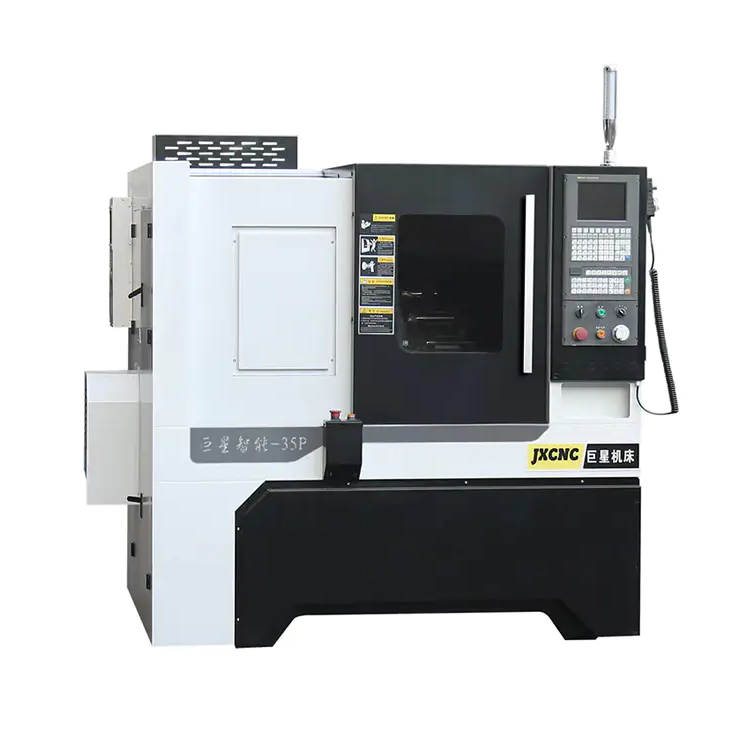
Precision manufacturing has evolved beyond simple dimensional control. Modern production often requires stable quality across thousands of components while maintaining reasonable machining times and operating costs. A Linear Guide CNC Machine has become a common choice for workshops that process metal and engineering materials because its guide system supports accurate and repeatable movement.
The design philosophy behind this type of CNC equipment combines mechanical rigidity, controlled motion, and efficient power transmission to support a wide variety of machining operations.
The Role of Linear Guide Technology
Every CNC machine relies on guideways to direct axis movement. Traditional sliding structures create larger contact areas, while linear guides use rolling elements that circulate inside the carriage block.
The rolling mechanism helps reduce friction and improve response to servo commands. This arrangement allows the machine to accelerate smoothly and maintain stable positioning during machining operations.
A typical Linear Guide CNC Machine may include:
Hardened guide rails
Four-row contact ball blocks
Precision ground mounting surfaces
Preloaded carriage assemblies
These components work together to support accurate axis travel.
Structural Design Influences Machine Performance
Machine rigidity affects vibration control and machining consistency.
Many Linear Guide CNC Machine models use high-strength cast iron structures that undergo stress relief treatment before machining.
Common structural features include:
One-piece machine bed
Box-type column
Reinforced saddle
Wide-span guide layout
Precision scraping of contact surfaces
These designs help distribute cutting forces while reducing deformation.
Machine weight may range from:
3,500 kg for compact machining centers
6,000 kg for medium machines
More than 10,000 kg for larger industrial models
Additional mass contributes to vibration damping during cutting operations.
Ball Screw Integration
Guide rails control direction, while ball screws convert motor rotation into linear movement.
Precision ball screws used in a Linear Guide CNC Machine often feature:
C3 or C5 accuracy grades
Double-nut preload
Large screw diameters
Support bearings at both ends
Typical ball screw pitches include:
10 mm
12 mm
16 mm
20 mm
The combination of ball screws and linear guides helps maintain stable axis movement across long travel distances.
Spindle Systems Expand Machining Capability
The spindle directly affects cutting performance.
Available spindle options may include:
BT30
BT40
BT50
Direct drive
Belt drive
Built-in motor spindle
Speed ranges often include:
8,000 rpm
10,000 rpm
12,000 rpm
15,000 rpm
Motor power may vary between 7.5 kW and 22 kW depending on machine size.
A Linear Guide CNC Machine equipped with suitable spindle specifications can process different materials while balancing torque and rotational speed.
Tool Management Improves Efficiency
Manual tool changes consume production time.
Many CNC machining centers include automatic tool changers with capacities such as:
16 tools
20 tools
24 tools
30 tools
Tool change times may range between 2 and 5 seconds.
Tool magazines can support:
Face milling
End milling
Drilling
Reaming
Tapping
Boring
Automated tool handling supports continuous production with fewer interruptions.
Thermal Stability Deserves Attention
Temperature changes influence machining accuracy.
Heat can originate from:
Servo motors
Ball screws
Spindle bearings
Cutting operations
Hydraulic systems
A Linear Guide CNC Machine may include thermal management measures such as:
Spindle cooling
Lubrication circulation
Coolant systems
Structural symmetry
Temperature compensation software
These measures help reduce dimensional variation during long machining cycles.
CNC Control Systems Coordinate Motion
Mechanical quality must work together with accurate control systems.
Modern CNC platforms support:
Three-axis interpolation
Four-axis expansion
Five-axis compatibility
Tool life management
Automatic compensation
Network communication
Programming methods may include:
G-code
Conversational programming
CAD/CAM integration
DNC operation
The control system manages acceleration, feed rates, spindle speed, and tool movement to maintain machining consistency.
Production Flexibility
Manufacturers often handle multiple product types in the same workshop.
A Linear Guide CNC Machine can support:
Small batch production:
Prototype parts
Product development
Medium batch production:
Industrial components
Equipment accessories
Large batch production:
Automotive parts
Consumer product components
The ability to switch programs quickly supports changing production schedules.
Energy and Resource Management
Production efficiency involves more than cutting speed.
Energy-saving features may include:
Servo-controlled drives
Efficient spindle motors
Variable coolant pumps
Automatic standby functions
Smart lubrication systems
Chip management systems may incorporate:
Spiral chip conveyors
Chain conveyors
Coolant filtration
High-pressure coolant pumps
These systems contribute to cleaner machine operation and simplified maintenance.
Future Manufacturing Trends
Industrial production increasingly combines machining equipment with digital technologies.
A Linear Guide CNC Machine can be integrated with:
Factory networks
Production monitoring software
Predictive maintenance systems
Robotic material handling
Smart scheduling platforms
Collected operating data can help manufacturers monitor spindle loads, machine utilization, and maintenance intervals.
Conclusion
A Linear Guide CNC Machine represents a combination of precision mechanics and modern automation. Hardened linear guides, precision ball screws, rigid machine structures, high-speed spindles, and advanced control systems work together to support stable machining across a broad range of applications.
Careful attention to travel capacity, spindle specifications, guide structure, tooling options, and automation compatibility allows manufacturers to build production systems that balance accuracy, productivity, and long-term operational stability.

 English
 Arabic
 French
 Spanish
 Deutsch
 Turkish
 Dutch
Dutch
 Italiano
 Russian
 Romaian
 Portuguese (Brazil)
 Greek
Greek
