


Are Cylindrical Cells Still Industry Standard?
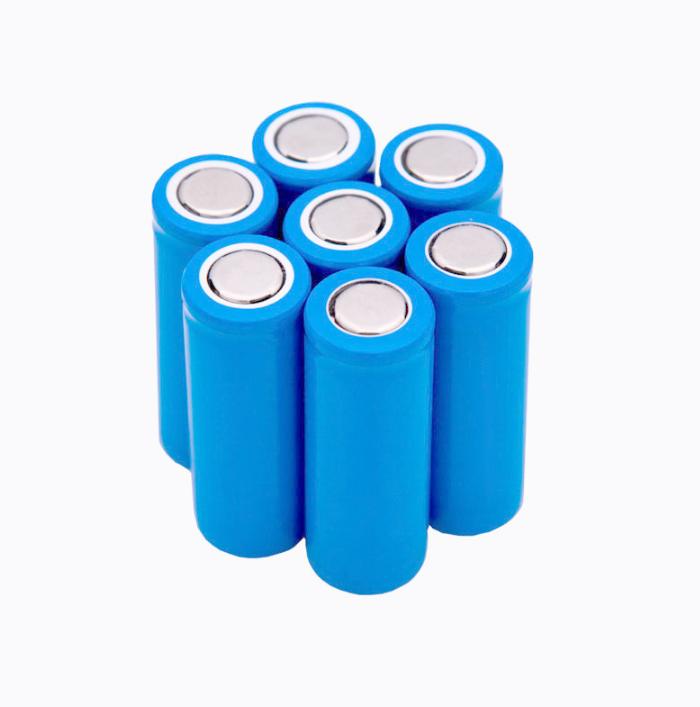
The global battery market has shifted significantly with rising demand for high-energy-density storage systems. Within this shift, Cylindrical Cells Supply has expanded beyond traditional 18650 formats into larger configurations such as 21700 and 4680 cells.
A cylindrical lithium-ion cell is defined by its diameter and length. For example:
18650 cell: 18mm diameter × 65mm length
21700 cell: 21mm diameter × 70mm length
The increase in physical volume allows higher energy storage without changing basic electrochemical chemistry.
Internal Engineering Improvements
Modern cylindrical cells use optimized electrode winding structures. The jelly roll design improves ionic diffusion paths and reduces current bottlenecks. Advanced tab designs (including quasi-tabless structures) help reduce internal resistance and heat concentration.
Typical internal resistance improvements:
Older 18650 designs: 30–60 mΩ
Advanced 21700 designs: 15–30 mΩ
Lower resistance improves discharge efficiency and reduces temperature rise under load conditions.
Electrical Performance Characteristics
Cylindrical cells used in industrial supply chains often follow these electrical standards:
Nominal voltage: 3.6V / 3.7V
Charge cutoff: 4.2V ±0.05V
Discharge cutoff: 2.5V–3.0V
Standard charge current: 0.5C
Fast charge capability: up to 1C or higher (cell dependent)
These values support compatibility across multiple battery pack architectures.
Why Supply Expansion Is Increasing
Demand for Cylindrical Cells Supply has increased due to several engineering advantages:
Thermal consistency plays a major role. Cylindrical geometry supports uniform heat distribution, reducing hotspot formation in densely packed modules. Many EV and storage systems use spacing between cells to create airflow channels, improving heat dissipation efficiency.
Mechanical strength also contributes. The steel casing resists swelling and external pressure better than flat cell designs, improving safety during mechanical stress or vibration.
Manufacturing Process Overview
Production of cylindrical cells typically involves:
Electrode coating thickness: 80–150 μm per layer
Separator thickness: 15–25 μm polyethylene/polypropylene
Electrolyte filling under vacuum conditions
Formation cycling at controlled temperatures between 25°C–45°C
After formation, cells undergo grading based on capacity deviation and internal resistance. Variations greater than ±50mAh are often classified into separate bins for consistent pack assembly.
Role in Energy Storage Systems
In stationary energy storage, cylindrical cells are arranged into dense modules with BMS integration. Common configurations include:
Residential storage packs: 14S–16S systems
Industrial storage: multi-rack parallel assemblies
These systems rely on consistent Cylindrical Cells Supply to maintain balanced energy output and predictable degradation rates.
Conclusion
The evolution of cylindrical lithium-ion technology demonstrates continuous improvement in energy density, thermal stability, and manufacturing precision. As demand for scalable energy storage grows, Cylindrical Cells Supply remains a core component of global battery infrastructure, supporting both mobility and stationary power applications.

 English
 Arabic
 French
 Spanish
 Portuguese
 Deutsch
 Dutch
Dutch
 Italiano
 Russian
 Romaian
 Portuguese (Brazil)
 Greek
Greek
