


Why Choose Sustainable Paper Plate Production?
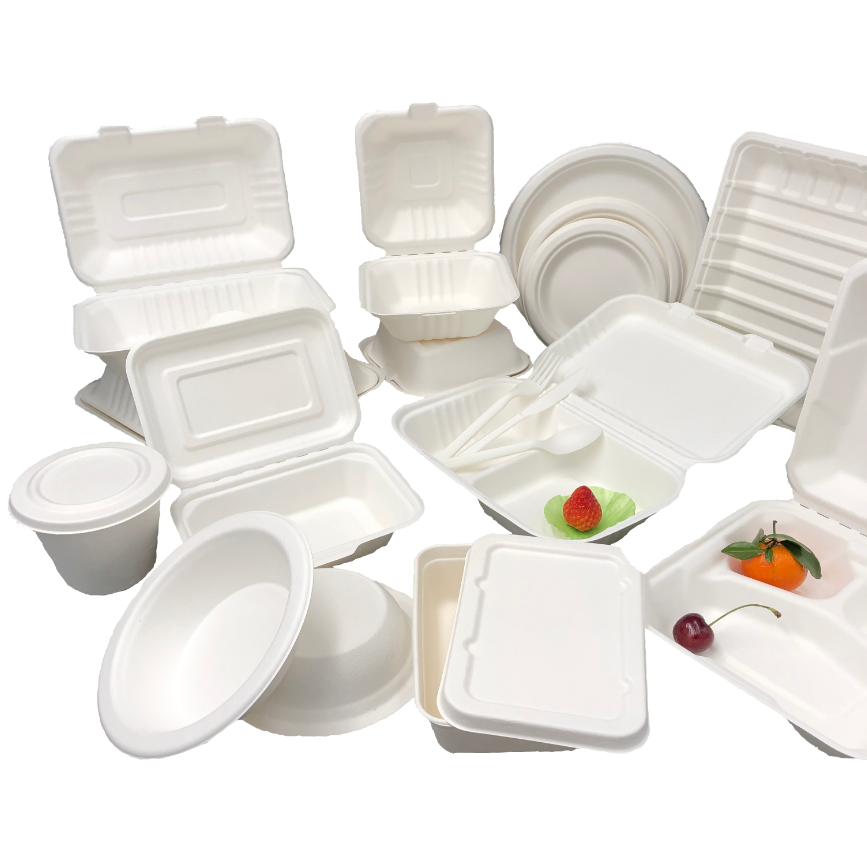
A biodegradable paper plate manufacturer integrates material science, pulp engineering, and industrial automation to produce eco-friendly tableware suitable for global food packaging supply chains. Unlike traditional paper plate production that relies on wood pulp and plastic coatings, modern biodegradable systems utilize agricultural fibers and molded pulp technology.
Among commonly used raw materials, sugarcane bagasse is considered a high-performance fiber source. It offers natural rigidity and reduces dependency on forest-based resources. Bagasse-based tableware typically decomposes within 90 days under industrial composting conditions, depending on environmental humidity and microbial activity .
Raw Material Processing and Fiber Conditioning
Production begins with fiber preprocessing. Bagasse is collected after sugar extraction and goes through washing and sterilization to remove organic impurities. The cleaned fiber is then processed into pulp using mechanical refining systems.
Fiber conditioning controls moisture absorption rates and ensures consistency in molding behavior. A typical production line maintains pulp concentration between 3% and 5% solids content for stable forming efficiency.
To enhance performance, manufacturers may introduce controlled ratios of bamboo fiber or recycled cellulose to improve tensile strength and edge compression resistance.
Pulp Molding Technology and Equipment Design
The core manufacturing process is pulp molding. This involves forming fiber slurry into precise shapes using aluminum or stainless-steel molds. Vacuum suction removes water while fibers interlock into a dense matrix.
Key production parameters include:
Forming vacuum pressure: 50–80 kPa
Mold temperature during forming: 60–90°C
Hot press temperature: 180–220°C
Compression time: 20–45 seconds per cycle
These parameters influence thickness uniformity and surface smoothness. Industrial-scale systems can produce thousands of units per hour depending on mold configuration.
Hot Press Reinforcement Process
Hot pressing is essential for structural reinforcement. During this stage, fiber surfaces are compressed to reduce porosity and increase resistance against oil penetration. This process eliminates the need for plastic film coatings, making the product fully compostable.
Research on molded fiber tableware shows that hot-pressed products can withstand higher load-bearing stress compared to conventional paper plates due to improved fiber bonding density .
Quality Control and Functional Testing
Every batch undergoes multiple inspection stages:
Dimensional accuracy checks for diameter and depth
Load-bearing tests using weighted food simulation
Water resistance testing under hot and cold conditions
Heat exposure validation up to 100–120°C
Compostability evaluation in controlled environments
Quality consistency is essential for commercial distribution, especially for export markets where compliance with FDA, LFGB, and ASTM standards is required.
Packaging and Logistics Optimization
After production, plates are stacked and compressed into uniform bundles. Packaging design focuses on reducing transport volume while maintaining product integrity. Carton stacking strength is tested to ensure stability during long-distance shipping.
Industry Development Direction
The biodegradable tableware industry is shifting toward higher automation and energy-efficient production lines. Advanced molding systems reduce water usage and improve fiber recycling efficiency. This supports large-scale adoption of compostable packaging in food delivery, catering, and retail sectors.
A biodegradable paper plate manufacturer therefore operates at the intersection of environmental engineering and industrial manufacturing, converting renewable fiber resources into practical packaging solutions that replace conventional plastic-based disposables.

 English
 Arabic
 Spanish
 Portuguese
 Deutsch
 Turkish
 Dutch
Dutch
 Italiano
 Russian
 Romaian
 Portuguese (Brazil)
 Greek
Greek
