


What Materials Work Best Under Car Plate?
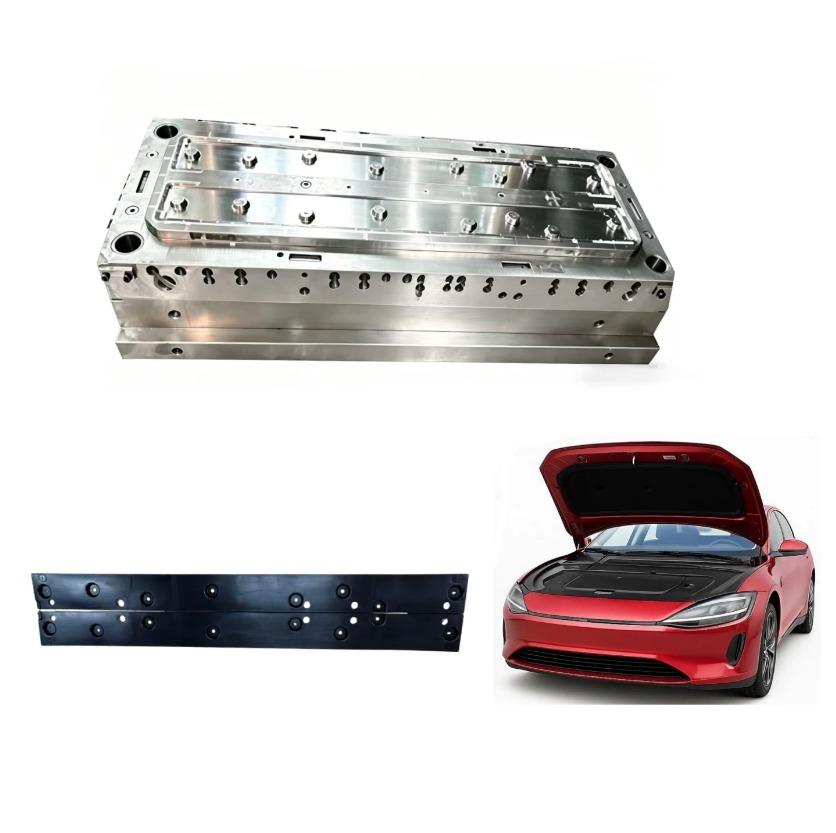
The selection of materials used in a Car Underbody Protection Plate significantly influences durability, weight distribution, corrosion resistance, and long-term performance. Each material category provides different mechanical and environmental properties that determine suitability for specific driving conditions.
Understanding these differences is important when evaluating underbody shielding systems for passenger vehicles, SUVs, and commercial transport applications.
Steel-Based Protection Systems
Steel remains widely used due to its high tensile strength and resistance to deformation. Typical automotive-grade steel plates range from 3 mm to 6 mm in thickness. High-carbon or alloyed variants may achieve yield strength values between 250 MPa and 600 MPa depending on treatment processes.
The main advantage of steel is its ability to withstand repeated impact cycles without structural failure. This makes it suitable for environments with frequent exposure to rocks, uneven terrain, or heavy debris.
However, steel is susceptible to corrosion if protective coatings are compromised. To address this, manufacturers often apply galvanization layers or powder-coated finishes. These coatings improve resistance to oxidation and extend service life under humid or salted road conditions.
Aluminum Alloy Protection Plates
Aluminum is frequently used where weight efficiency is important. Its density is approximately one-third that of steel, allowing reduction in total vehicle mass without sacrificing structural integrity.
Common aluminum alloys used in a Car Underbody Protection Plate include 5052 and 6061 grades. Thickness ranges from 4 mm to 8 mm depending on load requirements. Yield strength typically falls between 150 MPa and 300 MPa.
Although aluminum is softer than steel, it absorbs impact energy differently by distributing force across a wider surface area. This reduces the risk of sudden puncture damage under moderate impact conditions.
Corrosion resistance is a key advantage. Aluminum naturally forms an oxide layer that protects the surface from further degradation, making it suitable for coastal regions or areas with heavy winter road treatment.
Composite Polymer Protection Materials
Composite systems often use reinforced polypropylene or high-density thermoplastics. These materials typically have thickness values between 10 mm and 20 mm due to lower density and stiffness compared to metals.
One advantage of polymer-based Car Underbody Protection Plate designs is vibration damping. They reduce noise transmission into the cabin by absorbing high-frequency vibrations from road surfaces.
They also offer excellent resistance to chemical exposure such as oil splashes, road salts, and cleaning agents. However, their impact resistance is generally lower than metal-based systems, making them more suitable for urban or light-duty driving environments.
Structural Design Considerations
Beyond material selection, plate geometry plays an important role. Reinforcement ribs are often integrated into the surface design to increase stiffness without adding excessive weight.
Mounting points are engineered to distribute load across multiple chassis anchors. A typical design may include 4 to 8 mounting locations depending on vehicle size. Load distribution prevents localized stress concentration that could lead to deformation.
Ventilation channels are also incorporated in some designs to maintain airflow around engine and transmission areas. This helps prevent heat accumulation during long-distance driving.
Performance Evaluation Factors
Key technical parameters used to evaluate a Car Underbody Protection Plate include:
Impact resistance under low-speed collision scenarios
Tensile and flexural strength ratings
Corrosion resistance under salt spray exposure
Weight-to-strength ratio
Thermal stability during prolonged engine operation
Each parameter contributes to overall system performance and determines suitability for different operational environments.
Application Scope
Different material types align with different driving conditions. Steel systems are generally associated with high-load environments. Aluminum systems balance protection and efficiency. Composite systems focus on comfort, corrosion resistance, and noise reduction.
Vehicle manufacturers and aftermarket designers select materials based on target usage profiles rather than single performance metrics.

 English
 Arabic
 French
 Spanish
 Portuguese
 Deutsch
 Turkish
 Dutch
Dutch
 Italiano
 Russian
 Romaian
 Greek
Greek
