


How Padlock Materials Improve Security?
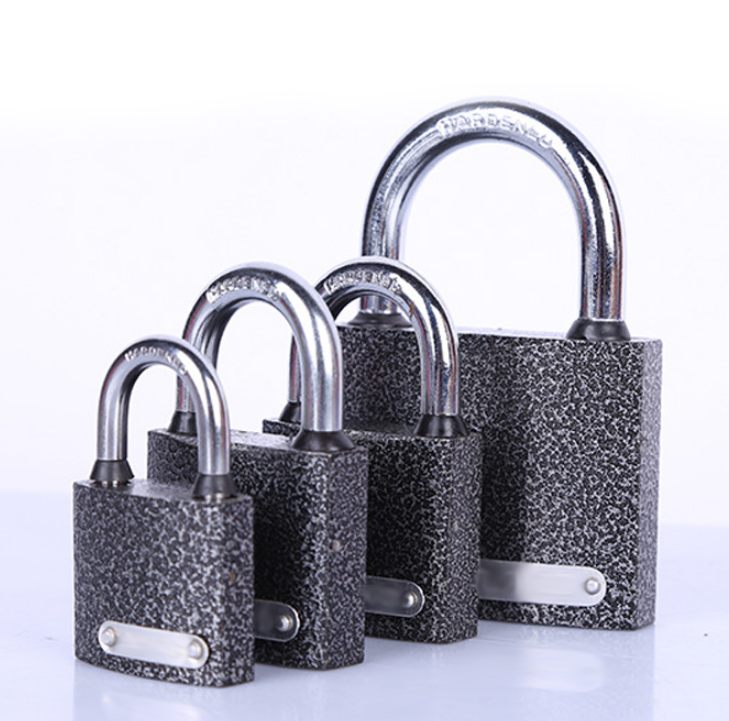
Material selection directly determines the structural strength and service life of a mechanical lock. In industrial locking systems, padlocks must withstand cutting tools, corrosion exposure, and repeated mechanical stress. These requirements have driven continuous improvements in metallurgy and manufacturing processes, especially in products supplied as Wholesale High Quality Padlock solutions for large-scale security deployment.
The most commonly used materials in high-performance padlocks include hardened steel, boron alloy steel, stainless steel, and reinforced brass. Each material offers different mechanical and environmental advantages.
Hardened steel is widely used for shackles due to its high tensile strength and resistance to bolt cutters. After heat treatment processes such as quenching and tempering, surface hardness can reach levels capable of resisting deformation under strong impact. Some industrial padlocks also incorporate boron carbide alloy, which improves cutting resistance significantly compared to standard steel.
Stainless steel is often selected for environments exposed to moisture or chemical corrosion. It provides stable performance in outdoor applications such as marine docks, transportation yards, and storage facilities. While slightly less hard than boron alloy steel, its corrosion resistance extends operational lifespan.
Brass alloy is commonly used in padlock bodies. It offers good machinability and stable internal structure for cylinder installation. However, for high-security applications, reinforced steel bodies are preferred due to their higher resistance to physical attack.
A typical Wholesale High Quality Padlock may include the following technical structure:
Body width: 40mm to 80mm depending on security level
Shackle diameter: 6mm–12mm hardened steel
Lock cylinder: 5-pin or 6-pin precision tumbler system
Dual locking points for anti-pry resistance
Anti-drill plate installed in cylinder core (optional in advanced models)
Advanced designs also include shrouded shackles, where a portion of the body covers the shackle to reduce access for cutting tools. This structural improvement significantly increases resistance against leverage attacks.
Manufacturing precision plays a crucial role in ensuring reliability. CNC machining ensures consistent tolerances across locking components, while automated assembly systems reduce assembly deviation. Heat treatment control is essential to avoid brittleness or inconsistent hardness distribution.
Testing procedures for industrial padlocks often include:
Pull force resistance testing
Shackle cutting simulation
Corrosion resistance exposure
Repeated cycle durability testing (opening/closing cycles exceeding thousands of operations)
These tests ensure that the final product maintains stable performance under real-world conditions.
Applications requiring durable padlocks include storage depots, construction tool cabinets, shipping containers, and machinery isolation points. In such environments, mechanical failure is not acceptable, making material reliability a critical factor.
Wholesale sourcing allows standardized material selection across production batches, ensuring consistent performance across multiple usage locations. This is particularly important for distributors managing large-scale security systems.
As security requirements continue to evolve, material engineering remains a key driver in padlock innovation, balancing strength, corrosion resistance, and manufacturing efficiency.

 English
 Arabic
 French
 Spanish
 Portuguese
 Deutsch
 Dutch
Dutch
 Italiano
 Russian
 Romaian
 Portuguese (Brazil)
 Greek
Greek
