


Why Choose OEM Office Chair Systems?
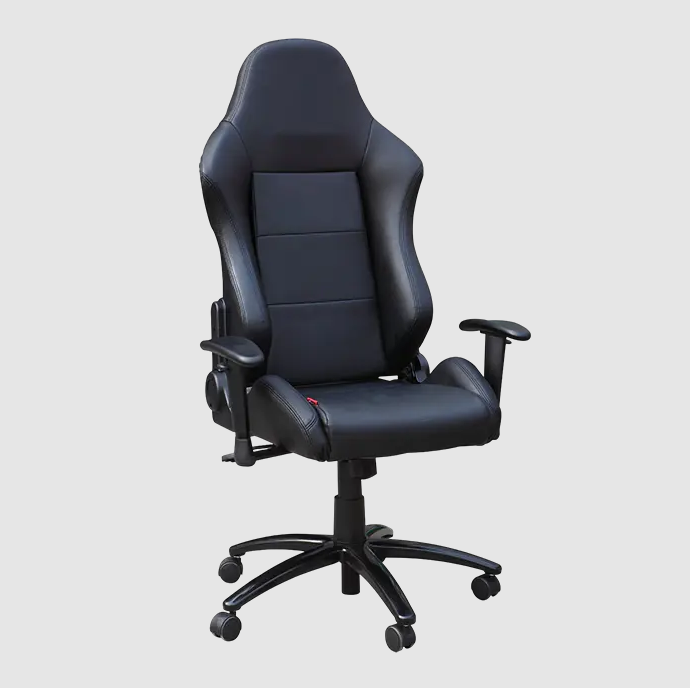
The design of an OEM Office Chair focuses on ergonomic adaptability, structural stability, and long-term usability across diverse working environments. These chairs are widely used in corporate offices, shared workspaces, and remote work setups due to their configurable structure and adjustable components.
Unlike standard fixed chairs, OEM production allows customization in lumbar support systems, seat depth, material composition, and adjustment mechanisms. This flexibility ensures the final product can meet different regional standards and user preferences.
Ergonomic Support and Posture Alignment
A well-designed OEM Office Chair follows the natural curvature of the human spine. The backrest is typically shaped to support the lumbar region, reducing pressure on the lower back during extended sitting periods. Adjustable lumbar systems may include sliding pads, tension-controlled mesh, or mechanical support knobs.
Seat depth is another important ergonomic factor. Typical OEM designs provide 40–50mm of seat depth adjustment or fixed depth optimized for average leg length proportions. Proper seat depth ensures a gap of approximately 50–100mm between the seat edge and the back of the knees, supporting healthy blood circulation.
Mechanical Tilt and Recline Systems
The tilt mechanism in an OEM Office Chair is often based on synchronized or single-axis systems. Synchronized tilt allows the backrest and seat to move in a coordinated motion, maintaining ergonomic angles during recline. Recline angles commonly range from 90° upright to 130°–150° relaxed positions.
Some OEM configurations include tension adjustment knobs that control resistance based on user body weight. This ensures smoother movement and prevents sudden backward shifts during reclining.
Gas Lift Performance and Safety Structure
Height adjustment in an OEM Office Chair relies on pneumatic gas lift cylinders filled with inert nitrogen gas. These cylinders are typically designed with steel wall thickness engineered to handle repeated compression cycles. Internal piston rods are chrome-plated to reduce friction and resist corrosion.
Standard adjustment travel is around 80–120mm, allowing compatibility with different desk heights. Safety classifications such as Class 3 and Class 4 are commonly used in commercial-grade chairs to ensure stability under long-term load conditions.
Material Selection and Surface Engineering
OEM Office Chair materials vary depending on intended use. Mesh chairs use high-tension polyester or nylon mesh with ventilation properties that reduce heat buildup. Fabric versions use woven textiles designed for abrasion resistance and long service life.
Foam density in seat cushions typically ranges from 40–60 kg/m³, balancing comfort and structural recovery. High-density foam reduces deformation over time and maintains seating shape under continuous use.
Plastic components such as armrest supports and back frames are commonly made from reinforced polypropylene or nylon composites. These materials provide impact resistance while maintaining lightweight structure for easy assembly and transport.
Armrest Ergonomics and User Interaction
Armrest design in OEM Office Chair production plays a key role in upper body posture control. Adjustable armrests help maintain wrist alignment during typing and reduce shoulder elevation stress.
Different adjustment levels are used depending on product positioning. 2D armrests allow vertical and horizontal movement, while 3D and 4D versions add rotational and depth adjustments. These configurations enable personalized alignment for different workstation setups.
Base Structure and Stability Engineering
The chair base is designed for stability under dynamic movement. A standard OEM Office Chair base typically uses a five-star structure to distribute weight evenly. Nylon bases are reinforced with fiberglass content to improve strength, while aluminum alloy bases are used in higher durability requirements.
Casters are engineered for smooth rolling performance and are typically tested for wear resistance over thousands of movement cycles. Swivel mechanisms are integrated to allow full rotation without resistance at the central axis.
OEM Customization Flexibility
One of the main advantages of OEM Office Chair production is configuration flexibility. Manufacturers can adjust seat height range, foam thickness, armrest design, and material combinations based on customer requirements.
This allows businesses to develop product lines tailored for different market segments, including entry-level office seating, mid-range ergonomic chairs, and specialized workstation chairs.
Through careful engineering of structure, materials, and adjustment systems, OEM Office Chair designs achieve a balance between ergonomic support, durability, and scalable production efficiency.

 Arabic
 French
 Spanish
 Portuguese
 Deutsch
 Turkish
 Dutch
Dutch
 Italiano
 Russian
 Romaian
 Portuguese (Brazil)
 Greek
Greek
