


How Long Do Outdoor Holiday Lights Last?
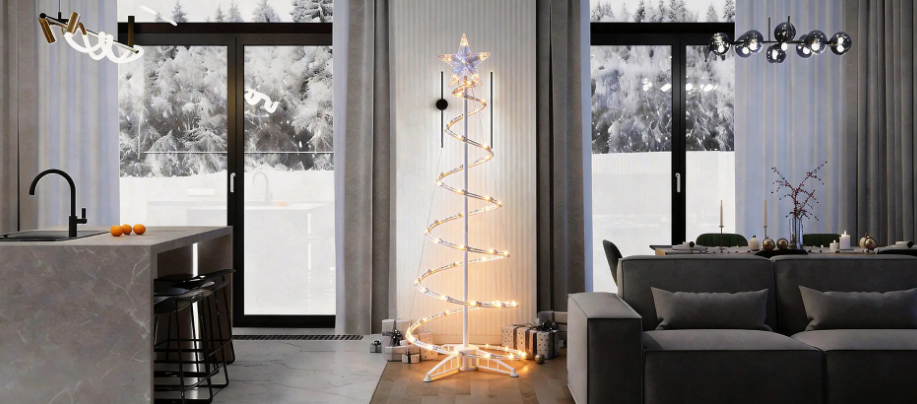
Outdoor decorative lighting often raises a practical question: how long will the batteries last? Homeowners, event organizers, and garden enthusiasts want lighting that remains bright throughout an evening without frequent battery changes. Battery Outdoor Holiday Lights have developed into efficient decorative products by combining LED technology with intelligent control systems.
Understanding the factors that influence runtime helps users choose lighting arrangements that balance brightness, decoration, and energy consumption.
LED Efficiency Makes the Difference
Earlier decorative lighting systems consumed significant amounts of electricity, making battery operation impractical for extended use.
Modern LEDs have changed this situation.
Key LED characteristics include:
Low energy consumption
Reduced heat generation
Stable light output
Long service life
Multiple color options
Typical decorative LEDs operate at relatively low power levels while delivering sufficient illumination for decorative outdoor applications.
Common color choices include:
Warm white
Cool white
Multicolor
Amber
Blue
Red
Green
These color options allow outdoor displays to match different seasonal themes.
Typical Battery Configurations
Battery Outdoor Holiday Lights commonly use:
Three AA batteries
Compact and lightweight for small decorative projects.
Three C batteries
Suitable for medium-sized light strings.
Three D batteries
Provide higher energy capacity for larger installations.
Battery voltage typically ranges from 4.5V depending on battery type.
Rechargeable NiMH batteries can reduce waste and support repeated use throughout the year.
String Length Influences Runtime
The total number of LEDs directly affects energy demand.
Common configurations include:
50 LEDs
Length around 5 meters.
100 LEDs
Length around 10 meters.
120 LEDs
Approximately 9.5 meters.
150 LEDs
Up to 20 or 30 meters depending on spacing.
Longer strings naturally require additional energy, although efficient LEDs help control battery consumption.
Timer Functions Reduce Power Consumption
Automatic timers have become a practical feature.
A common operating cycle works as follows:
Lights on for 6 hours.
Lights off for 18 hours.
Cycle repeats automatically each day.
This function reduces unnecessary battery use while maintaining a regular decorative schedule. Users do not need to manually switch lights on and off.
Timer systems can significantly extend practical operating periods between battery replacements.
Lighting Modes Affect Battery Life
Steady lighting generally consumes more power than intermittent flashing.
Popular modes include:
Steady
Twinkle
Flash
Slow fade
Wave
Sequential
Combination
Chasing
Selecting a flashing pattern may help conserve battery capacity while creating dynamic visual effects.
Many products include remote controls that allow brightness adjustment and lighting mode selection.
Weather Conditions Play a Role
Outdoor temperature influences battery chemistry.
Cold weather may temporarily reduce battery efficiency, while excessive heat can shorten battery lifespan.
Helpful practices include:
Using fresh batteries before major events.
Keeping battery compartments dry.
Protecting battery packs from direct standing water.
Storing lights indoors after the season.
Weather-resistant battery boxes provide additional protection for outdoor operation.
Waterproof Ratings Improve Reliability
Outdoor decorative lights benefit from protective construction.
Common features include:
IP44 weather resistance
Water-resistant battery housing
Dust protection
UV-resistant cable coating
Sealed LED modules
IP44-rated products are designed to tolerate outdoor environmental exposure such as rain and splashing water.
Practical Decoration Ideas
Battery Outdoor Holiday Lights work across many settings.
Garden Pathways
Wrap lights around low fencing or decorative borders.
Outdoor Dining
Create a comfortable evening atmosphere above tables.
Holiday Trees
Decorate without running extension cords.
Camping Areas
Provide portable decorative illumination.
Wedding Venues
Temporary lighting installations become easier without permanent wiring.
Balconies
Apartment residents can add seasonal decoration where electrical outlets are limited.
Extending Battery Performance
Several simple habits can improve runtime.
Use timer functions.
Choose LED products instead of older bulb technologies.
Install lights only where needed.
Turn off decorative lighting after events.
Use quality alkaline or rechargeable batteries.
Keep battery contacts clean.
Store lights properly between seasons.
Community discussions also suggest that timer-controlled operation and thoughtful placement can improve the practical experience of battery-powered decorative lighting.
Conclusion
Battery Outdoor Holiday Lights combine efficient LED technology with practical battery operation to deliver portable outdoor decoration. Features such as 50–150 LED configurations, weather-resistant construction, IP44 protection, automatic timers, and multiple lighting modes support a wide range of seasonal and everyday applications. Understanding how battery type, string length, operating mode, and environmental conditions affect performance allows users to create attractive outdoor displays while managing energy consumption effectively.

 English
 Arabic
 French
 Spanish
 Portuguese
 Deutsch
 Turkish
 Dutch
Dutch
 Italiano
 Russian
 Portuguese (Brazil)
 Greek
Greek
